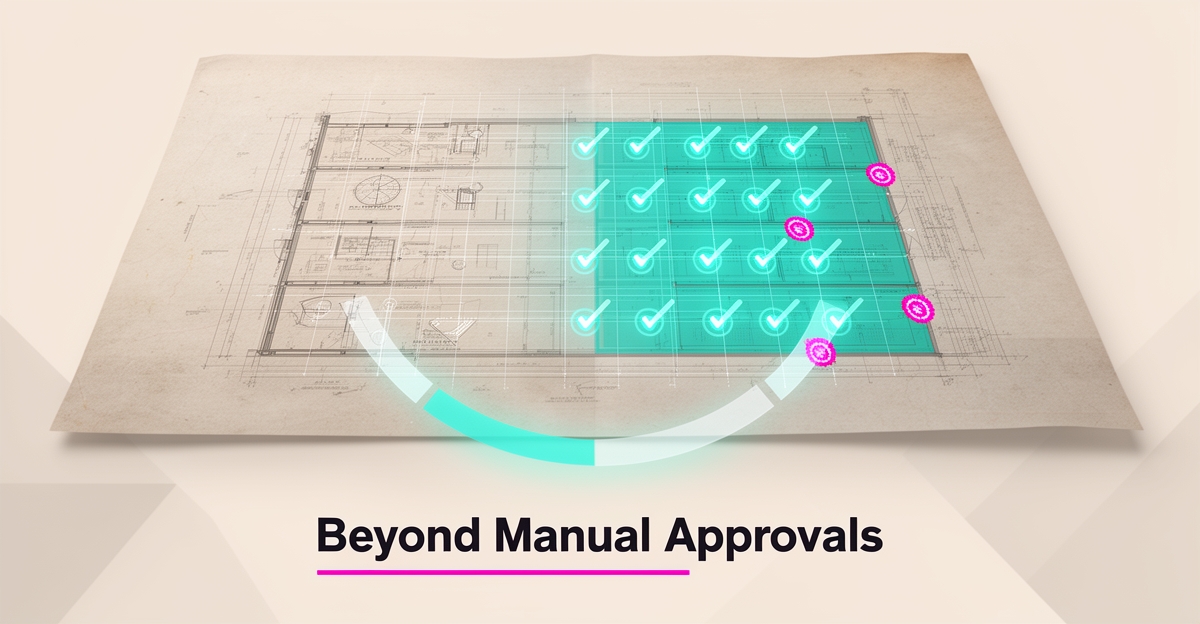
Why Most Building Code Firms Still Rely on Manual Approvals (And How to Fix It)
Key Facts
- Manual review cycles concentrate workload on one or two senior consultants, so a single absence can stall projects
- AI-assisted document processing typically cuts review and takeoff time dramatically compared to manual methods, with accuracy that holds up under expert spot-checks
- Industry surveys as of late 2026 show a growing share of construction and compliance teams using AI for document automation, with interest in planning and scheduling rising steadily
- AI-assisted review is generally far less costly per document than fully manual review, especially at high volumes
- Human oversight remains essential for final sign-off, complex interpretation and client-specific judgment
Hire a team member that works 24/7 — for less than a part-time wage.
AI receptionists, SDRs, dispatchers and 99+ roles. Trained on your business, fully managed.
Not sure where to start? Ask our AI planner
The Hidden Cost of Manual Approvals in Building Code Compliance
Many building code firms remain trapped in manual approval cycles not because they lack awareness of alternatives, but because the perceived effort to change feels greater than the pain of staying the same. Yet the operational toll is substantial: reviewers spend excessive time cross-referencing outdated code versions, chasing missing documentation, and resolving avoidable inconsistencies that could be caught earlier. This constant firefighting leaves little room for strategic work or proactive client guidance, turning compliance into a reactive bottleneck rather than a value-added service.
The fragility problem is real. Many small code consulting firms operate with lean teams where one or two senior consultants carry the bulk of the approval workload—the same single-point-of-failure pattern seen in overburdened open-source projects maintained by one person. This concentration of expertise creates fragility: when a key person is unavailable, projects stall, errors increase, and turnaround times balloon. Manual processes simply don't scale with demand, and relying on heroics from individuals is neither sustainable nor reliable.
These workflows also introduce measurable risks. Human-only reviews are prone to variability and oversight, especially under deadline pressure. In building code compliance, even minor misinterpretations of setback requirements, egress paths, or fire rating assemblies can trigger costly rework, delay permits, or worse, compromise safety. The hidden cost isn't just in delayed timelines—it's in eroded trust, avoidable liability, and the opportunity cost of senior experts stuck in repetitive tasks instead of advising on innovation or sustainability.
- Inconsistent application of code across similar projects due to human interpretation variance
- Increased error rates during high-volume periods when fatigue sets in
- Limited ability to handle sudden spikes in permit applications without adding headcount
- Knowledge silos that prevent junior staff from learning efficiently
- Difficulty maintaining audit trails that satisfy both internal QA and regulator scrutiny
Breaking free from this cycle doesn't require replacing experts with automation—it means augmenting their judgment with systems that handle the repetitive, rules-heavy lifting. AIQ Labs helps code consultants rebuild the one workflow that costs the most: intelligent pipelines that flag common discrepancies, auto-check references against the latest code updates, and route clear-cut approvals for instant processing—freeing humans to focus on complex interpretations and client counseling. The goal isn't to remove the expert from the loop, but to ensure their time is spent where it delivers the most value.
How AI-Powered Systems Are Reducing Approval Delays and Errors in Regulated Workflows
Approval bottlenecks in regulated building workflows are no longer a staffing problem. They are a processing problem, and AI-powered systems are now proving they can compress review cycles while holding accuracy under compliance scrutiny.
Construction and compliance teams are already moving. Industry surveys as of late 2026 show a majority of construction organizations expressing interest in AI-based solutions for planning and scheduling, and a meaningful share already using AI for document automation. That adoption is accelerating as firms see measurable gains in regulated, detail-heavy tasks.
Document intake and takeoff validation illustrate the shift. Benchmarks of AI-assisted versus manual document processing consistently show large reductions in time to complete takeoffs, with accuracy that holds up under expert spot-checks on counts and material quantities. The exact numbers vary by task and tooling, but the pattern is consistent: dramatically faster prep with quality that survives expert review.
The same pattern appears in code and compliance validation, a critical analog for building code review. Comparative analyses of AI-assisted versus manual review typically show substantially lower cost per review, with speed and scalability gains while keeping human oversight essential for final sign-off.
Multi-agent systems make these gains viable in regulated environments. Instead of a single model scanning PDFs, specialized agents handle extraction, normalization, cross-reference checking, and exception routing within a governed workflow. AIQ Labs has deployed 200+ multi-agent systems of this kind, and runs four live SaaS products on the same architecture every day.
In practice, AI reduces delays and errors by:
- Automating intelligent document processing to extract requirements, drawings, and submittals with consistent schema mapping
- Running parallel validation agents that check code clauses, prior approvals, and project-specific conditions
- Flagging discrepancies and routing only exceptions to human reviewers with full audit trails
- Learning from reviewer decisions to improve precision without changing regulatory logic
This is where approval time falls while compliance rises. The system does not replace the code official; it removes repetitive verification so experts focus on judgment calls.
AIQ Labs builds these production-ready systems for professional services firms that cannot afford enterprise IT overhead. Firms can start with a managed AI employee handling intake and pre-checks, or go further with a fully connected AI operating system owned outright.
For small to mid-sized code consultants, the result is faster turnaround, fewer re-submittals, and auditable decisions without hiring additional reviewers.
Practical Steps to Transition from Manual to AI-Augmented Code Approvals Without Disruption
Manual approvals persist because firms fear disruption more than delay. Small code consultancies can move to AI-augmented review without rebuilding their practice overnight.
Start with a focused workflow assessment. Map where documents enter, who touches them, and where approvals stall. Most SMB firms discover intake and rule validation consume the most rework. Document the current CRM and project platform handoffs so integration points are clear before any build begins.
Pilot AI in a single, high-volume intake workflow. Use an AI agent to normalize submissions, extract code sections, and flag missing items before a human reviews. A narrow pilot limits risk while proving time savings on your own documents—no leap of faith required.
Validate rules with human-in-the-loop oversight. An AI agent can pre-check submissions against code libraries and project-specific criteria, surfacing conflicts for senior reviewers. Human oversight remains essential for final sign-off, compliance, and client-specific judgment. The pilot should measure cycle time, error rate, and reviewer hours to build a business case for expansion.
Integrate with existing tools rather than replace them. Connect the agent to the CRM, document repository, and project platform the team already uses. Seamless two-way sync preserves audit trails and avoids duplicate entry. AIQ Labs designs these integrations as owned systems, so firms keep control of data and workflows without subscription lock-in.
Scale in milestones aligned to business risk tolerance. A phased path reduces disruption and preserves cash flow:
- Assess and map one approval workflow end-to-end
- Pilot an AI agent for intake normalization and rule pre-check
- Integrate with CRM and project platform via API
- Expand to adjacent workflows after metrics are validated
Evidence for efficiency gains already exists in adjacent building tasks. Benchmarks of AI-assisted takeoffs consistently show large time reductions with expert-level accuracy on counts and quantities. While code approvals differ, the pattern of faster prep with human validation holds.
Choose payment models that match your comfort level. Start Monthly gives you a managed AI employee with setup, training, integrations, monitoring and improvements included, pausable anytime. Build in Milestones lets you approve and pay per phase on a fixed price, keeping everything built so far. Own It Outright means the system is yours, with no subscription lock-in. Full details are on the pricing page.
The goal is not full automation on day one. It is reducing approval delays and errors while keeping compliance and client trust intact.
Still paying for 10+ subscriptions that don’t talk to each other?
We build custom AI systems you own outright. No vendor lock-in. Full control.
Not sure where to start? Ask our AI planner
Frequently Asked Questions
How much can AI actually reduce the time spent on manual approvals?
Is AI accurate enough to trust with regulatory compliance?
Will AI replace human reviewers in code consulting firms?
Is AI adoption common in the construction and compliance industry?
How does AI handle the high workload and staffing challenges in small firms?
What about the cost of implementing AI compared to manual review?
From Bottleneck to Breakthrough: The Path to Smarter Code Approvals
The hidden costs of manual approvals—wasted expert time, inconsistent interpretations, and avoidable delays—are no longer inevitable for building code firms. AI-augmented workflows don't replace the expert; they elevate them by handling repetitive checks, flagging discrepancies early, and ensuring audit-ready decisions without adding headcount. Firms that start small—by mapping a single workflow, piloting AI for intake normalization, and integrating with existing tools—can achieve faster turnarounds, fewer re-submittals, and more time for strategic client guidance. The shift isn't about automation for its own sake; it's about freeing your team to focus on what only humans can do: interpret complexity, advise with confidence, and build lasting trust. If you're ready to see where your approval process can improve, start with the two-minute Fit Check, then book a free 30-minute strategy call to map your biggest bottleneck—no pitch, just clarity.
Make AI your competitive advantage — not just another tool.
Strategy, implementation and ongoing optimization. One partner, end to end.
Not sure where to start? Ask our AI planner