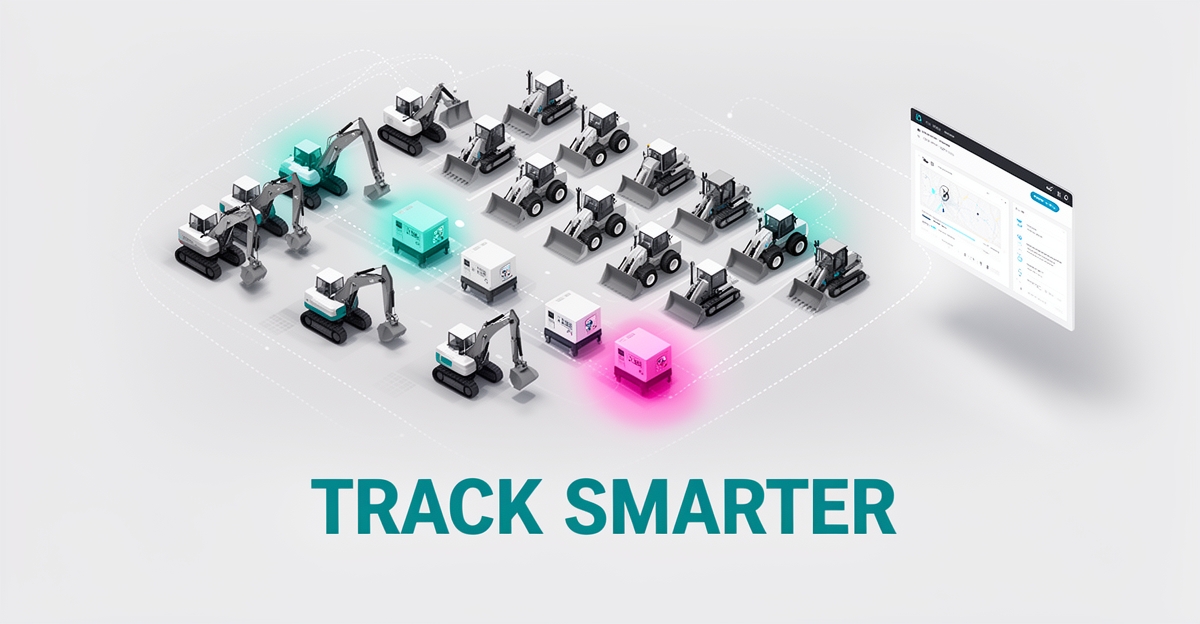
Why Most Construction Equipment Rentals Still Use Manual Equipment Tracking (And How to Fix It)
Key Facts
- Industry analyses commonly report that AI-powered inventory management can reduce operational costs significantly in construction equipment rental operations
- Predictive maintenance is widely credited with sharply reducing unplanned equipment downtime compared to reactive approaches
- Under manual tracking, equipment often sits idle a substantial portion of the time despite being available for rent
- A large share of construction firms are planning AI equipment investments as of late 2026
- Data quality issues and skills gaps are the two most commonly cited obstacles to AI implementation in the sector
- Cybersecurity remains a top concern among construction executives evaluating AI adoption
Hire a team member that works 24/7 — for less than a part-time wage.
AI receptionists, SDRs, dispatchers and 99+ roles. Trained on your business, fully managed.
Not sure where to start? Ask our AI planner
The Hidden Cost of Manual Equipment Tracking in Construction Rentals
Despite the clear advantages of AI-powered inventory systems, many construction equipment rental companies continue to rely on manual tracking methods, creating significant operational inefficiencies. These manual processes—often based on paper logs, spreadsheets, or disconnected digital tools—lead to frequent equipment misplacement, with items lost or mislocated across job sites, resulting in project delays and unnecessary rental extensions. Industry data suggests such inaccuracies contribute to underutilization, where equipment sits idle a meaningful share of the time despite being available for rent, directly impacting revenue potential and increasing carrying costs. Analyses of AI-powered inventory management in the rental sector commonly credit it with major operational cost reductions by addressing these very issues through real-time visibility and automated utilization tracking.
The financial impact extends beyond lost rental income. Manual tracking demands substantial administrative overhead, with staff spending countless hours reconciling logs, chasing down missing equipment, and correcting data entry errors—time that could be redirected toward customer service or business development. This administrative burden is compounded by the risk of human error, which can lead to incorrect billing, missed maintenance schedules, and compliance issues during audits. Furthermore, without accurate, real-time usage data, rental companies struggle to forecast demand accurately, often over-investing in redundant equipment or failing to meet peak demand, both of which erode profitability. IoT-enabled tracking deployments have demonstrated that predictive maintenance alerts can sharply reduce unplanned downtime—a benefit unattainable with manual methods.
These inefficiencies create a hidden cost structure that undermines competitiveness, especially as more firms adopt AI-driven solutions. Companies relying on manual tracking not only incur higher operational expenses but also lack the data insights needed to optimize fleet size, schedule preventive maintenance, or provide customers with accurate equipment availability—key differentiators in a tightening market. Industry analyses confirm that AI integration improves asset utilization and customer experience by enabling proactive equipment allocation and transparent job-site visibility. For rental businesses seeking to close this gap, AIQ Labs builds custom workflow systems that integrate location tracking, usage analytics, and maintenance alerts into a unified platform—eliminating guesswork and transforming equipment management from a reactive chore into a strategic advantage.
How AI-Powered Inventory Systems Deliver Measurable ROI in Equipment Rental
The numbers behind AI-powered inventory management in equipment rental aren't subtle. Rental operations that adopt AI-driven systems commonly report meaningful operational cost reductions, according to industry analysis of AI inventory management in the rental sector. For a business where every idle machine represents sunk capital, that kind of margin improvement changes the economics of the entire operation.
The ROI story starts with visibility. Manual tracking systems leave rental companies blind to where equipment sits, how often it's used, and when it's trending toward failure. AI-powered systems close that gap by monitoring equipment location, status, and usage across multiple sites in real time—the kind of continuous oversight AIQ Labs builds into custom systems for multi-site operations.
The productivity gains are well documented. Industry research on AI-assisted equipment operations points to substantial productivity boosts, with autonomous and AI-assisted machines increasing output per shift in operations that have adopted them. These gains compound when the same data feeds utilization planning—knowing which assets earn their keep and which drain capital.
Predictive maintenance is where downtime economics get dramatic. Industry research indicates predictive maintenance can cut unplanned downtime roughly in half, transforming maintenance from a reactive cost center into a scheduled, controlled activity. For rental fleets, that means fewer emergency repairs, fewer broken promises to customers, and higher fleet availability during peak demand. It's no surprise that a growing share of large contractors have already moved to AI-assisted equipment maintenance as of 2026.
The measurable benefits tend to cluster in four areas:
- Reduced operational costs across AI-enabled rental operations
- Improved asset utilization through real-time tracking of equipment location and usage
- Dramatically less unplanned downtime via predictive maintenance models
- Stronger customer experience and loyalty from reliable equipment availability
Momentum is building across the industry, with a large share of construction firms planning AI equipment investments in the near term as of late 2026. The laggards won't just miss cost savings—they'll compete against rivals whose fleets stay busier, break down less, and cost less to run.
Implementation does carry real risks worth planning for. Data quality issues affect a substantial share of AI projects, skills gaps hinder many implementations, and cybersecurity concerns are common among construction executives. These are solvable problems, but they're the reason a phased approach matters. Businesses that start with a single high-value workflow—say, real-time equipment tracking across two or three yards—can prove ROI quickly before scaling. And with AIQ Labs' Own It Outright model, the company owns the system, data, and infrastructure outright rather than renting another subscription.
The rental companies capturing these gains aren't waiting for the technology to mature. They're building it into their operations now, one workflow at a time.
Overcoming Barriers to AI Adoption in Construction Equipment Rental
If the benefits of AI-powered equipment tracking are so clear, why do most rental operations still run on spreadsheets and whiteboards? The answer usually comes down to three very real barriers: unreliable data, a shortage of in-house expertise, and fear of cyber threats.
Data quality is the most common stumbling block. Industry research consistently flags data quality as a leading cause of AI project struggles—and equipment rental is particularly vulnerable, since years of manual tracking leave records incomplete, inconsistent, or scattered across job sites. An AI system is only as good as the information feeding it, which is why the first step in any implementation should be consolidating and cleaning existing equipment data.
The skills gap is the second hurdle. A lack of skilled personnel hinders a large share of AI equipment implementations. Many rental businesses simply don't have data scientists or AI engineers on staff, and hiring them outright is rarely practical for a small or mid-sized operation. This is where a partnership model changes the math: rather than building internal capability from scratch, businesses can work with a partner like AIQ Labs that designs, builds, and manages custom AI systems on their behalf—with full ownership of the system and data transferred so there's no vendor lock-in.
Then there's cybersecurity. Surveys consistently show cybersecurity is a top concern among construction executives, and connecting equipment to networked systems does expand the attack surface. The right response isn't avoidance—it's a deliberate security strategy built into the system from day one, including access controls, audit trails, and human-in-the-loop checks for critical decisions.
These barriers are solvable, but only with the right implementation approach. A rushed, off-the-shelf deployment often stalls; a structured one succeeds. The difference typically looks like this:
- Auditing and unifying equipment data before any AI model is trained
- Phased rollouts, starting with a single workflow such as location tracking or maintenance alerts
- Ongoing monitoring, retraining, and optimization rather than a one-time install
- Role-specific training so yard staff, dispatchers, and managers all adopt the system confidently
This end-to-end approach is exactly how AIQ Labs frames its work: custom-built systems that monitor equipment location and status in real time, managed alongside the client's team, and continuously optimized as the business grows. Flexible engagement models—Start Monthly, Build in Milestones, or Own It Outright—let rental businesses prove value on a small scale before committing further. For teams that need help running day-to-day coordination, AI Employees such as AI dispatchers can handle scheduling and follow-ups at a fraction of the cost of a human hire, while an AI Operating System ties tracking, maintenance, and billing into one connected layer.
The barriers to AI adoption in equipment rental are real, but they're implementation problems, not technology problems. With clean data, the right expertise, and security designed in, the payoff—reduced downtime, better utilization, and lower costs—is well within reach.
Still paying for 10+ subscriptions that don’t talk to each other?
We build custom AI systems you own outright. No vendor lock-in. Full control.
Not sure where to start? Ask our AI planner
Frequently Asked Questions
Why do construction equipment rental companies still track equipment manually?
How much money can AI-powered inventory tracking actually save a rental business?
Does AI tracking really reduce equipment downtime?
What happens if our equipment data is a mess from years of spreadsheets?
We don't have data scientists on staff—can we still adopt AI tracking?
How should a rental company start implementing AI equipment tracking without big risk?
Turning Equipment Chaos into Competitive Advantage
Manual equipment tracking isn't just inconvenient—it's costing rental businesses in lost revenue, wasted labor, and missed opportunities. AI-powered inventory systems deliver measurable ROI by cutting operational costs, boosting asset utilization, reducing unplanned downtime through predictive maintenance, and improving customer experience with real-time availability. The barriers—data quality, skills gaps, and cybersecurity concerns—are real but solvable with a phased, partnership-driven approach. For construction equipment rental companies ready to move beyond spreadsheets and guesswork, the path forward starts with a clear assessment of your biggest bottlenecks. Take the first step with AIQ Labs' 2-minute Fit Check, then book a free 30-minute strategy call to see where AI can deliver the fastest impact in your operations.
Make AI your competitive advantage — not just another tool.
Strategy, implementation and ongoing optimization. One partner, end to end.
Not sure where to start? Ask our AI planner