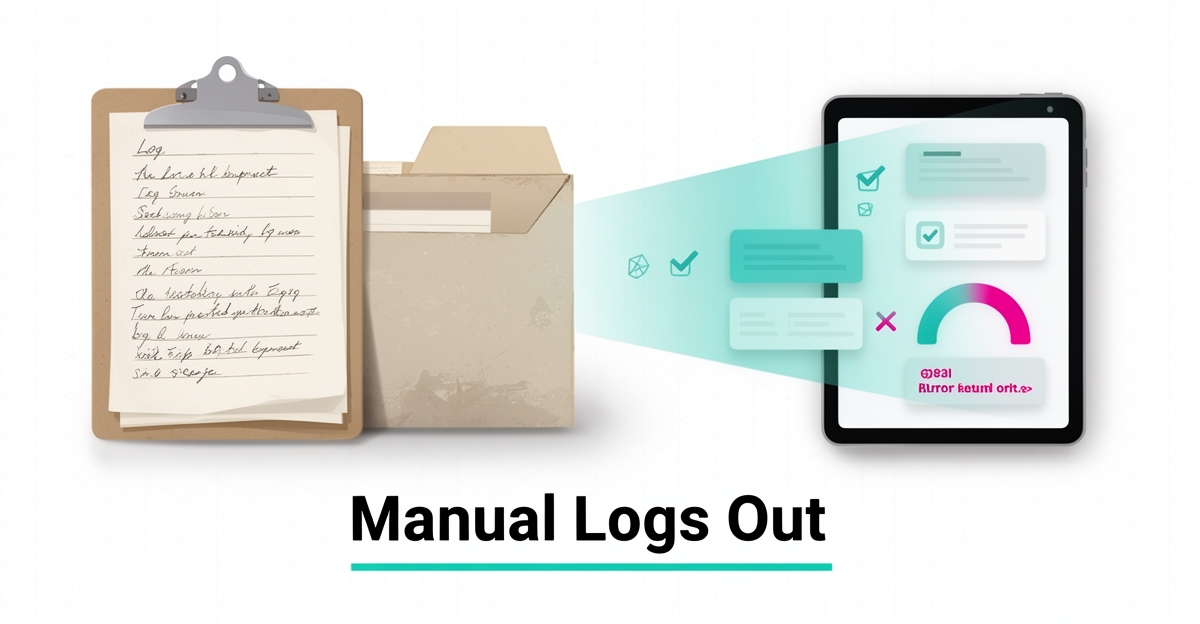
Why Most Construction Security Firms Still Rely on Manual Logs (And How AI Fixes It)
Key Facts
- Manual data entry can consume roughly a third of a project manager's week, according to industry research on construction workflows.
- Firms lose significant monthly revenue to preventable bottlenecks caused by manual tracking, per construction data analysis.
- AI-powered safety systems have been reported to achieve a 70-75% drop in recordable incidents through proactive OSHA monitoring, compliance research shows.
- A human inspector can take three days to find a pipe clash that AI detects in seconds, documented case studies reveal.
- 80% of construction firms experienced a cybersecurity breach in the past year, Wipfli's 2025 industry report found.
- One contractor automated 2,000 weekly site photos with AI, replacing 40 hours of manual inspections and preventing a $150,000 foundation error, according to documented results.
- Data architects can juggle 50 different file formats across 15 separate systems on a single large project, construction data research confirms.
Hire a team member that works 24/7 — for less than a part-time wage.
AI receptionists, SDRs, dispatchers and 99+ roles. Trained on your business, fully managed.
Not sure where to start? Ask our AI planner
The Hidden Cost of Clipboard Culture in Construction Security
Despite knowing the pitfalls, construction security teams still cling to manual logs because they trust the human eye more than any software, creating a hidden tax on every square foot of work. This cultural preference for paper persists even as manual data entry can consume roughly a third of a project manager's week, according to industry research, pulling skilled staff away from proactive safety oversight and into repetitive administrative tasks. The result is a systemic drag: firms lose meaningful monthly revenue to preventable bottlenecks caused by manual tracking, while a meaningful share of site data gets corrupted by entry errors that delay compliance reporting and increase risk exposure. Industry research confirms that this clipboard culture isn't just inefficient—it's actively eroding margins and slowing project timelines across the board.
The inefficiencies compound when teams juggle siloed systems, forcing a return to paper as the fastest workaround. Data architects routinely sort through 50 different file formats for a single large project, involving 15 firms using 15 separate systems, which prevents seamless data flow and pushes crews back to clipboards to save time in the moment. This fragmentation creates a data silo trap where critical safety and security information lives in isolated spreadsheets, PDFs, and notebooks—making it nearly impossible to generate real-time insights or audit-ready reports without hours of manual reconciliation. As a result, junior staff spend excessive time tagging files and chasing missing logs, increasing the likelihood of missed compliance gaps that only surface during inspections or incidents. Research shows that this reactive approach turns safety management into a game of catch-up, where hazards go unaddressed until it's too late to act preventively.
Breaking free from this cycle requires more than just new software—it demands a shift in mindset and infrastructure. AI-powered document processing can instantly scan, categorize, and store security records from physical or digital logs, eliminating manual entry and sharply reducing errors in similar workflows. By automating the intake and organization of safety data, AI transforms fragmented site information into structured, actionable intelligence that supports faster decisions and stronger compliance. For construction security firms ready to move beyond the clipboard, AIQ Labs rebuilds the document workflow that costs the most—scan to storage—through AI Workflow Builds at a fixed price and in phases, so teams can focus on protection, not paperwork. The path forward starts with replacing manual logs with automated systems that turn every square foot of data into a source of clarity, not cost.
How AI Transforms Security Logs from Reactive to Predictive
Manual logs feel safe until the cost shows up in missed revenue and delayed pours. AI changes security records from a backlog of paper into a live, searchable system that works while crews work.
Automated data processing removes the clipboard tax that slows sites. Industry analysis suggests manual data entry can consume roughly a third of a project manager's week, with staff spending around 12 hours weekly on it. AI can scan hundreds of blueprints and safety logs, sort them into project folders, and flag compliance gaps in minutes instead of days, cutting manual workload significantly.
Real-time video analytics replace passive camera watching with active threat verification. AI-powered construction security systems use machine learning and pattern recognition to analyze live feeds and distinguish a worker leaving late from a trespasser entering after hours. Recent coverage of smart site security notes the system filters false alarms from wildlife or weather and can trigger sirens or alerts only on verified threats.
Predictive intelligence turns historical logs into foresight. By analyzing past incidents and site photos, models predict schedule delays and unsafe conditions before they escalate. Compliance research reports AI-powered safety systems achieving a 70-75% drop in recordable incidents through proactive OSHA monitoring.
LLM-based knowledge access ends the hours-long file hunt. Instead of manually searching archives, safety professionals ask conversational questions like "Show scaffold collapse incidents from the last two years" and receive structured results instantly. EHS reporting analysis highlights how this converts hours of searching into seconds of querying and unlocks knowledge locked in files.
The speed difference is stark in practice. Construction AI reporting documents a human inspector taking three days to find a small pipe clash that AI finds in seconds, and a contractor automating 2,000 weekly site photos to replace 40 hours of manual inspections and prevent a $150,000 foundation error.
AIQ Labs builds document processing systems that extract data from physical or digital logs, reducing errors and improving compliance. The approach fits naturally into an AI Operating System—one connected layer that scans, categorizes, and stores security records into a usable knowledge base your firm owns outright.
How the shift shows up on site:
- Automated scanning and categorization of logs and photos with compliance gap flagging
- Real-time video analytics that verify threats and suppress false alarms
- Conversational retrieval that turns tribal knowledge into instant answers
- Predictive alerts that move security from reactive response to proactive prevention
The result is fewer missed entries, faster audits, and security decisions based on structured intelligence rather than memory.
From Strategy to Integration: Implementing AI in Construction Security Workflows
Implementing AI in construction security isn't about adding another tool—it's about rethinking how data flows through your operation. The first step is setting clear business goals, whether that's reducing manual data entry, which can consume roughly a third of a project manager's week, or eliminating the entry errors that corrupt site records. From there, choosing a cloud platform to host a central database becomes critical, especially when teams juggle up to 50 different file formats across 15 separate systems on a single project. Building import pipelines to pull data from field applications, then cleaning and standardizing it, creates the foundation AI needs to function. Without this groundwork, even the most advanced models will stall in pilot phase, unable to scale beyond isolated use cases.
Cybersecurity concerns can't be an afterthought, given that 80% of firms experienced a breach in the past year, per Wipfli's 2025 industry report. Every data pipeline must include encryption, access controls, and audit trails from day one—not as bolt-on features but as core architecture. AIQ Labs integrates these safeguards directly into custom AI document processing systems, ensuring that as security logs are scanned, categorized, and stored, compliance and protection move in parallel. Once data flows reliably, feeding it into machine learning models allows for testing and validation, turning raw inputs into actionable insights like predicting safety gaps before they become incidents.
The final step—monitoring pipeline performance—is where many firms lose momentum. Real-time tracking of data throughput, error rates, and model accuracy ensures the system adapts to changing site conditions. This continuous optimization transforms AI from a one-time project into an enterprise-wide capability, closing the gap between strategy and execution. When data architecture is built with ownership, security, and scalability in mind, construction security teams stop chasing logs and start preventing risks—turning a persistent bottleneck into a competitive advantage.
Still paying for 10+ subscriptions that don’t talk to each other?
We build custom AI systems you own outright. No vendor lock-in. Full control.
Not sure where to start? Ask our AI planner
Frequently Asked Questions
Why do construction security teams still rely on manual logs despite knowing they're inefficient?
How much time do construction staff actually spend on manual data entry each week?
What specific cost does manual tracking impose on construction firms each month?
Can AI really reduce errors in construction security logs by a significant margin?
How does AI improve real-time threat detection on construction sites compared to traditional cameras?
What measurable impact does AI have on reducing safety incidents in construction?
Beyond the Clipboard: Turning Security Logs Into Competitive Advantage
Construction security teams cling to manual logs because they trust the human eye, but that trust carries a hidden tax: a third of a project manager's week lost to data entry, site data corrupted by errors, and meaningful monthly revenue lost to preventable bottlenecks. Paper persists because siloed systems and 50 different file formats make digital feel slower, yet that fragmentation is exactly what turns safety and compliance into reactive catch-up. AI changes the equation by scanning, categorizing and storing physical and digital security records automatically, turning fragmented logs into structured, searchable intelligence that flags gaps, verifies threats in real time, and enables predictive alerts. The shift isn't about replacing people, it's about freeing them to protect rather than chase paperwork. If you're ready to move from clipboard culture to a system you own, start with a clear workflow audit and data architecture review. AIQ Labs rebuilds the document workflow that costs the most—scan to storage—through AI Workflow Builds, or connects your whole operation with an AI Operating System you own outright. Take the 2-minute Fit Check at aiqlabs.ai/apply, then book a free 30-minute strategy call at aiqlabs.ai/book to map your biggest bottleneck. Industry research shows the cost of waiting is already showing up on your margins.
Make AI your competitive advantage — not just another tool.
Strategy, implementation and ongoing optimization. One partner, end to end.
Not sure where to start? Ask our AI planner