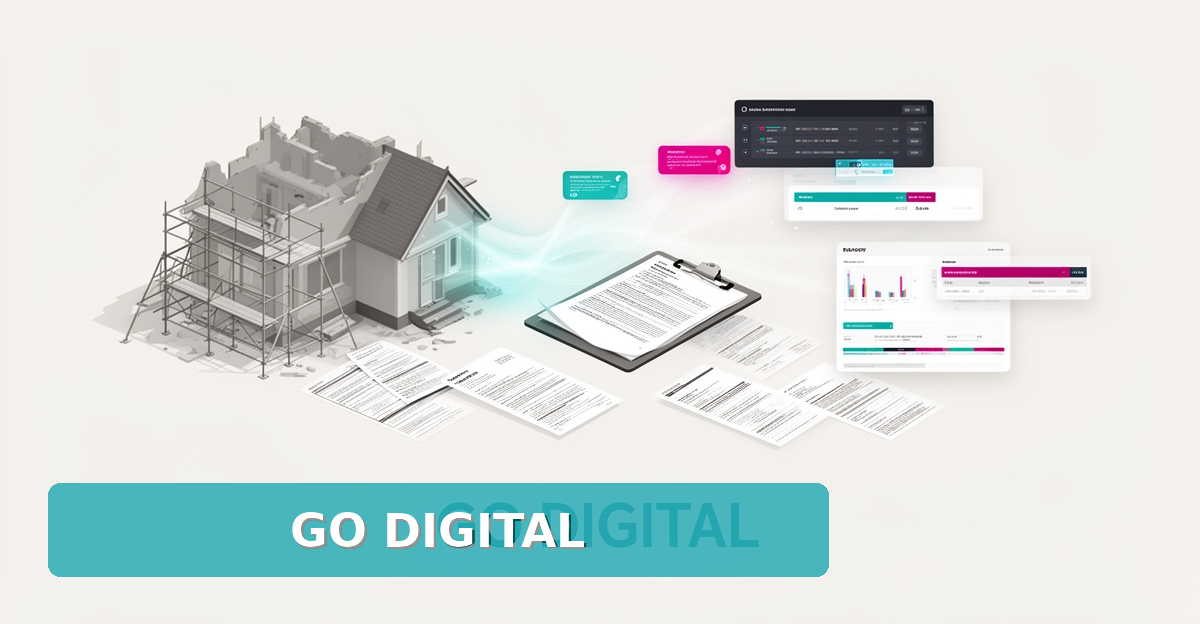
Why Most Disaster Rebuild Contractors Still Use Paper-Based Progress Reports (And How to Fix It)
Key Facts
- AI progress tracking reduces manual tracking time by 95% compared to traditional efforts.
- Switching to AI tracking lowers monthly project management costs by 16%.
- AI-driven projects are delivered 11% faster than those using manual methods.
- AI systems process visual site data within 4 to 24 hours for near-real-time updates.
- Contractors can begin AI tracking in less than 2 weeks after submitting BIMs.
- Weekly or biweekly site captures with 360-degree cameras provide consistent insights.
- AI tools consolidate five or more disparate platforms into single interfaces.
What if you could hire a team member that works 24/7 for $599/month?
AI Receptionists, SDRs, Dispatchers, and 99+ roles. Fully trained. Fully managed. Zero sick days.
The Paper Trap: Why Manual Tracking Fails in Disaster Rebuilds
Disaster rebuilds operate under extreme pressure, where every hour of delay translates to financial loss and homeowner anxiety. Yet, many contractors still rely on paper-based progress reports that introduce dangerous delays and subjective interpretations into critical workflows.
Manual tracking creates a "trust gap" between the job site and stakeholders who demand objective proof of completion. When progress updates are delayed, subjective, or inconsistent, contractors face payment disputes and eroded client confidence.
Paper reports are inherently subjective, leading to conflicting narratives about project status. Without visual evidence, disputes arise over whether work was actually completed or merely started.
Consider the case of a disaster rebuild where a contractor submitted paper forms claiming framing was complete. Insurance adjusters, lacking visual proof, disputed the timeline, delaying payments by weeks. Visual AI tracking eliminates this ambiguity by providing timestamped, objective data that aligns all parties.
Key statistics reveal the inefficiency of manual methods:
- AI-driven tracking reduces time spent on progress reporting by 95% compared to manual efforts, according to Doxel.
- Contractors see a 16% reduction in monthly project management costs when switching from manual to automated systems, as reported by Doxel.
- Projects utilizing AI progress tracking are delivered 11% faster than those relying on traditional manual tracking methods, Doxel notes.
This data highlights that manual tracking is not just inefficient—it is financially unsustainable in high-stakes environments.
Paper-based systems create information silos that prevent real-time decision-making. When progress data is trapped in notebooks or local files, it cannot be instantly shared with executives, clients, or subcontractors.
This delay prevents proactive management. Instead of addressing schedule risks immediately, managers react to problems days after they occur. AI-driven visual reporting solves this by providing near-real-time updates that sync automatically with project management tools.
Visual reporting enhances stakeholder alignment through:
- Immediate Visibility: CFOs and executives can instantly see project status without waiting for weekly meetings, Doxel reports.
- Objective Evidence: AI provides consistent, objective data that builds owner confidence in on-time delivery, according to Doxel.
- Proactive Alerts: Modern AI platforms predict schedule delays before they happen, allowing for early intervention rather than reactive fixes, Track3D explains.
By shifting from reactive paper trails to proactive digital insights, contractors regain control over their timelines.
In disaster recovery, trust is the most valuable currency. Homeowners and insurers need certainty that their investment is progressing as planned. Paper reports offer no such certainty; they are easily lost, altered, or misinterpreted.
AI-driven progress tracking acts as a "trust engine," providing undeniable visual proof of work-in-place. This transparency reduces disputes and accelerates payment cycles, which is critical for cash flow in rebuild projects.
Implementing AI tracking offers three immediate benefits:
- Fact-Based Alignment: Stakeholders are "on the same page with facts" rather than subjective opinions, Doxel notes.
- Historical Analysis: Detailed data at the trade level allows builders to analyze production rates and improve future performance, Track3D reports.
Eliminating paper traps requires more than just new software; it requires a strategic shift toward automated, objective data collection.
The AI Solution: From Subjective Reports to Objective Data
Disaster rebuild contractors often rely on subjective paper reports that create trust gaps with insurers and homeowners. This manual approach is prone to human error and fails to provide the granular, objective data required for accurate decision-making.
By digitizing site data through computer vision and machine learning, contractors can eliminate guesswork. AI systems analyze visual data against Building Information Models (BIM) to provide precise, verifiable progress tracking.
The core of this transformation is capturing physical reality and converting it into digital truth. Contractors can use simple 360-degree cameras or smartphones to capture site imagery during weekly or biweekly walks.
These visual inputs are processed by AI algorithms that compare "what is" against "what was planned." The result is near-real-time data that removes bias from progress reporting.
- Automated Visual Capture: Use smartphones or 360° cameras for consistent site documentation
- BIM Integration: Sync visual data directly with existing Building Information Models
- Granular Tracking: Monitor progress down to the specific trade or component level
This method replaces subjective "he said/she said" narratives with timestamped visual evidence. Stakeholders, including CFOs and insurance adjusters, can instantly see exactly what has been built without interpreting complex Gantt charts.
Objective data builds trust faster than any verbal assurance. In high-stakes disaster rebuilds, proving progress is just as important as completing the work. AI-driven tracking provides the irrefutable proof needed to justify payment requests and manage stakeholder expectations.
According to Doxel’s industry research, implementing AI progress tracking reduces project management costs by 16% and accelerates project delivery by 11%. These metrics demonstrate that objectivity directly impacts the bottom line.
Furthermore, the operational efficiency gains are staggering. The same research indicates that AI tools cut the time spent on tracking and communication by 95% compared to manual efforts. This allows project teams to focus on execution rather than administration.
Traditional paper reports are historical records; they tell you what happened yesterday. AI systems are predictive; they tell you what will happen tomorrow. By analyzing trends in visual data, AI can forecast schedule delays before they occur.
This shift from reactive to proactive management is critical for disaster rebuilds where timelines are often tight and resource-constrained.
- Delay Prediction: AI identifies potential schedule bottlenecks weeks in advance
- Resource Optimization: Data-driven insights help allocate manpower more effectively
- Early Issue Detection: Spot quality or compliance issues before they become costly reworks
As noted by industry experts, this data-driven improvement allows builders to analyze historic production rates and continuously refine their operations. It transforms site data from a compliance requirement into a strategic asset.
Technology only adds value if it integrates seamlessly into existing workflows. The best AI solutions are "field-first," designed to improve the quality of life for builders rather than adding administrative burden.
Implementation should be swift, taking less than two weeks from BIM delivery to active tracking. This rapid deployment ensures that contractors see immediate ROI without disrupting ongoing operations.
Effective automation requires connecting these insights to established project management tools like Procore or Autodesk Construction Cloud. AIQ Labs specializes in building these seamless integrations, ensuring that objective data flows directly into the systems your team already uses. This eliminates data silos and creates a single source of truth for the entire project.
With objective data in hand, the next challenge is automating the workflows that depend on it.
The ROI of Automation: Time, Cost, and Speed
Disaster rebuild contractors often cling to paper-based progress reports out of habit, not necessity. This manual reliance creates blind spots that cost time, money, and client trust. Switching to AI-driven tracking transforms subjective guesswork into objective, real-time data.
The shift from manual entry to automated visual analysis delivers immediate, measurable returns. Contractors stop spending hours reconciling schedules and start fixing critical path issues. This section details the specific efficiency gains and cost reductions you can expect.
Manual progress tracking is a significant bottleneck in disaster recovery. It diverts skilled superintendents from actual reconstruction to administrative data entry. AI-driven systems eliminate this friction by automating data capture and analysis.
According to Doxel’s industry research, contractors experience a 95% reduction in time spent tracking progress compared to manual efforts. This massive time savings allows teams to focus on rebuilding rather than reporting.
Furthermore, AI processing speeds provide actionable insights when they matter most. The system processes captured visual data within 4-24 hours, delivering near-real-time updates. This speed ensures that decision-makers are never working with stale information.
- 95% less time spent on manual tracking duties
- 11% faster overall project delivery speeds
- 4-24 hour processing time for visual site data
- Weekly or biweekly capture frequency for consistent insights
This efficiency is not just about speed; it’s about accuracy. Automated systems remove human error from the equation, ensuring that every reported percentage is backed by visual evidence.
Labor costs are the largest expense in construction management. Manual reporting requires multiple staff hours daily just to compile status updates. By automating this workflow, contractors can significantly lower their overhead.
Doxel reports a 16% reduction in monthly project management costs after implementing AI tracking. This saving comes from reduced administrative hours and fewer rework cycles caused by miscommunication.
In disaster rebuilds, where margins are often tight due to insurance caps, a 16% cost reduction is substantial. These savings can be reinvested into better equipment, faster material procurement, or higher technician wages.
Time is money in disaster recovery. Homeowners need their lives restored quickly, and delays damage reputations. AI tracking provides the visibility needed to keep projects on schedule.
Automated systems predict schedule delays before they happen. Instead of reacting to missed deadlines, contractors can proactively adjust resources. Track3D’s platform analysis highlights that AI enables proactive timeline management rather than reactive damage control.
The implementation timeline is also minimal. Contractors can be up and running in less than 2 weeks after sending their Building Information Model (BIM). This quick setup means ROI begins almost immediately.
- 16% lower monthly project management costs
- < 2 weeks to implement after BIM submission
- Proactive delay predictions vs. reactive fixes
- Elimination of costly rework from miscommunication
By automating the "how" and "when" of progress reporting, contractors gain the speed necessary to win more bids and retain more clients. This operational shift creates a scalable foundation for growth.
Implementation: The Field-First AI Workflow
Moving from paper to digital progress tracking doesn’t require a complete operational overhaul. The most effective AI implementations prioritize ease of use, ensuring field teams can adopt new technology without extensive retraining or complex setup procedures.
By focusing on quick setup and seamless integration, contractors can deploy automated reporting systems that work alongside existing tools like Procore or Autodesk Construction Cloud. This approach eliminates the friction often associated with new software, making AI adoption a practical step rather than a disruptive challenge.
The barrier to entry for AI progress tracking has lowered significantly. Modern solutions are designed to integrate directly into the workflows contractors already use, rather than forcing them to learn entirely new platforms.
- Instant Syncing: Automated systems connect with project management tools to update timelines and budgets in real-time.
- Minimal Training: Field staff can begin using smartphone or 360-degree camera captures immediately with little to no training.
- Centralized Data: Visual data flows directly into existing dashboards, eliminating the need for separate reporting portals.
This streamlined approach ensures that the technology serves the team, not the other way around. When setup is effortless, adoption rates increase, and the transition from manual methods becomes seamless.
One of the most compelling advantages of modern AI progress tracking is the speed at which it delivers results. Unlike traditional software implementations that can take months, AI-driven solutions can be operational in a matter of days.
According to industry data from Doxel, contractors can achieve full implementation in less than two weeks after providing their Building Information Models (BIM). This rapid deployment allows businesses to start capturing value almost immediately, rather than waiting for a lengthy rollout process.
The shift to AI-driven tracking offers immediate, quantifiable improvements in project management efficiency. By automating the collection and analysis of site data, contractors can reclaim significant time and reduce operational costs.
Research from Doxel indicates that AI progress tracking leads to a 95% reduction in time spent on manual tracking and communication tasks. Additionally, companies report a 16% decrease in monthly project management costs and projects that are completed 11% faster than those relying on traditional methods.
These statistics highlight that AI is not just about digitization; it is about drastic efficiency gains. For disaster rebuild contractors, where speed and accuracy are critical to stakeholder trust, these improvements are transformative.
To implement this field-first workflow, contractors should start by identifying their primary pain point: is it data entry, schedule adherence, or stakeholder reporting? AIQ Labs can help build a custom solution that integrates with your current tech stack, ensuring you own the system and avoid vendor lock-in.
The next step is to assess your current data readiness and explore how custom AI workflows can automate your specific progress reporting needs.
Conclusion: Building Trust Through Technology
The transition from paper-based progress reports to AI-driven automation is no longer just an operational upgrade; it is a strategic imperative for disaster rebuild contractors. By replacing subjective paperwork with objective, visual data, you transform your reporting into a "trust engine" that aligns all stakeholders. This shift ensures that owners, insurers, and project managers are viewing the same factual reality, eliminating the guesswork that often delays funding and settlement.
Manual tracking methods are inherently reactive and prone to human error, which erodes confidence in delivery timelines. In contrast, AI systems provide near-real-time progress tracking that captures visual evidence of work-in-place. This allows teams to move from simply documenting the past to proactively managing the future of the project.
Disaster rebuilds involve high-stakes environments where trust is the currency of success. Homeowners and insurance adjusters need proof, not promises. AI-powered visual reporting provides the granular, timestamped evidence necessary to validate progress instantly. This level of transparency reduces disputes and accelerates payment cycles by providing undeniable proof of completed work.
According to industry leaders, this shift delivers measurable efficiency gains across the board:
- 95% Less Time spent on manual tracking and communication efforts
- 16% Reduction in monthly project management and administrative costs
- 11% Faster overall project delivery speeds due to streamlined workflows
As noted by Nikki Lux, Schedule Coordinator at QTS Data Centers, AI tracking is valuable because it is "objective," consistently giving owners confidence in on-time delivery. This objectivity is crucial in disaster scenarios where emotional stakes are high and delays are unacceptable.
Traditional paper reports only tell you what happened yesterday. AI-driven systems analyze visual data against Building Information Models (BIM) to predict schedule delays before they occur. This capability allows contractors to adjust manpower and resources in real-time, ensuring that critical path activities remain on track.
The implementation barrier is lower than ever. With modern solutions, you can achieve less than 2 weeks to get started after sending the initial BIM data. By utilizing simple capture methods like smartphones or 360-degree cameras, you eliminate the need for specialized tech teams while integrating seamlessly with existing tools like Procore or Autodesk.
As Todd Gantter, Sr. Project Superintendent at Sundt Construction, highlights, visual reports allow executives to "instantly see where the project is at and assess schedule risks." This ensures everyone is "on the same page with facts" rather than subjective interpretations.
AIQ Labs specializes in building custom AI workflows that digitize, analyze, and auto-update project timelines for disaster rebuild contractors. We replace fragmented manual processes with unified, owned digital assets that sync directly with your project management tools.
Contact AIQ Labs today to discover how we can architect your competitive advantage.
Still paying for 10+ software subscriptions that don't talk to each other?
We build custom AI systems you own. No vendor lock-in. Full control. Starting at $2,000.
Frequently Asked Questions
Does switching to AI progress tracking actually save us money compared to our current paper-based system?
How long does it take to get our AI progress tracking system up and running?
Will our field teams struggle to learn a new complex software platform?
How does AI help resolve payment disputes with insurance adjusters or homeowners?
Can the system help us predict schedule delays before they happen?
Does this technology require expensive new hardware for our foremen?
From Paper Traps to AI Precision: Reclaiming Profit in Disaster Rebuilds
Relying on paper-based progress reports in disaster rebuilds is no longer just an inconvenience; it is a financial liability that fuels payment disputes, delays, and eroded trust. As the data shows, manual tracking creates information silos that prevent real-time decision-making, while AI-driven solutions can reduce reporting time by 95% and cut project management costs by 16%. For contractors, the transition from subjective paperwork to objective, visual AI tracking is the key to eliminating the 'trust gap' and ensuring faster, more profitable project delivery. AIQ Labs specializes in turning these inefficiencies into competitive advantages through custom AI development. We build automated reporting systems that digitize, analyze, and auto-update project timelines and budgets, syncing seamlessly with your existing project management tools to drastically reduce human error. Don’t let outdated workflows drain your margins. Contact AIQ Labs today to discover how we can architect your competitive advantage and transform your operational efficiency.
Ready to make AI your competitive advantage—not just another tool?
Strategic consulting + implementation + ongoing optimization. One partner. Complete AI transformation.