Why Most Dumpster Rental Companies Still Use Paper-Based Records (and How to Fix It)
Key Facts
- Commercial dumpster providers typically operate across dozens of states with contracts often spanning one to three years, a scale paper logs struggle to support
- A single coffee spill on a dispatch clipboard can erase an entire week of service history, customer preferences, and pricing agreements
- Dumpster sizes commonly range from 2 to 40 yards to handle everything from residential cleanouts to commercial demolition projects
- Manual record-keeping prevents demand forecasting, leaving trucks underutilized during peak seasons and overbooked during lulls
- AI-powered digitization transforms static paper logs into real-time tracking for dumpster locations, usage, and optimized routing
- Digital records reduce administrative overhead and minimize errors compared to manual entry, which compounds mistakes across dispatch and billing
- Companies using AI to analyze service history and booking patterns can predict future demand and optimize resource allocation instead of guessing
Hire a team member that works 24/7 — for less than a part-time wage.
AI receptionists, SDRs, dispatchers and 99+ roles. Trained on your business, fully managed.
Not sure where to start? Ask our AI planner
The Hidden Costs of Paper-Based Dumpster Records
A single coffee spill on a dispatch clipboard can erase an entire week of service history, and that vulnerability is exactly why paper logs remain a silent profit killer. When records live only on clipboards and in filing cabinets, they're one flood, fire, or misplaced folder away from disappearing forever — taking customer preferences, pricing agreements, and route optimizations with them.
Manual record-keeping creates cascading inefficiencies across the operation. Human error in handwritten logs compounds over time, making it nearly impossible to track service history accurately or identify booking trends that drive smarter fleet deployment. Without digitized data, companies cannot analyze customer behavior patterns or forecast demand with any precision, leaving trucks underutilized during peak seasons and overbooked during lulls. These gaps force reactive decision-making instead of strategic planning, directly inflating operational costs and degrading the customer experience that builds loyalty in a competitive market.
- Physical records face irreversible loss from damage, misplacement, or natural disasters
- Manual entry errors compound across dispatch, billing, and customer communication
- Inability to analyze historical patterns prevents demand forecasting and route optimization
- Administrative overhead grows linearly with every new contract and service call
- No audit trail for compliance, disputes, or service verification
Digitizing these workflows transforms raw service data into a strategic asset. AIQ Labs helps dumpster rental operators build custom AI pipelines that ingest historical logs, automate data extraction, and surface predictive insights — from optimal container sizing recommendations to proactive reorder triggers based on customer lifecycle patterns. The shift from reactive paperwork to proactive intelligence isn't just modernization; it's the difference between guessing demand and knowing it.
How AI Transforms Dumpster Data into Actionable Intelligence
Paper logs were built for a slower industry. Today they create blind spots that cost dumpster rental companies time, revenue, and customers.
Manual record-keeping is time-consuming and prone to human error, making it difficult to track service history, customer preferences, and booking trends effectively. This lack of organized data hinders informed decision-making and strategic planning across the sector.
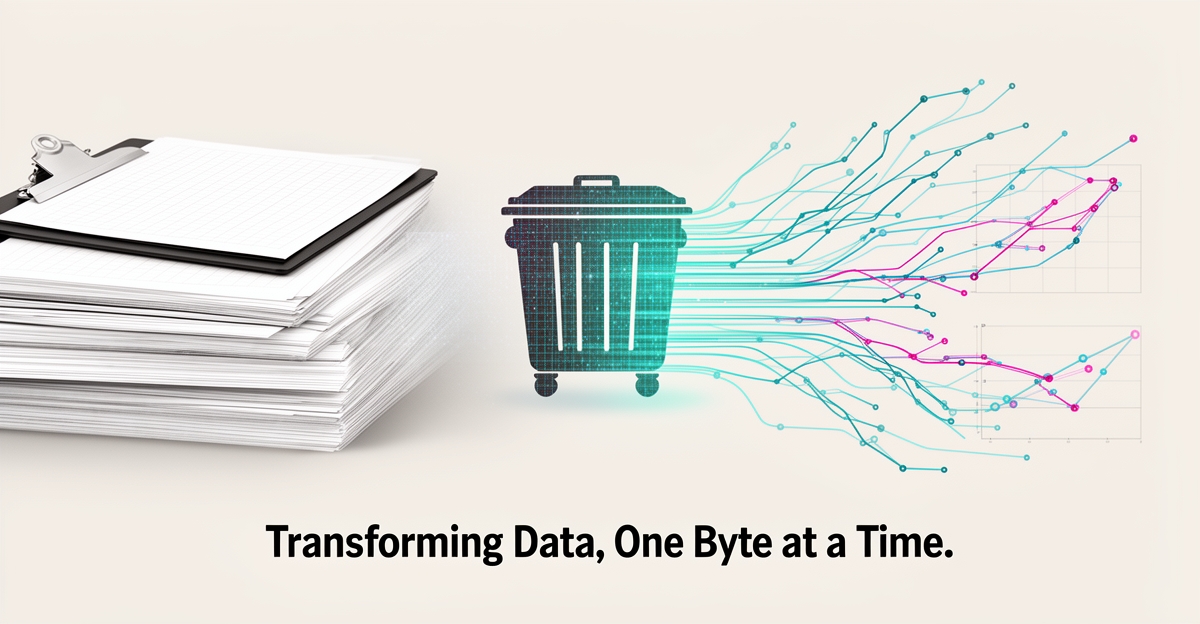
AI-powered digitization changes static records into live operational intelligence. By capturing service history, customer behavior, and booking patterns in digital pipelines, companies gain real-time visibility instead of retrospective guesswork.
Real-time tracking replaces lost paperwork. Digital databases enable instant access to dumpster locations, usage, and service windows, which supports better fleet management and optimized routing. Commercial operators running multi-state fleets with long-term contracts simply cannot support that scale on paper.
Predictive demand forecasting becomes possible when historical data is structured. AI can analyze patterns in customer behavior, predict future demand, and optimize resource allocation. This is critical as demand fluctuates with project types and seasons.
Customer behavior analysis unlocks pricing and service improvements. AI-powered analytics provide valuable insights into customer needs, allowing for personalized service offerings and targeted marketing campaigns — and customer expectations for convenience and responsiveness keep rising, especially in dense urban markets where professional moving and cleanup services are increasingly the norm.
The transformation turns three core data streams into decisions:
- Service history digitized for instant retrieval and trend detection
- Booking patterns analyzed to forecast demand by size and location
- Customer behavior tracked to personalize offers and retention
With digital records, routing, inventory, and pricing decisions shift from reactive to proactive. Companies can right-size fleet deployment, reduce idle assets, and align pricing with actual utilization rather than assumptions.
Data-driven decision making is no longer optional in a competitive market. Leveraging AI to analyze data allows dumpster rental companies to make informed decisions about pricing, service offerings, and marketing strategies.
AIQ Labs integrates AI into data pipelines to create actionable insights, helping SMBs move from paper risk to digital advantage. The result is improved operational efficiency, enhanced customer service, and increased profitability through intelligence that paper logs can never provide.
From Paper to AI: A Practical Implementation Path for SMBs
Paper logs slow dumpster rental companies down exactly when demand is picking up. Manual files create blind spots in service history, customer behavior, and booking patterns that AI can now digitize and analyze.
A low-risk path starts with a single broken workflow, not a full overhaul. Companies map the most time-consuming paper process — typically booking, dispatch, or invoicing — and replace it with a custom AI workflow that integrates with existing tools. This creates immediate visibility without forcing a complete system change.
Digitization delivers instant access where manual retrieval once ruled. The comparison is stark: traditional paper records rely on physical files and manual retrieval, while AI-powered digital records enable instant access and automated, in-depth analysis. Error potential drops and scalability rises as data moves from desk drawers to a digital source of truth.
From there, teams expand to data pipelines that track service history, customer preferences, and booking trends in real time. AI analyzes historical data to identify patterns in customer behavior, predict future demand, and optimize resource allocation. That insight supports pricing, fleet deployment, and targeted marketing instead of guesswork.
AIQ Labs aligns this approach with SMB-friendly models that prioritize ownership and practical results. You can start with an AI Workflow Build for one critical pain point at a fixed price, then scale toward an AI Operating System as confidence grows — a connected layer you own outright. AI Employees can handle intake, scheduling, and follow-up around the clock while learning from each interaction, at a fraction of the cost of a human hire.
A practical implementation path looks like this:
- Audit paper touchpoints and pick one high-impact workflow to digitize first
- Connect existing CRM, accounting, and dispatch tools via API so data syncs automatically
- Deploy a pilot AI Employee for bookings or dispatch and measure time saved and error reduction
- Scale to predictive analytics for demand forecasting and personalized service offers
Market pressure makes this shift timely. Customer expectations for fast, reliable waste services keep rising, and commercial contracts often run one to three years, underscoring the need for long-term visibility that paper cannot provide.
With digital records, companies gain real-time tracking of dumpster locations and usage for better fleet management and optimized routing. Automated billing reduces administrative overhead and minimizes errors, while AI-powered analytics reveal customer needs for personalized service offerings and targeted campaigns.
The result is data-driven decision making that replaces reactive firefighting with proactive planning. As AIQ Labs integrates AI into data pipelines, dumpster rental SMBs can create actionable insights from service history and booking patterns while maintaining full ownership of the systems they build.
Still paying for 10+ subscriptions that don’t talk to each other?
We build custom AI systems you own outright. No vendor lock-in. Full control.
Not sure where to start? Ask our AI planner
Frequently Asked Questions
Why do so many dumpster rental companies still rely on paper logs?
What's the biggest downside of paper-based service records?
Can AI actually help forecast dumpster demand and optimize routes?
What dumpster sizes and contract terms are common for commercial customers?
How do I start digitizing without replacing my whole system?
Is demand for professional waste services actually growing?
Turning Paper Trails into Profit Paths
The shift from paper-based records to AI-powered intelligence isn't just about modernization—it's about reclaiming control over data that directly impacts profitability and customer trust. As we've seen, paper logs create avoidable risks: lost history, compounding errors, and blind spots that prevent smarter fleet deployment and demand forecasting. By digitizing workflows—starting with a single high-impact process like booking or invoicing—dumpster rental operators gain real-time visibility, reduce administrative overhead, and unlock predictive insights that drive proactive decisions. AIQ Labs helps SMBs make this transition practical and ownership-focused, building custom AI pipelines that turn service history into strategic advantage without vendor lock-in. The result is clearer routing, optimized inventory, and personalized service that keeps customers coming back. Ready to see where your biggest bottleneck hides? Start with a free two-minute Fit Check to map your highest-ROI automation opportunity—no obligation, just clarity on your path forward.
Make AI your competitive advantage — not just another tool.
Strategy, implementation and ongoing optimization. One partner, end to end.
Not sure where to start? Ask our AI planner