Why Most Fleet Fuel Card Providers Fail at AI Implementation (And How to Avoid It)
Key Facts
- AI fleet management saves $54,000–$120,000 per year compared to manual dispatch according to industry analysis
- Fleets of 20+ vehicles recover their entire annual software cost within the first month of AI implementation per operational efficiency studies
- AI-powered theft and fraud detection flags suspicious events within 5-10 seconds as noted in fleet management research
- Southwind reduced annual fuel costs by $500,000 across a 1,000-vehicle fleet by adopting AI-powered solutions per case study results
- Organizations using Motive fuel insights achieve up to 13% improvements in fuel efficiency per research findings
- Fleets using driver coaching analytics report up to 79% fewer hard acceleration events per behavioral analytics data
- AI-optimized routes result in 10-15% fuel savings by eliminating unnecessary mileage and idle time per operational efficiency studies
Hire a team member that works 24/7 — for less than a part-time wage.
AI receptionists, SDRs, dispatchers and 99+ roles. Trained on your business, fully managed.
Not sure where to start? Ask our AI planner
The Core Problem: Why AI Fails in Fleet Fuel Management
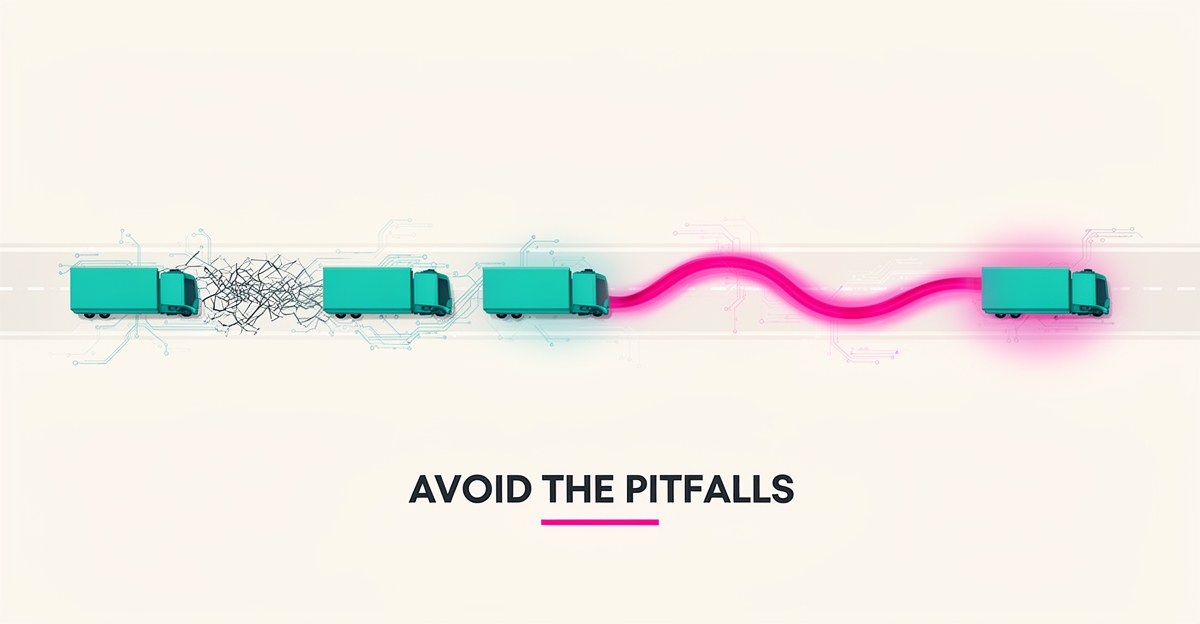
The stakes couldn't be higher: fuel represents 30-40% of total fleet operating costs, making it the largest controllable expense most fleets have. Yet when fleet fuel card providers rush to add AI, most implementations quietly underdeliver—and the reasons are almost always the same three pitfalls.
Pitfall #1: Garbage In, Garbage Out
AI is only as good as the data feeding it. Fleet fuel management demands the integration of multiple data streams—telematics, driver behavior metrics, fuel card transactions, route data, and maintenance diagnostics—into a unified platform. When these sources aren't synchronized or contain inconsistencies, the AI cannot accurately detect fraud, inefficiency, or optimization opportunities.
This is why AI-driven fleet fuel management software that connects telematics data, driver behavior analytics, and fuel card transactions in one platform consistently outperforms fragmented point solutions. Without a single source of truth, even sophisticated algorithms produce unreliable insights.
Pitfall #2: No Stakeholder Buy-In
Even technically sound systems fail when the people expected to use them resist. Successful implementations require engagement from operations managers, finance teams, IT departments, drivers, and executive leadership. Without it, fleets face resistance to change, under-resourced rollouts, and no governance structure to keep the initiative on track.
The consequences are measurable. Fleets that use driver coaching analytics report up to 79% fewer hard acceleration events—but only when drivers and managers actually adopt the tools. AI capability without human adoption delivers zero return.
Pitfall #3: Off-the-Shelf Tools Without Customization
Fleet operations vary enormously across industries, vehicle types, and regulatory contexts—ELD compliance, IFTA reporting, multi-depot versus single-depot structures, and regional fuel pricing all differ. Generic, one-size-fits-all tools inevitably produce suboptimal performance and user dissatisfaction.
The contrast is stark in the outcomes. Well-integrated, purpose-built systems can flag suspicious transactions within 5-10 seconds and achieve more than 90% accuracy in fraud detection, while static rule-based systems miss complex fraud patterns entirely. Southwind, for example, reduced annual fuel costs by $500,000 across a 1,000-vehicle fleet by adopting AI-powered solutions tailored to its operations.
The Common Thread: No Business Case
Underlying all three pitfalls is a missing foundation—a clear business case with baseline measurements, financial projections, and defined KPIs. Organizations that skip this step can't measure ROI or sustain investment. This is precisely why a structured readiness assessment matters: at AIQ Labs, transformation consulting begins with evaluating data infrastructure, building the business case, and involving key teams before any system is built—so the AI evolves with the business rather than failing against it.
Avoid these three pitfalls, and AI stops being an expensive experiment and becomes what it should be: a measurable driver of fuel savings. [Learn more about AIQ Labs' AI Workflow Builds](/workflow-builds).
Building the Business Case: The Foundation for Success
The most successful fleet AI implementations don't start with technology selection—they begin with a rigorous business case that quantifies current inefficiencies and maps a path to measurable returns. Without this foundation, even the most sophisticated AI systems become expensive experiments rather than profit drivers.
Fuel represents 30-40% of total fleet operating costs, making it the largest controllable expense for most operations. Yet many providers rush to deploy AI tools without establishing baseline metrics or financial projections, leaving stakeholders skeptical and budgets vulnerable. When AI fleet management delivers $54,000–$120,000 in annual savings compared to manual dispatch, the difference between success and failure often comes down to preparation, not technology.
Building a compelling business case requires documenting your current state before touching any new systems. This baseline becomes your benchmark for proving value and securing ongoing investment.
- Establish a 30-day baseline measuring current MPG, idling hours, fuel cost per mile, and incidents of theft or fraud
- Calculate your manual processing costs—manual dispatching typically costs 25% more in total operating expenses than AI-optimized alternatives
- Project specific savings targets based on industry benchmarks: 10-15% fuel reductions from route optimization, 20-35% cuts in overtime and idle time
- Set realistic timeline expectations using the 1-3 month break-even period typical for AI implementations
Financial projections must account for both hard savings and operational efficiencies. While fleets of 20+ vehicles often recover their entire annual software cost within the first month, your business case should model conservative, moderate, and aggressive scenarios. Include the hidden costs of manual processes—for a 25-vehicle fleet, manual dispatch translates to over $72,000 in annual losses from fuel inefficiency, overtime, and administrative overhead.
Timeline expectations require equal precision. Modern platforms deploy in 1-2 weeks, with hardware installation taking 30-60 minutes per vehicle and software setup completing within the first week. However, achieving the documented 280% Year 1 ROI demands patience during the initial 30-day baseline period and disciplined tracking against your established KPIs.
This methodical approach to business case development mirrors the framework AIQ Labs applies in AI transformation consulting, where readiness assessments and ROI modeling precede any technical implementation. By treating your AI initiative as a financial investment with defined milestones rather than a technology upgrade, you create the accountability structure necessary to navigate organizational resistance and secure executive sponsorship.
When stakeholders see concrete numbers—$4,500–$10,000 in monthly savings potential against documented baseline costs—resistance transforms into advocacy. The business case becomes your roadmap not just for approval, but for measuring success long after the initial deployment excitement fades.
Implementation That Works: Phased Rollout and Integration Strategy
A proven implementation approach starts small and scales with confidence, turning AI potential into measurable results. Research shows that fleets of 20+ vehicles recover their entire annual software cost within the first month of AI implementation according to industry analysis. This rapid payback is achievable through a structured phased rollout that begins with a targeted pilot program.
The most successful implementations follow a three-stage expansion strategy: pilot, regional, and enterprise-wide. During the pilot phase, organizations deploy the system on a representative subset of vehicles—typically 5-10% of the fleet—to validate savings, refine processes, and build leadership buy-in. This approach allows teams to test telematics and fuel card data integration, establish baseline measurements for key metrics like miles per gallon and idle time, and demonstrate early wins in route optimization and fraud detection before broader deployment.
Real-time capabilities deliver immediate value when properly integrated. AI-powered theft and fraud detection can flag suspicious events within 5-10 seconds by cross-referencing vehicle GPS, fuel card transactions, and tank-level sensors as noted in fleet management research. Simultaneously, AI-optimized routes eliminate unnecessary mileage, poor stop sequencing, and idle time, resulting in 10-15% fuel savings through dynamic adjustments for traffic, weather, and delivery windows per operational efficiency studies. These combined capabilities create a foundation for scaling that delivers both cost savings and operational improvements.
- Establish 30-day baseline measurements for MPG, idling hours, and fuel cost per mile
- Deploy pilot program on 5-10% of fleet to validate integration and savings
- Enable real-time fraud detection and route optimization during initial rollout
- Scale regionally to test against diverse routes and operating conditions
- Achieve enterprise-wide deployment with continuous performance monitoring
The integration strategy focuses on unifying telematics, fuel card transactions, and driver behavior data into a single platform where AI can identify patterns invisible to manual analysis. Organizations that follow this phased approach consistently achieve break-even in 1-3 months and realize 3-year savings ranging from $162,000 to $360,000 for typical fleets based on longitudinal fleet performance data. This methodical progression ensures technical stability, user adoption, and measurable ROI at each stage—avoiding the common pitfalls of rushed implementations that fail to deliver sustainable value. AIQ Labs supports this structured approach through its [AI Operating Systems](/ai-operating-systems) service, guiding organizations through assessment, deployment, and optimization phases with enterprise-grade frameworks tailored to fleet operations.
Still paying for 10+ subscriptions that don’t talk to each other?
We build custom AI systems you own outright. No vendor lock-in. Full control.
Not sure where to start? Ask our AI planner
Frequently Asked Questions
Why do so many fleet fuel card providers fail when they try to add AI?
How much of my fleet budget is actually going to fuel?
Can AI really catch fuel theft fast enough to matter?
What kind of savings do fleets actually see with AI fuel management?
Do drivers actually use the coaching tools, or is it just another dashboard?
How long does it take to see a return on AI fuel management?
From Pilot to Profit: Making AI Work for Your Fleet
AI fails in fleet fuel management when it starts with technology instead of business fundamentals. The pattern is consistent: fragmented data creates garbage in, garbage out; off-the-shelf tools ignore industry-specific operations; and without stakeholder buy-in and a clear business case, even capable systems stall. Success comes from the opposite approach — establishing a 30-day baseline, unifying telematics, driver behavior and fuel card data into a single source of truth, and rolling out in phases from pilot to regional to enterprise-wide. Fuel represents 30-40% of total fleet operating costs, so the upside of getting this right is measurable and immediate. If you’re evaluating AI for fuel management, start with readiness, not vendors: map your data, define KPIs for MPG, idle time and fraud, and build the financial case before any build begins. That disciplined foundation is exactly what AIQ Labs supports through its [AI Operating Systems](/ai-operating-systems) service. Start the [Fit Check](/apply) at aiqlabs.ai/apply for a free 30-minute strategy call to map your biggest bottleneck and identify high-ROI automation opportunities — no pitch, just clarity.
Make AI your competitive advantage — not just another tool.
Strategy, implementation and ongoing optimization. One partner, end to end.
Not sure where to start? Ask our AI planner