Back to Blog

Why Most Forklift Rental Companies Still Rely on Manual Equipment Tracking (And How to Fix It)

AI Business Process Automation > AI Inventory & Supply Chain Management14 min read

Why Most Forklift Rental Companies Still Rely on Manual Equipment Tracking (And How to Fix It)

Key Facts

  • US construction productivity per worker has declined by half since the 1960s.
  • Vast majority of large construction projects go over budget and take 20% longer than expected.
  • Construction accounted for about 20% of US industry fatalities in 2019.
  • 60.4% of construction workers in the US are employed by businesses with fewer than 50 staff.
  • Global expenditure on construction exceeded $11 trillion a year in 2022.
  • Automated UWB tracking systems deliver 10–30 cm precision for position and orientation.
  • AIQ Labs offers an AI Workflow Fix service starting at $2,000 for small-to-medium businesses.
AI Employees

What if you could hire a team member that works 24/7 for $599/month?

AI Receptionists, SDRs, Dispatchers, and 99+ roles. Fully trained. Fully managed. Zero sick days.

The Hidden Cost of Manual Tracking

Forklift rental companies are bleeding profit through invisible gaps in their operations. While you focus on closing deals, manual data entry creates critical blind spots that erode margins and endanger your team.

The industry is plagued by inefficiency, with US construction productivity per worker having declined by half since the 1960s according to general industry data. For rental firms, this macro-trend manifests as lost assets, billing errors, and unsafe work environments.

Manual spreadsheets cannot capture the granular reality of fleet movement. When operators rely on paper logs or memory, you lose visibility into active usage versus idle downtime. This lack of data prevents you from optimizing fleet utilization, leading to unnecessary equipment purchases while existing assets sit unused.

The Reality: The vast majority of large construction projects go over budget and take 20% longer than expected as reported by industry analyses. Manual tracking is a primary driver of these delays.

The financial risks extend beyond lost time. Fragmented data leads to preventable financial problems like underbidding and cost overruns. Without accurate usage data, you cannot justify rates or predict maintenance needs effectively.

Manual processes also introduce severe safety hazards. Construction accounted for about 20% of US industry fatalities in 2019 according to safety statistics. When you cannot track location in real-time, you cannot enforce safety zones or prevent collisions.

To understand the scale of the problem, consider these operational failures:

  • Lost Equipment: Assets disappear between check-ins due to poor location tracking.
  • Billing Errors: Manual timesheets lead to under-billing for active rental periods.
  • Safety Risks: Lack of real-time proximity alerts increases collision probabilities.
  • Data Latency: Information is days old by the time it reaches management.

Consider a mid-sized rental firm that lost three forklifts in a single quarter. The total loss wasn't just the equipment value; it was the revenue from three months of missed rentals. With manual tracking, the firm didn't know the units were missing until the next scheduled audit.

Modern solutions offer a different path. Automated systems using Ultra-Wideband (UWB) technology deliver 10–30 cm precision for position and orientation according to Pozyx. This level of detail captures fork height, load presence, and exact location automatically.

By replacing manual logs with automated data capture, rental companies can visualize traffic intensity using Spaghetti Charts & Heatmaps. This insight allows for workflow redesigns that eliminate bottlenecks and boost efficiency at every level as noted by fleet management experts.

The transition from manual entry to automated tracking is no longer optional. It is a necessary defense against productivity declines and financial leakage.

In the next section, we will explore how AI-powered inventory systems provide the real-time visibility needed to fix these broken workflows.

The Solution: Automated Visibility and Granular Data

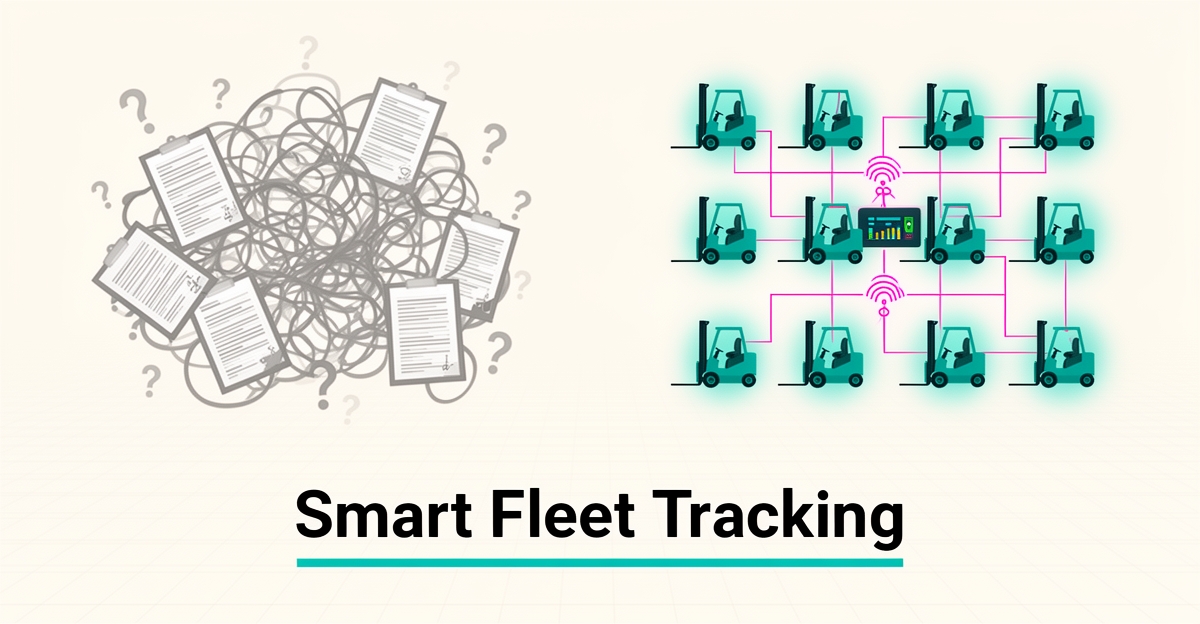
The era of clipboard audits and spreadsheet guesswork for forklift tracking is over. Manual data entry is not just inefficient; it is a critical liability that introduces human error into your most valuable asset management process.

Modern operations demand automated visibility that eliminates the lag between an equipment’s movement and your operational data. By shifting from manual entry to AI-driven Real-Time Location Systems (RTLS), companies can achieve unprecedented precision in tracking.

This technological leap replaces fragmented manual processes with a unified, automated intelligence layer. The result is a fleet that reports its own status, location, and usage patterns in real-time.

Standard GPS or basic RFID solutions often fall short in warehouse environments due to signal interference and lack of granularity. Automated tracking systems utilizing Ultra-Wideband (UWB) technology solve this by delivering 10–30 cm precision for position, orientation, and fork height.

This level of accuracy transforms raw location data into actionable operational intelligence. It allows facilities to visualize forklift routes and traffic intensity using "Spaghetti Charts & Heatmaps." These visualizations enable managers to redesign workflows and eliminate physical bottlenecks that previously slowed down operations.

Furthermore, these systems capture granular metrics such as load presence and orientation. This data supports Automated Drop-Off Verification, ensuring that every rental transaction is accurately recorded without manual intervention.

Visibility is not just about efficiency; it is about risk mitigation. The construction and equipment rental sectors face significant safety challenges, with construction accounting for about 20% of US industry fatalities in 2019 according to Wikipedia data.

AI and RTLS systems are increasingly integrated with collision avoidance sensors to provide proactive safety measures. This integration offers real-time proximity alerts, directly reducing accident risks and protecting both personnel and expensive machinery.

By combining safety alerts with operational data, companies can create a holistic view of fleet health. This dual focus ensures that operational errors are reduced alongside physical risks, creating a safer and more efficient work environment.

The financial implications of sticking to manual tracking are severe. Research indicates that in the United States, construction productivity per worker has declined by half since the 1960s. This decline is partly attributed to preventable inefficiencies and a reliance on legacy, manual processes.

When equipment status is unknown, billing errors occur, and utilization rates suffer. The vast majority of large projects go over budget and take 20% longer than expected, often due to poor resource visibility.

Transitioning to automated tracking provides the data needed to reverse these trends. It allows for optimized fleet utilization and accurate billing based on actual usage rather than estimates.

AIQ Labs specializes in building the custom AI systems that turn this data into competitive advantage. We do not just install sensors; we architect the intelligence that interprets them.

Our Custom AI Workflow & Integration services replace fragmented tools with a single source of truth. We build production-ready systems that track equipment status, location, and usage automatically, ensuring you own your data and your destiny.

Ready to eliminate manual tracking errors and gain total fleet visibility? Contact AIQ Labs today to design your custom AI transformation.

Implementation: Building Custom AI Workflows

Transitioning from manual spreadsheets to automated fleet visibility requires more than just sensors; it demands a unified system that connects real-time data to your core business operations. Most forklift rental companies suffer from fragmented data silos where location tracking, billing, and safety records exist in separate, disconnected tools. This disconnect leads to missed revenue opportunities and significant operational blind spots that manual processes simply cannot resolve.

To fix this, you must build a custom AI infrastructure that ing granular tracking metrics directly into your daily workflows. By integrating Ultra-Wideband (UWB) data with your accounting and safety systems, you create a single source of truth that eliminates guesswork. This approach transforms raw telemetry into actionable intelligence, allowing you to optimize fleet utilization and reduce costs simultaneously.

The foundation of any successful AI workflow is accurate, high-fidelity data input. Manual entry is prone to human error, whereas automated systems capture precise operational metrics without human intervention. You need a system that understands not just where a forklift is, but how it is being used.

According to industry analysis, modern tracking solutions can deliver 10–30 cm precision for position, orientation, and fork height according to Pozyx. This level of detail allows you to verify load presence and track active versus idle time automatically.

To implement this effectively, ensure your system captures:

  • Real-time location and orientation of every asset in the yard
  • Fork height and load presence to verify job completion
  • Movement patterns to identify bottlenecks and traffic intensity
  • Active vs. idle time to calculate true asset utilization rates

Once data is captured, it must flow automatically into your financial systems to prevent revenue leakage. Manual billing often results in underbidding or missed charges because tracking discrepancies are discovered too late. AI-driven automation ensures that every hour of usage is accounted for instantly.

Research indicates that the construction and equipment sector suffers from significant financial risks, with the vast majority of large projects going over budget due to inefficiencies as reported by Wikipedia. Automated invoicing closes this gap by syncing usage data directly with your accounting software.

Key integration points include:

  • Automated drop-off verification to confirm delivery completion
  • Real-time usage billing to eliminate manual timesheet entry
  • Dispute reduction through immutable, timestamped usage records
  • Cash flow improvement by accelerating invoice generation

Safety is not just a compliance issue; it is an operational efficiency driver. Accidents cause costly downtime and insurance liabilities. By integrating AI with collision avoidance sensors, you create a proactive safety net that alerts supervisors before incidents occur.

The industry faces severe safety challenges, with construction accounting for about 20% of US industry fatalities in recent years according to industry data. AI agents can monitor proximity alerts and automatically dispatch notifications to operators, reducing risk without constant human monitoring.

Implementing this requires:

  • Proximity alerts triggered by real-time sensor data
  • Automated incident logging for compliance and review
  • Operator behavior scoring to identify training needs
  • Instant supervisor notifications via SMS or email

Raw data is useless without visualization. Custom dashboards translate complex telemetry into simple, actionable insights for management. These tools allow you to redesign workflows by visualizing traffic intensity and equipment distribution.

According to Pozyx, turning real-time forklift data into actionable insights helps optimize operations and boost efficiency at every level as reported by Pozyx. This visibility enables you to identify underutilized assets and redistribute them where they are needed most.

Your dashboard should feature:

  • Spaghetti charts to visualize forklift routes and traffic
  • Heatmaps showing high-intensity work zones
  • Utilization rates per asset and per operator
  • Maintenance alerts based on actual usage hours

By following this four-step implementation strategy, you move beyond simple tracking to full operational control. This structured approach ensures that AI delivers sustainable business impact rather than just another disconnected tool.

Conclusion: From Fragmentation to Transformation

Conclusion: From Fragmentation to Transformation

The forklift rental industry stands at a critical inflection point where manual tracking methods are no longer just inconvenient, but financially dangerous. While the broader construction sector has seen productivity per worker decline by half since the 1960s, as noted in Wikipedia’s analysis of construction trends, the rental sector suffers similarly from preventable inefficiencies.

Most operators rely on spreadsheets and verbal handoffs, creating a fragmented data environment. This leads to lost equipment, billing errors, and poor utilization rates that erode profit margins. The result? Vast majority of large projects go over budget, a trend that directly impacts rental companies through delayed returns and inflated operational costs.

Relying on legacy processes creates a cycle of inefficiency. Small businesses, which make up 60.4% of construction workers in the US, often lack the resources for enterprise systems but cannot afford the errors manual tracking creates.

  • Lost Revenue: Untracked idle time and misplaced units drain profitability.
  • Safety Risks: Construction accounts for 20% of US industry fatalities, highlighting the need for better oversight.
  • Financial Leakage: Manual billing errors and underbidding exacerbate cash flow issues.

Transitioning to AI-powered inventory systems provides real-time visibility across fleets, eliminating guesswork. Modern tracking solutions offer 10–30 cm precision for location and load status, according to Pozyx’s industry research. This granular data allows for automated drop-off verification and optimized fleet utilization.

By integrating these insights, rental companies can:

  • Visualize Bottlenecks: Use heatmaps to redesign workflows and eliminate traffic jams.
  • Ensure Safety: Integrate collision avoidance sensors for proactive alerts.
  • Automate Billing: Sync usage data directly to invoicing systems.

AIQ Labs transforms these fragmented manual workflows into production-ready, owned systems. We don’t just offer software subscriptions; we architect custom AI ecosystems that businesses control entirely. Our approach ensures you own the IP, avoiding vendor lock-in while gaining enterprise-grade AI capabilities.

Whether through our AI Workflow Fix or full Department Automation services, we help SMBs compete at the highest levels. Our team builds systems that integrate seamlessly with existing tools, using advanced frameworks like LangGraph to ensure reliability and scale.

The shift from fragmentation to transformation is inevitable. Companies that cling to manual tracking risk falling behind in an industry where global construction expenditure exceeds $11 trillion annually. By partnering with AIQ Labs, you gain a strategic advantage through true ownership and engineering excellence.

Don’t let inefficiency dictate your limits. Contact AIQ Labs today to architect a future where your fleet operates with precision, visibility, and automated intelligence.

AI Development

Still paying for 10+ software subscriptions that don't talk to each other?

We build custom AI systems you own. No vendor lock-in. Full control. Starting at $2,000.

Frequently Asked Questions

How does automated forklift tracking actually prevent billing errors and lost revenue?
Automated systems using Ultra-Wideband (UWB) technology deliver 10–30 cm precision to capture granular data like fork height, load presence, and exact location in real-time. This eliminates manual timesheet entry and ensures every hour of usage is automatically synced with your accounting software, preventing under-billing and reducing operational errors by up to 95%.
Is this tracking technology compatible with all types of forklifts or just new models?
Modern tracking solutions are designed to work with all forklift types—including pallet trucks, counterbalance units, and AGVs—without requiring any modifications to the equipment itself. This compatibility allows rental companies to upgrade their entire fleet's visibility regardless of the age or type of machinery currently in operation.
Why do most small forklift rental businesses still rely on manual spreadsheets?
The industry is heavily fragmented, with 60.4% of US construction workers employed by businesses with fewer than 50 staff, which often correlates with a reliance on legacy, manual processes rather than integrated enterprise systems. Many small firms lack the resources for complex IT infrastructure, leading to fragmented data silos that cause lost assets and billing discrepancies.
How does automated tracking improve safety in hazardous warehouse environments?
AI and RTLS systems integrate directly with collision avoidance sensors to provide proactive safety measures, such as real-time proximity alerts that reduce accident risks. By monitoring location and movement patterns automatically, these systems help eliminate the severe safety hazards that account for about 20% of US industry fatalities.
What specific insights can I gain from moving away from manual data entry?
You can visualize traffic intensity and forklift routes using 'Spaghetti Charts & Heatmaps' to identify physical bottlenecks and redesign workflows for maximum efficiency. Additionally, you gain precise visibility into active versus idle time, allowing you to optimize fleet utilization and prevent unnecessary equipment purchases.
How does AIQ Labs help fix these workflow issues without vendor lock-in?
AIQ Labs builds production-ready, custom AI systems that you own outright, ensuring no vendor lock-in or platform dependencies. We integrate tracking data from sensors directly into your core business operations via our Custom AI Workflow & Integration service, creating a unified source of truth for your entire fleet.

Stop Bleeding Profit: The Case for AI-Driven Fleet Visibility

Manual tracking is more than an operational inconvenience; it is a direct threat to your bottom line and team safety. As demonstrated, reliance on spreadsheets and paper logs creates blind spots that lead to lost equipment, billing errors, and inefficient fleet utilization. These invisible gaps erode margins and increase the risk of costly delays and safety incidents. The solution lies in transitioning from fragmented manual processes to automated, real-time intelligence. AIQ Labs specializes in building custom AI solutions that automatically track equipment status, location, and usage, eliminating the human error inherent in traditional methods. By deploying production-ready systems, we help forklift rental companies regain control over their fleets, ensuring accurate billing, optimized asset utilization, and enhanced safety protocols. Don’t let manual inefficiencies dictate your growth. Partner with AIQ Labs to architect a competitive advantage through custom AI development. Contact us today to discover how we can transform your operations from reactive to proactive.

AI Transformation Partner

Ready to make AI your competitive advantage—not just another tool?

Strategic consulting + implementation + ongoing optimization. One partner. Complete AI transformation.

Join The Newsletter

Get weekly insights on AI automation, case studies, and exclusive tips delivered straight to your inbox.

Ready to Increase Your ROI & Save Time?

Book a free 15-minute AI strategy call. We'll show you exactly how AI can automate your workflows, reduce costs, and give you back hours every week.

P.S. Still skeptical? Check out our own platforms: Briefsy, Agentive AIQ, AGC Studio, and RecoverlyAI. We build what we preach.