Why Most Golf Courses Fail at AI Implementation (And How to Avoid It)
Key Facts
- Most golf courses get stuck at the 'Pilots' stage of the AI Maturity Curve, launching isolated tools like chatbots that never scale.
- Traditional golf management systems typically create data silos with separate modules for tee sheets, pro shop sales, and F&B operations, per technology comparisons.
- Seasonal and part-time staff turnover is high in golf hospitality—millennials in particular often leave jobs within the first two years, according to workforce trend research—outpacing AI training efforts.
- AI personalization on platforms like Netflix and Spotify relies on unified data streams per industry analysis—a standard most golf operations lack.
- Dynamic pricing can automatically adjust rates for seniors, juniors, weekend players, and cart preferences, per operational data.
- AI can analyze tee time selection, F&B orders, and pro shop purchases to predict future customer behavior, industry research shows.
- AIQ Labs' phased rollout—assess, pilot, prove, expand—starts with a single AI Employee and compounds value from there, with early wins typically visible within the first month.
Hire a team member that works 24/7 — for less than a part-time wage.
AI receptionists, SDRs, dispatchers and 99+ roles. Trained on your business, fully managed.
Not sure where to start? Ask our AI planner
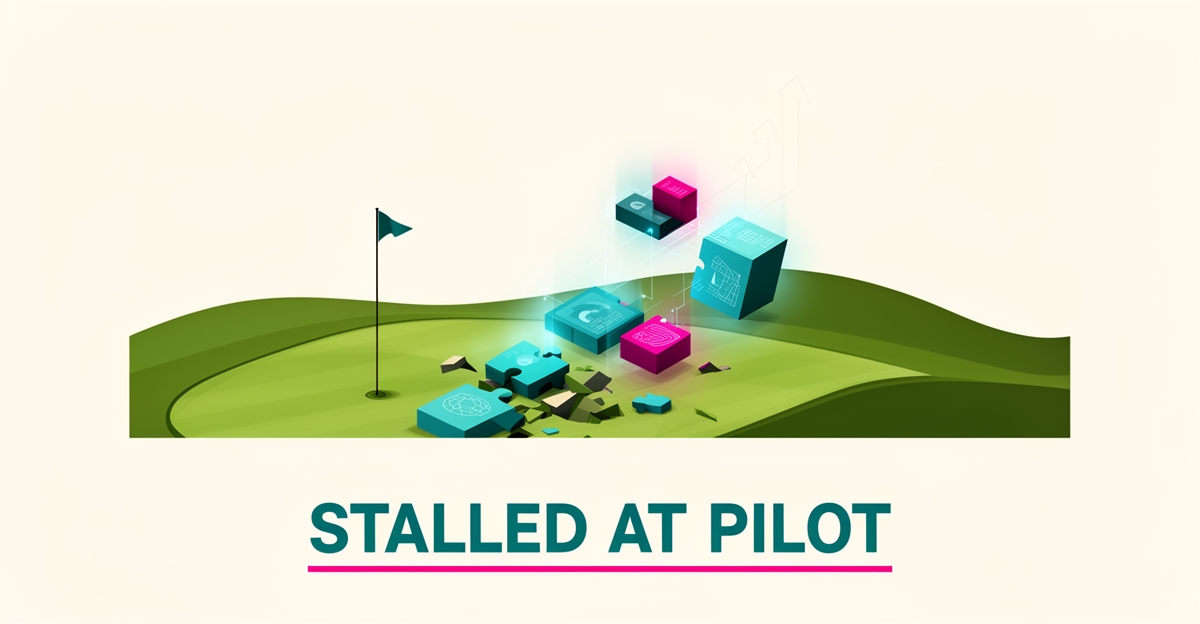
The Pilot Trap: Why Golf Course AI Projects Stall Before Scaling
The excitement around AI in golf course management often leads courses to launch isolated pilots—like chatbots for tee time inquiries or dynamic pricing modules—without the foundation to scale these experiments. This pattern traps many in the "Pilots" stage of the AI Maturity Curve, where promising tests never evolve into operational reality. According to industry analysis, the gap between AI's potential and actual implementation frequently stems from overlooked prerequisites like data readiness and staff capability. Courses may see short-term engagement from a chatbot handling basic questions, but without integrated data streams, the tool remains a siloed novelty rather than a scalable asset.
Traditional golf management systems exacerbate this challenge by design. As noted in technology comparisons, these platforms often feature separate modules for tee sheets, pro shop sales, and food and beverage operations, creating inherent data silos. When AI tools pull from only one system—say, pricing adjustments based solely on weekend rates—they miss critical context like member purchase history or pro shop inventory levels. This fragmentation prevents the holistic insights AI needs to deliver meaningful value, leaving courses with fragmented automation that can't coordinate across departments.
The result is a cycle of experimentation without progression. Staff trained to use a disconnected chatbot for membership inquiries can't leverage those interactions to inform inventory forecasting or personalized marketing because the data never flows between systems. Without addressing this infrastructure gap during the pilot phase—through a readiness assessment that evaluates data quality, integration needs, and team preparedness—courses invest in tools that deliver limited, isolated benefits. True scaling requires moving beyond isolated experiments to build the connected data ecosystem and operational processes that allow AI to function as a unified capability, not a collection of standalone features. To break free from the pilot trap, golf courses must first diagnose their readiness before deploying any AI solution.
Three Silent Killers: Bad Data, Untrained Staff, and Magic-Wand Expectations
Golf courses chasing AI adoption often stumble on three predictable failure modes that have nothing to do with the technology itself. The first is fragmented data—tee sheet reservations sitting in one system, pro shop purchases in another, and food and beverage orders isolated in a third—making true personalization impossible. As research shows, AI-powered personalization in consumer platforms like Netflix and Spotify relies on unified data streams, a standard most golf operations currently lack. Without breaking down these silos, AI cannot analyze the full customer journey to deliver relevant offers or predict behavior.
The second silent killer is workforce readiness. Golf courses rely heavily on seasonal and part-time staff who turn over frequently—millennials, in particular, often leave jobs within the first two years—yet receive little or no training on AI tools when they're introduced. Employees cannot effectively use or trust systems they don't understand, leading to workarounds that defeat automation's purpose. Unlike full-time roles in industries where AI is mature, golf's transient workforce demands simpler interfaces and just-in-time training, which most implementations overlook.
Finally, leadership frequently expects instant ROI from "AI sprinkles" layered onto broken processes—like deploying a chatbot without fixing underlying scheduling inefficiencies. This magic-wand mindset ignores that AI amplifies both strengths and weaknesses; it won't fix poor data hygiene or undefined workflows. Consumer-grade experiences from Spotify or Amazon set unrealistic benchmarks, but those platforms spent years refining data pipelines and user trust. Sustainable AI in golf starts not with technology, but with a readiness assessment that evaluates data integrity, staff capability, and realistic timelines—ensuring the foundation exists before scaling.
- Fragmented data across systems prevents holistic customer views
- Seasonal staff turnover outpaces AI training efforts
- Leadership expects immediate returns without process fixes
AIQ Labs addresses these pitfalls through its AI Workflow Builds—starting with the one workflow that costs your course the most, rebuilt at a fixed price and in phases. This approach contrasts with vendors who promote point solutions, instead focusing on whether the organization has the integrated data, trained personnel, and phased rollout plan needed for AI to deliver lasting value—not just another underused tool gathering dust in the pro shop.
The Readiness Assessment: Your Pre-Flight Checklist for AI That Actually Works
Before any AI solution is built, AIQ Labs begins with a structured readiness evaluation—assessing your technology stack, data quality, team capabilities, and high-value automation targets. This isn't a generic checklist; it's tailored to golf course realities, from integrating with systems like Club Caddie or Lightspeed to cleaning member purchase histories for accurate forecasting. Industry research confirms that AI's potential to analyze customer behavior—like tee time selection and food and beverage orders—hinges entirely on data integrity. Without this foundation, even the most advanced AI will deliver flawed insights.
The assessment identifies where AI Employees can first add value: receptionists managing tee time calls around the clock, pro shop staff handling inventory inquiries, or F&B teams automating menu personalization based on member habits. Operational data shows that membership systems already track purchase and payment history—making them ideal starting points for AI-driven recommendations. Yet workforce trends suggest younger employees often leave roles quickly, underscoring the need to augment human teams with AI that handles repetitive tasks, freeing staff for higher-touch guest interactions.
- Technology stack compatibility with existing golf management platforms
- Data quality and accessibility across member touchpoints
- Team readiness to adopt and collaborate with AI Employees
- High-impact use cases aligned with revenue and guest experience goals
By mapping these pillars to your course's unique workflow, AIQ Labs ensures AI isn't just implemented—it's adopted, scaled, and sustained. This readiness-first approach transforms AI from a risky experiment into a predictable driver of efficiency and personalization, grounded in what your course already does well.
From Assessment to AI Employee: A Phased Rollout That Compounds Value
Golf courses often jump into AI with high hopes but hit roadblocks fast—poor data, untrained staff, or expecting overnight miracles. The smarter path starts small, proves value quickly, then scales with confidence. AIQ Labs begins with a readiness assessment to ensure your foundation is solid before any technology touches your workflow.
Begin with a single AI Employee, like an AI Receptionist handling tee-time booking calls 24/7 or an AI Dispatcher streamlining maintenance coordination. This focused approach lets you test AI in a real-world context without overhauling everything at once. Using AIQ Labs' Start Monthly model—flat monthly fee, typically around 80% less than a human hire, pause anytime—you de-risk the first step while gaining immediate operational support.
Within the first month, measure results through reduced missed calls, faster booking completion, or lighter staff admin load. Early wins build internal buy-in and fund the next phase: department automation. Expand to pro shop sales, F&B inventory, or member communications—each building on the last, creating compounding efficiency.
Avoid common pitfalls by grounding each phase in readiness. Assess data quality first—AI can't personalize offers or predict demand if your tee sheet, pro shop, and F&B systems are siloed or inaccurate. Train staff not just to use the tools, but to interpret AI insights, turning automation into strategic advantage. Set realistic expectations: AI enhances, doesn't replace, your team's expertise.
This phased rollout—assess, pilot, prove, expand—turns AI from a costly experiment into a scalable asset. Each step reinforces the next, creating a self-funding journey toward smarter, more responsive golf operations. When you're ready to connect everything into one operating layer, AI Operating Systems ties the pieces together, built in phases and owned outright.
Own the System, Not the Subscription: Building a Golf Course AI Asset You Control
Golf courses often invest in AI tools only to find they can't scale them, customize them, or truly own the outcomes. Without control over the underlying system, they remain dependent on vendors who dictate pricing, features, and roadmap—turning what should be a strategic advantage into an ongoing operational cost. This dependency erodes long-term value and prevents courses from building a proprietary edge that competitors can't easily replicate.
AIQ Labs changes this dynamic by building custom AI systems that golf courses own outright—no vendor lock-in, no per-seat SaaS fees, and full intellectual property transfer. Through our Own It Outright model, courses receive complete control over their AI assets, including the member preference engine, dynamic pricing logic, and staff knowledge base. Alternatively, the Build in Milestones approach lets courses develop and pay for components phase by phase, retaining everything built so far even if they pause. Over time, these components accumulate into a proprietary AI operating system that appreciates in value as it learns from course-specific data and refines its predictions.
This owned system becomes a competitive moat: unlike off-the-shelf tools that any rival can license, a custom AI platform trained on years of member behavior, local demand patterns, and operational nuances delivers insights and automation no generic solution can match. It transforms AI from a subscription expense into a strategic asset—one that enhances member satisfaction, optimizes revenue, and strengthens the course's position in an increasingly experience-driven market.
Own your AI system, not just subscribe to it, and build a foundation that grows more valuable with every round played.
Ready to assess your course's readiness for a custom AI build? Start with our free Fit Check to identify high-ROI opportunities, then schedule a 30-minute strategy call with our team to map a sustainable path forward—no obligation, just clarity on where AI can create real, lasting value for your golf course.
Still paying for 10+ subscriptions that don’t talk to each other?
We build custom AI systems you own outright. No vendor lock-in. Full control.
Not sure where to start? Ask our AI planner
Frequently Asked Questions
Why do most golf course AI projects fail to scale beyond the pilot stage?
How does fragmented data prevent AI from delivering personalized experiences at golf courses?
What role does staff turnover play in the failure of AI implementation at golf courses?
Is it realistic to expect immediate ROI from AI tools like chatbots without fixing underlying processes?
What does a golf course AI readiness assessment actually evaluate before implementation?
How can golf courses avoid vendor lock-in when implementing AI?
From Pilot to Profit: Building AI That Actually Works for Your Course
Most golf courses get stuck in the pilot trap—launching AI experiments that never scale because they overlook the fundamentals: fragmented data, undertrained staff, and unrealistic expectations. As this article showed, true AI value doesn't come from flashy tools but from a readiness-first approach that assesses your systems, prepares your team, and starts small with measurable wins. By beginning with a readiness evaluation, you can identify high-impact use cases—like an AI Receptionist handling tee-time booking calls around the clock or an AI Dispatcher streamlining maintenance—and build momentum through phased, self-funding expansion. This isn't about chasing trends; it's about creating a proprietary AI asset that grows more valuable with every round played, owned outright and tailored to your course's unique rhythms. Ready to see where AI can create real, lasting value for your operation? Start with our free Fit Check to uncover your highest-ROI opportunities, then schedule a no-obligation 30-minute strategy call to map a sustainable path forward—because the best AI investments begin with clarity, not code.
Make AI your competitive advantage — not just another tool.
Strategy, implementation and ongoing optimization. One partner, end to end.
Not sure where to start? Ask our AI planner