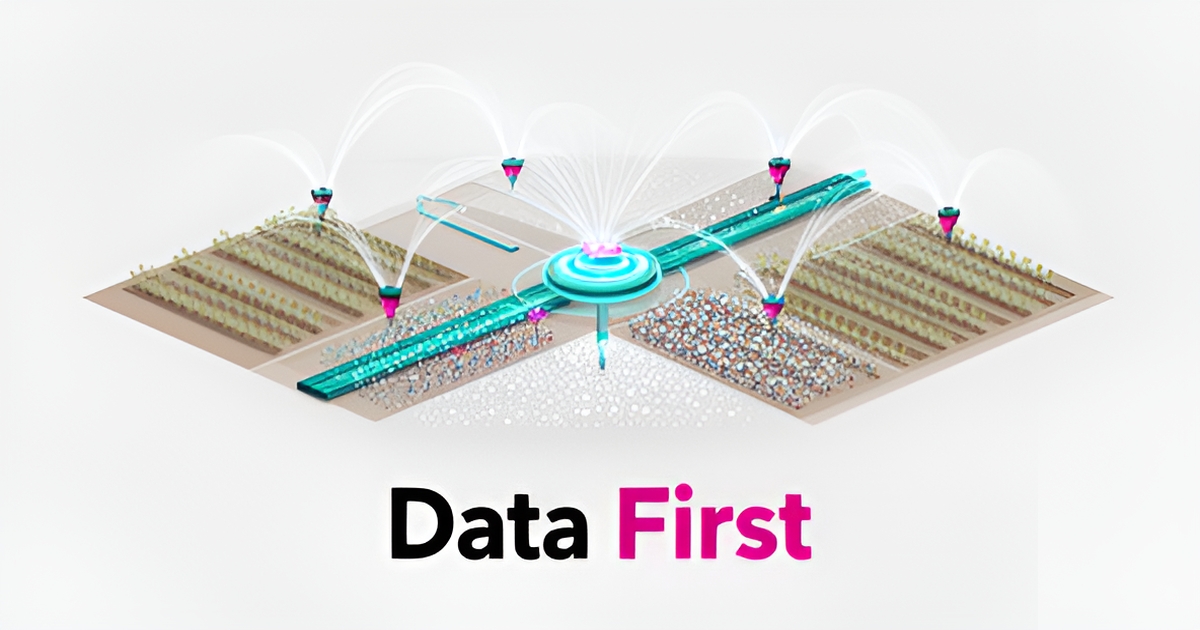
Why Most Irrigation Dealers Fail at AI Adoption — And How to Avoid It
Key Facts
- Most AI problems in agriculture trace back to poor data collection practices — inconsistent image capture, uncalibrated sensors, and undigitized field notes — rather than model limitations
- Agricultural AI inputs are heavily image-based, meaning consistent angles, distances, and lighting are essential for accurate predictions
- Sensor data from soil probes and weather stations is only useful if sensors are maintained and synchronized with imagery
- Farmer logs and handwritten notes often contain insights sensors miss — digitizing them immediately improves model accuracy
- Industry analyses consistently find that a large majority of corporate AI initiatives stall before delivering value, often because investments are misaligned with operational reality
- Disciplined pilots with clear kill criteria are a recurring pattern in the AI programs that do succeed
Hire a team member that works 24/7 — for less than a part-time wage.
AI receptionists, SDRs, dispatchers and 99+ roles. Trained on your business, fully managed.
Not sure where to start? Ask our AI planner
The Data Quality Trap: Why Most AI Projects Fail Before They Start
Most irrigation dealers buy AI tools first and ask about data later. That sequence guarantees disappointment.
Poor data collection practices quietly undermine every irrigation AI project before it starts. Inconsistent image capture, uncalibrated sensors, and undigitized field notes create noise that models cannot learn from. The result is unreliable recommendations and lost trust with growers.
Most AI problems in agriculture are caused by poor data collection, not weak algorithms. Fixing the data collection pipeline — not upgrading the model — is what resolves the majority of issues. Data quality is the bottleneck, not model sophistication.
Agricultural AI inputs are heavily visual and sensor dependent. Image-based datasets make up the largest share of inputs, meaning consistent angles, distances, and lighting are essential for accurate predictions. Sensor data from soil probes, weather stations, and sap flow sensors is only useful if maintained and synchronized with imagery.
The remaining signal comes from people. Farmer logs and notes — often old-fashioned notebooks — frequently contain insights sensors miss. Digitizing them immediately is crucial for accuracy. Without a routine, the model trains on gaps.
Data consistency beats data volume, and field validation is non-negotiable for AI adoption in agriculture. Dealers who skip this step see models that work in the demo and fail in the field.
Common data traps in irrigation operations include:
- Inconsistent image capture with varying angles, distances, and lighting across sites
- Uncalibrated or unsynchronized sensors that drift without maintenance
- Undigitized field notes and manual logs that never enter the system
- No field validation process to confirm model outputs against real conditions
Simply buying AI tools will not fix foundational data gaps. A structured AI readiness assessment evaluates your current technology stack, data infrastructure, and team capabilities before any build. AIQ Labs uses this assessment to identify high-value automation targets and recommend realistic, step-by-step upgrades — whether that starts with managed AI staff handling calls and scheduling, or a rebuild of the one workflow that costs you the most.
Without clean, consistent inputs, even the best irrigation AI will underperform. Data discipline is the prerequisite, not an afterthought.
Start Small, Scale Smart: The Pilot-First Approach That Works
Most irrigation dealers rush into AI adoption with grand visions of full automation, only to see pilots stall and investments sour. The reality is that sustainable transformation begins not with sweeping change, but with focused, low-risk experiments that prove value quickly. Successful agritech adoption consistently shows that starting with narrowly defined use cases — like detecting leaks in real-time or optimizing irrigation schedules based on soil moisture — builds farmer trust through tangible results before scaling complexity.
A pilot-first approach works because it addresses the core barriers that derail most AI initiatives: poor data quality and unclear ROI. Since most AI problems trace back to data collection, targeted pilots are ideal for establishing reliable data routines without overwhelming teams. Disciplined pilots with clear kill criteria are a recurring pattern in the AI programs that succeed, because small-scale validation prevents costly missteps. By contrast, unrealistic expectations — such as expecting AI to replace expert judgment overnight — remain a leading cause of failure in irrigation technology adoption, where human-centered design and iterative feedback are critical for refinement.
The most effective pilots solve urgent, visible problems farmers face daily. For example, AI-powered leak detection systems using image-based data can immediately reduce water waste and prevent crop damage, creating quick wins that justify further investment. Likewise, scheduling optimization tools that integrate sensor data and farmer logs deliver measurable efficiency gains without requiring an overhaul of existing workflows. These focused applications build confidence through transparency, showing farmers exactly how AI supports rather than supplants their expertise.
AIQ Labs helps irrigation dealers implement this pilot-first mindset through structured readiness assessments that identify high-impact, low-complexity starting points. By validating assumptions in controlled environments and measuring outcomes against clear benchmarks, dealers avoid the pitfall of scaling unproven technology. This methodical progression — from leak detection to predictive maintenance to a fully connected operation — ensures each step delivers value while strengthening data foundations for the next phase. The goal isn't just to adopt AI, but to create a self-reinforcing cycle where early wins fund and inform smarter, broader adoption. When pilots succeed on their own terms, scaling becomes a natural evolution rather than a forced mandate.
From Assessment to Action: How AIQ Labs' Readiness Framework Prevents Costly Missteps
Irrigation dealers are investing in AI, but most stall before they see returns. The gap is not technology — it is readiness.
A structured AI readiness evaluation replaces guesswork with a realistic roadmap. It starts by auditing the tech stack, data infrastructure, and team capabilities that actually determine success. Industry analyses consistently find that a large majority of corporate AI initiatives fail to reach production, often because investments are misaligned with operational reality.
Data quality is the first bottleneck. Agriculture AI adoption research finds that most AI problems are fixed by improving data collection, and consistent data collection routines beat volume every time. For irrigation dealers, that means image-based datasets, sensor data from soil probes and weather stations, and farmer logs must be synchronized and validated before models are trained.
Unrealistic expectations are the second killer. Dealers often chase full automation before proving value on one workflow. A readiness framework forces prioritization around measurable ROI and pilot discipline — the factors AI failure analyses consistently identify as critical to moving from pilot to production.
AIQ Labs approaches this through three entry points, each matched to a different level of readiness. AI Employees put managed AI staff — receptionists, SDRs, dispatchers, and 99+ other roles — to work at a fraction of the cost of a human hire, with no data overhaul required. AI Workflow Builds rebuild the single workflow that costs you the most, at a fixed price and in phases. And AI Operating Systems connect everything into one operating layer, built in phases and owned outright. Payment follows the same logic: start monthly, build in milestones, or own it outright. The assessment is designed to prevent costly missteps by aligning tech, data, and people before any build.
A practical readiness review covers:
- Tech stack audit: CRM, inventory, and field service tools and integration points
- Data infrastructure: consistency of image, sensor, and log inputs and validation processes
- Team capabilities: adoption readiness, change management, and governance for responsible AI use
- Business case modeling: ROI targets, kill criteria for pilots, and phased scaling plan
This creates realistic sequencing instead of big-bang deployments. Small wins build trust with growers and staff, and measurable outcomes fund the next phase.
When readiness is established first, AI moves from risky experiment to embedded capability that delivers sustainable competitive advantage.
Still paying for 10+ subscriptions that don’t talk to each other?
We build custom AI systems you own outright. No vendor lock-in. Full control.
Not sure where to start? Ask our AI planner
Frequently Asked Questions
Why do most AI projects fail for irrigation dealers?
What types of data do irrigation AI systems actually need?
Should we go all-in on AI automation or start with a pilot?
How do I know if my dealership is ready for AI?
Will AI replace our irrigation experts and farmer relationships?
What's the biggest mistake dealers make when buying AI tools?
Ready to Move from AI Hype to Real Results?
The difference between irrigation dealers who succeed with AI and those who stall isn't the technology they choose — it's the foundation they build first. Poor data quality, unrealistic expectations, and the absence of a structured readiness assessment derail most initiatives before they deliver value. Yet the path forward is clear: fix your data collection pipeline, start with focused pilots that solve urgent problems like leak detection, and scale only after proving ROI. AIQ Labs has deployed 200+ multi-agent systems and runs four live SaaS products daily — this is work we do every day, not theory. Whether you need managed AI Employees, a fixed-price Workflow Build, or a phased AI Operating System you own outright, the first step is the same. Don't let your AI investment become another failed experiment. Start with the two-minute Fit Check to identify your highest-value automation opportunity, then book a free 30-minute strategy call to build your roadmap.
Make AI your competitive advantage — not just another tool.
Strategy, implementation and ongoing optimization. One partner, end to end.
Not sure where to start? Ask our AI planner