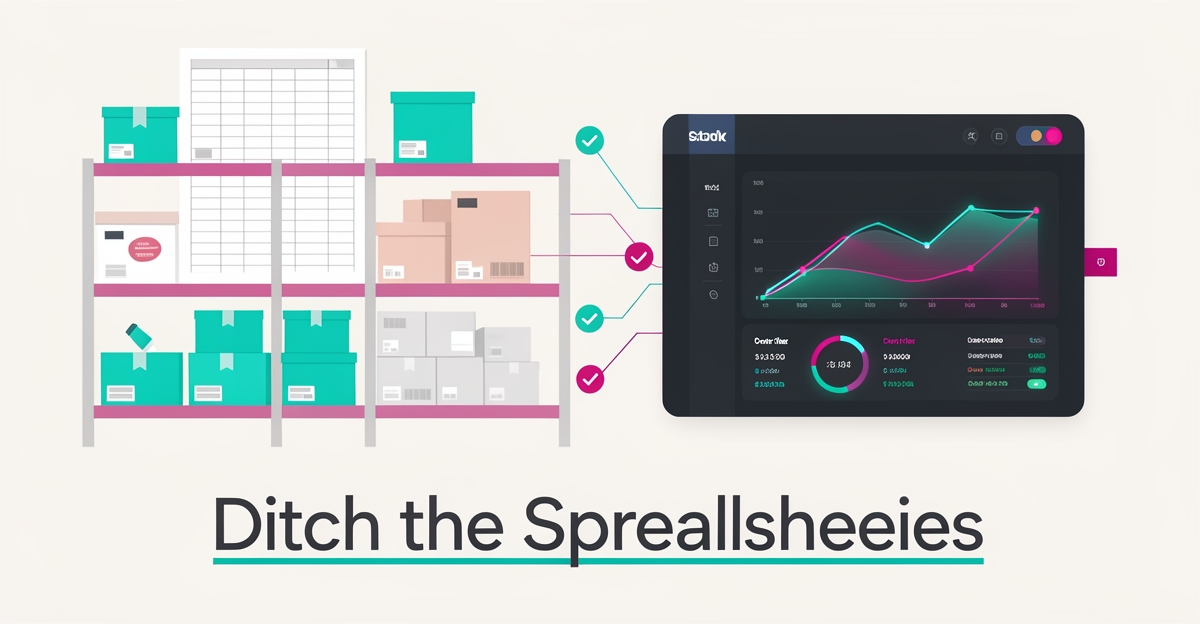
Why Most Janitorial Distributors Still Use Manual Order Tracking (And How to Fix It)
Key Facts
- Manual order tracking creates data inconsistencies, poor visibility, and hours of administrative rework across sales, warehouse, and delivery teams
- AI inventory systems can typically predict reorder needs from historical consumption patterns, seasonal trends, and contract requirements, turning reactive restocking into proactive replenishment
- Distributors adopting AI-driven scheduling and route optimization commonly report meaningful reductions in scheduling conflicts and travel time
- ISSA represents thousands of members across the global cleaning, hygiene, and facility management market, an industry where AI adoption is accelerating as of late 2026
Hire a team member that works 24/7 — for less than a part-time wage.
AI receptionists, SDRs, dispatchers and 99+ roles. Trained on your business, fully managed.
Not sure where to start? Ask our AI planner
The Hidden Cost of Manual Order Tracking in Janitorial Distribution
Manual order tracking feels familiar, but in janitorial distribution it quietly erodes margin every day. Distributors cling to spreadsheets and phone calls because the systems are known, not because they work.
The industry continues to rely on manual order tracking despite documented inefficiencies. Distributors face data inconsistencies and outdated information that compromise decision-making, poor visibility into order status and inventory levels, and time-consuming administrative tasks that divert resources from value-added activities. Fragmented systems create data silos and prevent scaling.
These manual processes create competitive disadvantages as AI-enabled competitors deliver superior service at lower operational costs. Industry analysis of AI adoption in janitorial and distribution businesses consistently points to meaningful reductions in operational costs and improvements in scheduling efficiency compared to traditional manual processes—often in the range of 25 to 40% on costs for operations that automate tracking end to end.
Visibility gaps are especially costly. Without real-time updates, sales reps quote products that are out of stock, warehouse teams pick wrong SKUs, and customers receive late deliveries. Poor visibility into order status, inventory levels, and customer needs forces reactive firefighting instead of proactive service. Administrative staff spend hours reconciling spreadsheets, chasing PO numbers, and confirming delivery windows.
The hidden cost shows up as lost time, errors, and churn. Manual coordination drives frequent scheduling conflicts and delivery delays. Research on AI-driven operations in service businesses typically finds large reductions in scheduling conflicts compared to manual coordination, and meaningful travel-time savings through geographic route optimization for distribution fleets.
Manual order tracking also blocks predictive capability. Distributors cannot anticipate supply shortages or client cancellation risk when data lives in disconnected tools. Modern AI systems analyze historical data to predict maintenance requirements, anticipate supply shortages, and identify clients at risk of cancellation, enabling proactive management.
The operational drag is measurable across the workflow:
- Data inconsistencies and outdated information that compromise decision-making
- Poor visibility into order status, inventory levels, and customer needs
- Time-consuming administrative tasks that divert resources from value-added activities
- Fragmented systems that lack integration capabilities and create data silos
AI workflow automation changes this pattern by replacing spreadsheets with live, intelligent workflows. AIQ Labs has deployed 200+ multi-agent systems and builds AI Workflow Builds that provide real-time updates, alerts, and automated status tracking—turning static catalogs and order policies into agents that answer questions and maintain consistency across customer-facing and internal operations.
How AI Transforms Order Tracking with Real-Time Visibility and Predictive Automation
AI-powered systems eliminate the manual bottlenecks that plague janitorial distributors by delivering real-time order status, predictive reordering, and unified operational visibility. Unlike spreadsheets that lag behind actual inventory levels or delayed communications that create uncertainty, AI-driven platforms provide live updates across every touchpoint—from order placement to final delivery. This continuous flow of accurate information reduces the guesswork that leads to overstocking, stockouts, and rushed emergency shipments, giving distributors the clarity needed to make confident, timely decisions.
By analyzing historical consumption patterns, seasonal trends, and contract-specific requirements, AI inventory management systems predict reorder needs with high accuracy, transforming reactive restocking into a proactive, data-driven process. These predictive capabilities ensure that critical supplies are replenished just in time, minimizing carrying costs while maintaining service reliability. Distributors that automate tracking and scheduling typically report meaningful reductions in operational costs and scheduling friction, as automated workflows free staff from repetitive tasks and allow them to focus on higher-value activities like customer relationship management and strategic planning.
- Real-time order status tracking eliminates visibility gaps between sales, warehouse, and delivery teams
- Predictive reordering reduces stockouts and excess inventory through demand forecasting
- Unified operational dashboards provide a single source of truth for inventory levels, order progress, and delivery timelines
- Automated alerts notify stakeholders of delays, low stock, or scheduling conflicts before they impact operations
- Integration with existing CRM and accounting systems ensures data consistency across all business functions
AIQ Labs builds custom AI systems that embed these capabilities directly into a distributor's existing workflows, replacing manual tracking with intelligent automation that scales with business growth. By connecting disparate tools into a cohesive operational framework, these solutions deliver the real-time insights and predictive precision needed to compete in an increasingly digital marketplace—without requiring distributors to rip and replace their current technology stack. For distributors whose tracking problems span every department, a phased AI Operating System connects order intake, inventory, scheduling, and billing into one owned operating layer. The result is a streamlined, responsive order tracking process that supports both immediate efficiency gains and long-term strategic advantage.
Practical Steps to Replace Manual Tracking with AI-Driven Order Workflows
Replacing manual order tracking with AI-driven workflows begins with a clear understanding of current operations. Start by auditing data collection practices across scheduling, inventory, customer management, and financial systems to uncover inconsistencies, duplicates, or gaps that could undermine AI performance. This foundational step ensures the data feeding your new system is reliable and standardized.
Next, evaluate how well your existing tools connect with potential AI platforms. Systems with strong API integrations allow for smoother deployment, while legacy systems may need data migration or upgrades to support automation. Documenting current workflows for each core operational area follows—mapping out manual steps, decision points, and exception handling reveals where AI can eliminate bottlenecks and reduce errors.
With workflows mapped, configure AI agents using your catalogs, SDS sheets, spec sheets, and internal SOPs as training material. These agents become intelligent touchpoints for product selection, chemical guidance, and order intake, pulling structured details like account numbers, SKUs, and delivery windows to route requests accurately. Finally, establish monitoring loops using analytics and conversation reviews to refine configurations continuously, addressing documentation gaps and recurring issues as they emerge.
AIQ Labs supports this journey through its Build in Milestones model: a fixed-price, phased engagement where you approve and pay for each completed phase while retaining all work done so far. If you'd rather start smaller, managed AI Employees can handle order intake and status inquiries at a fraction of the cost of an additional hire. The path in is simple: complete the 2-minute Fit Check, then book a free 30-minute strategy call where we'll map your biggest bottleneck—or tell you straight if there isn't a clear win.
Still paying for 10+ subscriptions that don’t talk to each other?
We build custom AI systems you own outright. No vendor lock-in. Full control.
Not sure where to start? Ask our AI planner
Frequently Asked Questions
Why do janitorial distributors still use manual order tracking if it's so inefficient?
How much can AI actually save on operations and scheduling?
Can AI really predict when we need to reorder supplies?
Will switching to AI mean ripping out our current CRM and accounting tools?
What's the first step to move from spreadsheets to AI-driven order workflows?
Is AI safe to use for chemical guidance and customer orders?
From Manual Chaos to Intelligent Order Flow
Manual order tracking isn't just outdated—it's actively draining your janitorial distribution business through data inconsistencies, poor visibility, and wasted administrative hours that could be spent on growth. AI-powered transformation delivers measurable relief: lower operational costs, smoother scheduling, and predictive reordering that turns reactive scrambling into proactive control. The good news? You don't need to rip out your existing systems to start. Begin by auditing your current workflows to pinpoint where manual tracking creates the most friction—then explore how AI agents can be built directly into your existing tools using your own catalogs and SOPs as training material. This isn't about chasing trends; it's about reclaiming operational clarity and competitive edge with technology that works for you, not the other way around. If you're ready to see where AI can unlock real value in your specific operations, start with the free, no-obligation Fit Check to map your biggest bottleneck and identify high-ROI automation opportunities—we'll tell you straight if there isn't a clear win.
Make AI your competitive advantage — not just another tool.
Strategy, implementation and ongoing optimization. One partner, end to end.
Not sure where to start? Ask our AI planner