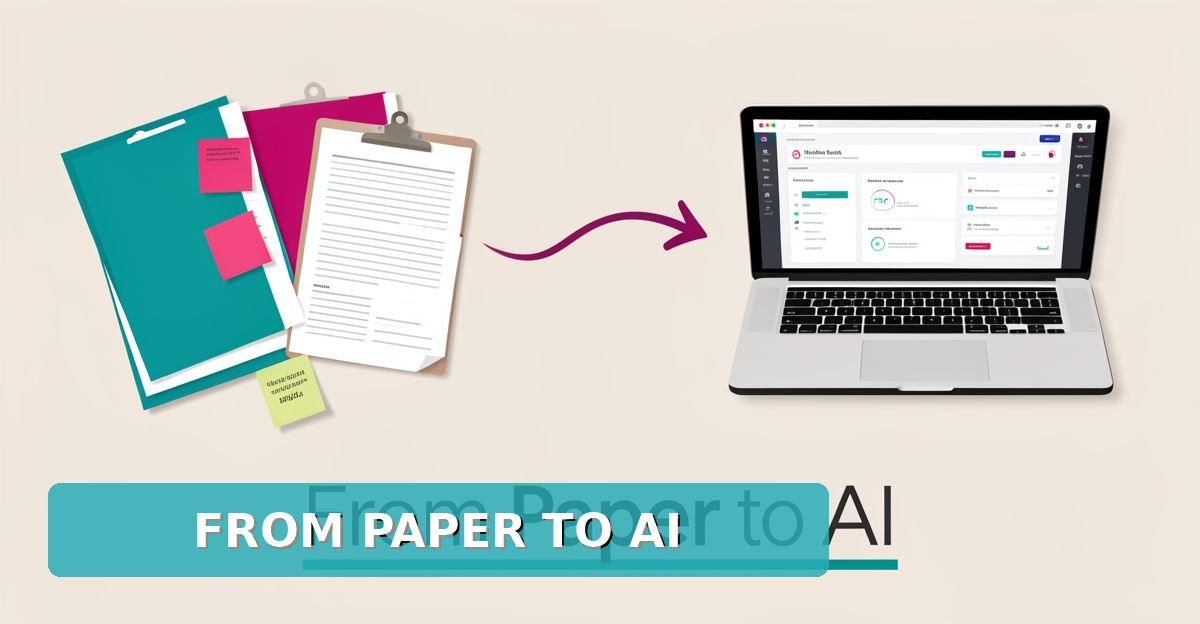
Why Most Kitchen & Bath Designers Still Use Paper-Based Project Tracking (And How to Fix It)
Key Facts
- Design firms running manual processes typically spend several hours assembling each client proposal, most of it copying data between disconnected tools.
- AI systems can draft initial mood boards, space plans and material specifications in minutes, leaving humans to refine rather than assemble.
- With AI document processing, proposal generation typically drops to 30-45 minutes of refinement instead of a multi-hour manual build.
- Manual workflows tend to cap firms at roughly 10-20 active projects regardless of demand.
- A connected AI operating system is built in phases, so teams adapt gradually instead of absorbing a disruptive big-bang rollout.
- AIQ Labs has deployed 200+ multi-agent systems and runs four live SaaS products daily.
Hire a team member that works 24/7 — for less than a part-time wage.
AI receptionists, SDRs, dispatchers and 99+ roles. Trained on your business, fully managed.
Not sure where to start? Ask our AI planner
The Hidden Cost of Paper-Based Project Tracking in Design Firms
Most kitchen and bath designers didn't start their businesses to spend evenings wrestling with spreadsheets, yet that's exactly where the workday ends for firms still running on manual workflows. The administrative burden compounds silently — one email chain here, a missed vendor confirmation there — until the firm's capacity hits a hard ceiling.
Design firms running manual processes typically spend several hours assembling each client proposal. That time vanishes into copying data between disconnected tools: Excel for tracking, email for communication, separate invoicing software, and design platforms that don't speak to each other. Every manual handoff introduces error risk, from transposed budget numbers to outdated material specs that surface only during installation.
The scalability math is unforgiving. Manual processes that function adequately for five concurrent projects become chaotic at fifteen and collapse entirely beyond twenty. Adding team members doesn't solve the bottleneck — it amplifies it, because every new hire must learn the unwritten rules and tribal knowledge that hold the fragile system together. Client experience suffers too, varying wildly depending on which designer manages the project and how many balls they're juggling that week.
- Proposal generation consumes hours per project instead of a short refinement session
- Error rates climb with every manual data entry point across disconnected systems
- Firm growth typically caps at 10-20 active projects regardless of demand
- Client communication becomes reactive rather than systematic
- No single source of truth exists for project status, budgets, or timelines
AIQ Labs sees this pattern across professional service firms where creative expertise gets buried under administrative drag. Custom AI document processing systems can extract project details from emails, PDFs, and forms automatically, feeding structured data into project management tools in real time. The shift isn't about replacing designer judgment — it's about reclaiming the hours that judgment requires. For firms that want to start smaller, a single AI Workflow Build can rebuild the one workflow that costs the most, at a fixed price, in phases.
How AI-Powered Document Processing Eliminates Operational Bottlenecks
Paper-based tracking feels manageable until a firm hits the 10-project wall. The intake form sits in an inbox, the proposal lives in a spreadsheet, and the change order is scribbled on a notepad. That fragmentation is why most kitchen and bath designers stay stuck in manual mode.
AI-powered document processing replaces that chaos with intelligent capture and routing. Instead of copying details from emails and PDFs by hand, an AI operating system extracts project details, client preferences, budget parameters and space requirements directly from incoming messages and forms. The data is classified in real time and fed into project management tools, so intake, proposal generation and tracking move as one workflow.
The impact is immediate on proposal speed. Firms running manual processes typically spend several hours assembling each client proposal. With an AI OS, initial mood boards, space plans and material specifications are generated in minutes, with proposal generation typically dropping to 30-45 minutes of refinement work. That shift frees billable hours back to design rather than admin.
Scalability follows the same pattern. Manual processes that work for 5-10 concurrent projects become overwhelming at 20+, while AI operating systems can manage 20+ projects without added overhead by automating routine updates, scheduling and approvals. Automated project tracking also identifies scheduling conflicts, budget overruns and vendor delays before they impact client timelines.
AIQ Labs builds custom AI document processing systems that automatically extract project details from emails, PDFs and forms and feed them into project management tools in real time. The approach mirrors how AI operating systems automate client intake, proposal generation and project tracking by extracting data from unstructured sources and routing it through unified workflows.
Typical bottlenecks eliminated by document capture and workflow routing include:
- Intake questionnaires that capture style preferences, budget and space requirements without manual re-entry
- Proposal assembly from extracted specifications, reducing multi-hour builds to minutes of refinement
- Project tracking across concurrent jobs with automated conflict and budget alerts
- Client communication handled through intelligent messaging for updates and approvals
Implementation is not instant. A connected system is built in phases, with each phase delivering usable value before the next begins, and firms can choose to start monthly, build in milestones, or own the system outright. Once live, firms gain consistent, error-reduced workflows that scale with demand rather than headcount.
Implementation Path: From Manual Chaos to AI-Driven Project Management
Design firms drowning in paper-based project tracking often feel stuck between creative work and administrative overload. The transition to AI-driven systems doesn't require a complete overhaul overnight—it starts with understanding exactly where time is leaking today.
Begin with a workflow assessment to map every manual touchpoint in your project lifecycle. Firms running manual processes typically spend several hours assembling each client proposal, time that could be redirected to design work or client strategy. Identify which documents—emails, PDFs, forms—are repeatedly handled and where errors creep into budgets or timelines. This baseline reveals the highest-impact opportunities for automation, ensuring your AI investment targets real pain points rather than hypothetical gains.
Next, implement AI document processing in phases to avoid disrupting ongoing projects. Start with a single workflow like proposal intake or vendor coordination, using AI to automatically extract details from incoming emails and PDFs and route them into your project management tools. A phased rollout lets teams adapt gradually. For example, automate email parsing for change orders first, then expand to invoice tracking once the team trusts the system's accuracy—measured by reduced manual entry and fewer scheduling conflicts.
Finally, train your team to work alongside AI, not against it. Focus on role-specific guidance: show designers how AI handles routine status updates so they can focus on client consultations, and train administrators on monitoring AI-flagged exceptions like budget overruns. The return comes from reclaiming billable hours and scaling beyond the 10-20 project limit of manual processes. Continuous optimization—refining the system based on real project data—ensures it evolves with your firm's growing complexity, turning yesterday's chaos into today's competitive advantage. Firms ready to connect intake, proposals, tracking and communication into one owned layer can explore a full AI Operating System, or start with a 2-minute Fit Check to see where automation delivers real, measurable value.
Still paying for 10+ subscriptions that don’t talk to each other?
We build custom AI systems you own outright. No vendor lock-in. Full control.
Not sure where to start? Ask our AI planner
Frequently Asked Questions
How much time do design firms typically spend assembling a client proposal with manual processes?
How much faster is proposal generation with an AI operating system compared to manual processes?
What is the typical scalability limit for design firms using manual project tracking?
How long does it usually take to implement an AI operating system before seeing operational benefits?
What does it cost to work with AIQ Labs?
Can AI-powered document processing reduce errors in project tracking for design firms?
Reclaim Your Design Hours: From Paper Trails to Project Flow
The hidden cost of paper-based project tracking isn't just in the hours lost—it's in the growth stalled, the errors compounding, and the client experience suffering when designers spend hours per proposal wrestling with disconnected tools instead of refining their vision. AI-powered document processing transforms this reality by automating intake, proposal generation, and tracking, turning fragmented workflows into a unified system that scales with demand. For kitchen and bath designers ready to move beyond the 10-20 project ceiling, the path forward starts with a clear assessment of where time is leaking today. Take the first step with a free 30-minute strategy call to map your biggest bottlenecks and see where automation delivers real, measurable value.
Make AI your competitive advantage — not just another tool.
Strategy, implementation and ongoing optimization. One partner, end to end.
Not sure where to start? Ask our AI planner