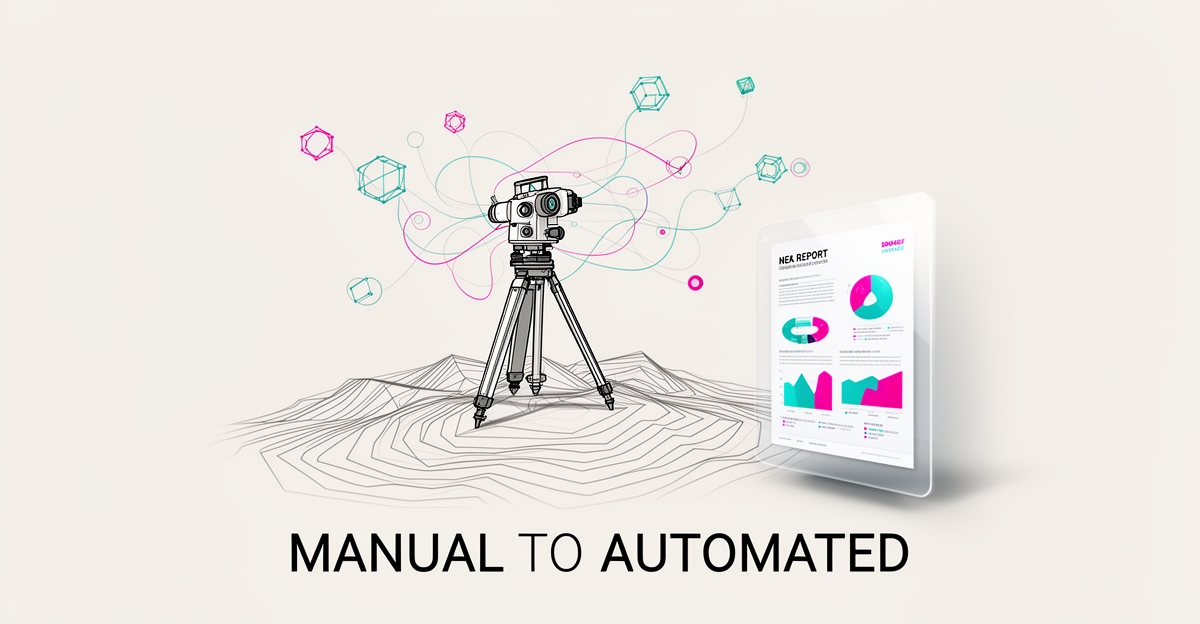
Why Most Land Surveying Firms Still Rely on Manual Reporting (And How to Fix It)
Key Facts
- Manual reporting typically adds 3-5 business days to project turnaround in land surveying firms
- AI adoption in construction grew from 26% in 2023 to 37% in 2025 according to industry research
- 72% of organizations across all industries have adopted AI in at least one business function based on industry analysis
- Global AI in construction market projected to grow from $3.93 billion in 2024 to $22.68 billion by 2032 per market forecasts
- AI-powered reporting generates client-ready reports in minutes rather than days for surveying firms
- AI-powered reporting reduces human error by validating measurements against BIM and reference data
- Firms using owned AI reporting systems avoid vendor lock-in and can evolve with changing standards
Hire a team member that works 24/7 — for less than a part-time wage.
AI receptionists, SDRs, dispatchers and 99+ roles. Trained on your business, fully managed.
Not sure where to start? Ask our AI planner
The Manual Reporting Trap Holding Surveying Firms Back
The persistence of manual reporting in land surveying isn't just a preference—it's a costly habit clinging to outdated workflows. Despite clear evidence that AI adoption in construction grew from 26% in 2023 to 37% in 2025, many firms continue to risk project timelines and client trust through error-prone, labor-intensive reporting methods. Industry research shows manual processes remain widespread even as AI transforms adjacent construction functions.
This reliance creates tangible bottlenecks that ripple through operations. Field teams spend hours compiling notes, sketches, and measurements into coherent reports—time that could be spent on active surveying or client engagement. When reports finally emerge, they often contain inconsistencies: transposed numbers, mislabeled boundaries, or omitted easements that require costly rework. These aren't minor oversights; they directly impact project approvals, financing, and legal compliance.
The inefficiencies compound when delays occur. Manual reporting typically adds 3-5 business days to project turnaround, creating scheduling conflicts with contractors and developers who depend on timely survey data. In an industry where AI adoption is rising rapidly, this lag positions firms as bottlenecks rather than enablers of progress. Clients increasingly expect the speed and precision that automated systems deliver.
Consider the specific pain points manual reporting introduces:
- Increased human error from fatigue-induced data transcription
- Inconsistent formatting across team members and projects
- Difficulty scaling during peak seasons without proportional staff increases
- Limited ability to integrate with digital project management platforms
- Higher long-term costs from rework and delayed payments
Breaking free from this trap requires reframing AI not as a disruptive overhaul, but as a targeted enhancement to existing expertise. Firms that transition to automated reporting see immediate reductions in error rates and reporting cycles—turning field data into client-ready deliverables in minutes rather than days. This shift doesn't diminish the surveyor's role; it elevates it by eliminating repetitive tasks and allowing professionals to focus on interpretation, analysis, and client consultation—the high-value work that truly defines their expertise.
How AI-Powered Reporting Transforms Field Data Into Client-Ready Reports
Manual reporting keeps surveying teams tied to the field office long after crews leave site. Raw field data sits in notebooks, photos, and spreadsheets, waiting for someone to clean, standardize, and turn it into a client-ready report.
AI-powered reporting closes that gap by ingesting field captures and producing standardized deliverables in minutes. The system applies consistent templates, validates measurements against BIM references, and flags anomalies before they reach a client. That automation reduces human error and accelerates turnaround times across the project lifecycle.
Construction AI adoption is accelerating fast. Industry research shows a 42% year-over-year increase in AI adoption in construction, with adoption growing from 26% in 2023 to 37% in 2025. The same analysis notes 72% of organizations across all industries have adopted AI in at least one business function, signaling mainstream readiness beyond pilot projects.
In surveying workflows, the transformation is visible in how data moves from capture to delivery. AI-powered robots equipped with cameras capture 3D pictures at construction sites, and neural networks cross-check those images against BIM and bill of materials information. Engineers use that verified progress data to track milestones without manual reconciliations.
Standardization is where speed compounds. Automated reporting systems turn raw field data into client-ready reports by enforcing consistent formats, naming conventions, and quality checks. Teams stop rebuilding reports from scratch each cycle and start reviewing exceptions instead of transcribing numbers.
The benefits align with broader construction priorities. AI-powered quality control systems help identify defects early, predictive maintenance minimizes equipment downtime, and supply chain optimization ensures timely delivery of materials. Risk mitigation improves as machine learning monitors safety hazards, quality issues, delays, and cost overruns across multiple subcontractors working in parallel.
AIQ Labs builds custom AI workflows that generate accurate, standardized reports from field inputs, reducing human error and accelerating turnaround times. Through AI Workflow Builds, the one workflow that costs your firm the most gets rebuilt at a fixed price, in phases—turning fragmented captures into owned digital assets rather than subscription tools.
Automated reporting supports these outcomes:
- Reduced human error through automated validation against BIM and reference data
- Accelerated turnaround times by generating client-ready reports in minutes
- Improved efficiency across the construction lifecycle with standardized deliverables
- Better risk mitigation via early defect identification and progress tracking
Firms that move from manual to automated reporting shift capacity from transcription to interpretation. Standardized reports build client trust, while faster delivery creates room for more projects without adding headcount. The traditional ways of doing business are no longer merely inefficient; they are now unsustainable.
When reporting becomes reliable and repeatable, surveying teams can focus on judgment, not formatting.
From Skepticism to Implementation: Making AI Practical for Surveying Teams
For many surveying firm owners, "AI" still sounds like something that belongs in a tech company's budget, not theirs. But the numbers tell a different story: industry data shows AI adoption in construction grew from 26% in 2023 to 37% in 2025, and 72% of organizations across all industries have now adopted AI in at least one business function. The firms still relying on manual reporting aren't avoiding complexity—they're accumulating it.
The good news is that adopting automated reporting doesn't require a firm-wide overhaul. It starts with one workflow.
Practical first steps for surveying firms:
- Identify the single most painful reporting bottleneck—usually turning raw field data into client-ready deliverables.
- Audit your data quality first, since AI-powered tools require high-quality data to produce accurate results.
- Start with a pilot on one project type rather than attempting firm-wide implementation.
- Integrate with the tools your team already uses instead of forcing a new platform on them.
This matters because the contrast between approaches is stark. Research on AI in construction finds that manual reporting brings errors, inefficiencies, and delays—while AI-powered reporting reduces errors, improves efficiency, and accelerates turnaround times. The market is moving accordingly: the global AI in construction market is projected to grow from $3.93 billion in 2024 to $22.68 billion by 2032.
Of course, the challenges are real. High upfront costs and complex implementation are the two most commonly cited barriers, and cybersecurity deserves attention when connecting field systems to cloud tools. The key is choosing an adoption model that manages these risks rather than ignoring them. Phased builds—where you approve and pay for each milestone as it ships, and keep everything built so far if you stop—let firms prove value before committing fully.
It's also worth reframing what AI actually does in the field. As one industry analysis puts it, "AI is not coming along to run us humans out of the field; it is here to augment us." Surveyors keep the judgment and expertise; the automation handles the repetitive transcription and formatting that consumes hours after every job.
This is where custom-built systems outperform generic software. AIQ Labs builds AI workflows that turn raw field data into standardized, client-ready reports automatically—reducing human error and compressing turnaround from days to hours. Because clients own the system outright, there's no vendor lock-in, and the workflow can evolve as the firm's reporting standards and templates change.
The firms winning work in the next five years won't be the ones with the most expensive equipment. They'll be the ones whose field data becomes a finished deliverable before the competition has finished typing theirs.
Building an Owned AI Reporting System That Scales With Your Firm
The gap between a promising AI pilot and a reporting system your entire firm runs on daily is where most surveying companies stall. Industry analysts note that most organizations get stuck experimenting rather than scaling — even as adoption data shows AI use in construction-related fields grew from 26% in 2023 to 37% in 2025. The firms that cross that gap share one trait: they own their automation instead of renting it.
Owning the system changes the economics entirely. Off-the-shelf subscriptions charge per seat and per report, lock your templates behind someone else's platform, and break the moment your reporting standards change. A custom-built workflow, by contrast, becomes a firm asset — code, agents, and data that belong to you and evolve with your standards of practice.
The architecture that makes this work is multi-agent orchestration. Rather than one monolithic tool attempting everything, specialized agents handle distinct stages of the reporting pipeline:
- A data-ingestion agent that pulls raw field measurements, sketches, and notes from your existing collection tools
- A validation agent that cross-checks figures against project references before anything reaches a draft
- A drafting agent that generates standardized, client-ready report sections in your firm's exact format
- A QA layer with human-in-the-loop review, so a licensed surveyor signs off before anything goes out the door
This is not theoretical. AIQ Labs has deployed 200+ multi-agent systems and runs four live SaaS products of its own daily, so the same production-tested architecture that powers those platforms powers client systems in fields from legal intake to dispatch automation. The approach matters for surveying because reporting demands precision: every action is validated before execution, guardrails limit what the system can do autonomously, and complete audit trails support professional accountability.
Scaling also requires a payment structure that matches how firms actually operate. A firm with one painful bottleneck — say, boundary survey reports that take days to assemble — can start with a single workflow build at a fixed price and see results in weeks. Firms ready to automate an entire department can build in milestones, approving and paying per phase while keeping everything shipped so far. And firms wanting a full reporting and operations layer can move to an AI Operating System, built in phases and owned outright.
The timing argument is straightforward. The global AI in construction market is projected to grow from $3.93 billion in 2024 to $22.68 billion by 2032, and firms that build owned systems now will compound that advantage as competitors remain stuck copying data into templates by hand. As one industry analysis put it, traditional ways of doing business are no longer merely inefficient — they are unsustainable.
If you want to see where an owned reporting system would fit in your firm, start with the two-minute Fit Check at aiqlabs.ai/apply, then a free 30-minute strategy call with an AI engineer. It is a working session, not a sales pitch — and if there is no clear win for your firm, you will hear that too.
Still paying for 10+ subscriptions that don’t talk to each other?
We build custom AI systems you own outright. No vendor lock-in. Full control.
Not sure where to start? Ask our AI planner
Frequently Asked Questions
Why are land surveying firms still using manual reporting if AI is growing so fast?
How much faster can AI make survey reporting compared to doing it by hand?
Will AI replace surveyors or just change their job?
Is AI adoption in construction really mainstream enough for a small surveying firm?
What are the biggest risks with switching from manual to AI reporting?
Do we have to buy a subscription tool or can we own the reporting system?
The Competitive Edge Belongs to Firms That Own Their Workflow
Manual reporting is no longer just inefficient—it is a compounding liability that risks project timelines, client trust, and your firm's capacity to scale. The path forward requires no massive overhaul: start with one painful bottleneck, validate your data quality, and build a custom system that turns raw field captures into standardized, client-ready deliverables in minutes. With AI adoption in construction growing from 26% to 37% in just two years, the gap between automated firms and manual shops widens daily. AIQ Labs builds owned, multi-agent reporting systems that eliminate transcription errors and compress turnaround times—without vendor lock-in or subscription dependency. If you are ready to see where an owned reporting workflow fits in your firm, start with the two-minute Fit Check at aiqlabs.ai/apply, then a free 30-minute strategy call with an AI engineer. It is a working session, not a sales pitch—and if there is no clear win for your firm, you will hear that too.
Make AI your competitive advantage — not just another tool.
Strategy, implementation and ongoing optimization. One partner, end to end.
Not sure where to start? Ask our AI planner