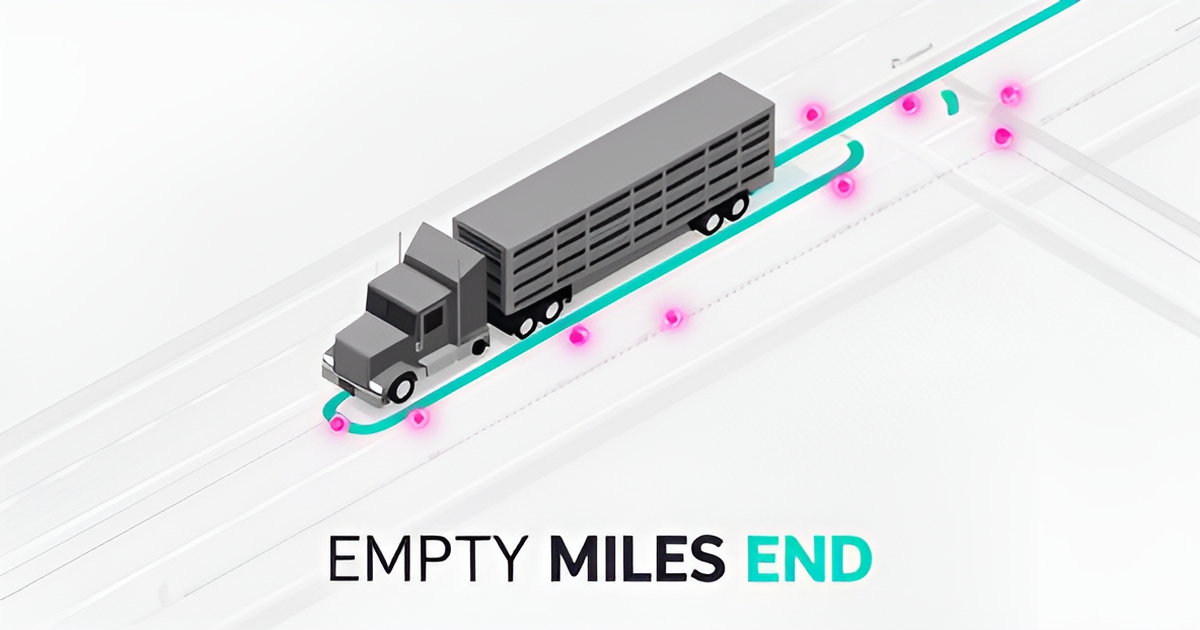
Why Most Livestock Hauling Businesses Are Missing Out on AI-Based Load Optimization
Key Facts
- Trucks in logistics commonly run a significant share of their distance empty — often cited in the 20-30% range — burning fuel and driver hours for zero revenue, according to industry commentary on AI-based load planning systems.
- AI-based load planning systems are reported to deliver roughly a 10-15% reduction in empty miles and 8-12% fuel cost savings without adding a single truck to the fleet, according to industry analysis.
- Optimizing across mode and load variables on real US East Coast routes drove a +19.4 percentage-point improvement in load utilization in a logistics optimization model.
- AI in GIS analysis is reported to improve livestock tracking accuracy by over 40% compared to traditional methods according to precision farming analysis.
- In logistics, a decision made 6 hours late is often a lost opportunity, highlighting the need for compressed decision time according to Krupal Chaudhary, founder of Demaze.
- Most livestock haulers still rely on spreadsheets and phone calls to match backhauls, missing out on AI-driven load optimization that turns empty return trips into revenue-generating backhauls.
Hire a team member that works 24/7 — for less than a part-time wage.
AI receptionists, SDRs, dispatchers and 99+ roles. Trained on your business, fully managed.
Not sure where to start? Ask our AI planner
The Hidden Cost of Empty Miles in Livestock Transport
Every mile a livestock trailer rolls empty is money evaporating from the bottom line. Industry commentary consistently puts empty running at 20-30% of distance traveled in logistics, burning fuel, driver hours, and equipment life for zero revenue. For livestock haulers, where animal welfare regulations and biosecurity requirements already compress margins, that waste is unsustainable.
The problem compounds when trailers return underutilized or routes are planned reactively. A study on AI-based load planning systems found that optimizing across mode and load variables drove a +19.4 percentage-point improvement in load utilization on real US East Coast routes. Yet most livestock operations still rely on spreadsheets, phone calls, and dispatcher intuition to match backhauls.
Empty miles don't just waste fuel — they cascade into hidden costs:
- Accelerated maintenance cycles from unnecessary wear
- Driver retention risk when pay depends on loaded miles
- Missed revenue windows during peak livestock movement seasons
- Carbon footprint inflation that buyers increasingly scrutinize
AI-powered workflow automation changes the equation by predicting empty runs before they happen and matching return loads dynamically. Industry analysis indicates these systems typically deliver a 10-15% reduction in empty miles and 8-12% fuel cost savings without adding a single truck to the fleet. The technology compresses decision time from hours to minutes — critical in livestock logistics where a decision made six hours late is often a lost opportunity.
AIQ Labs builds custom systems that integrate with existing dispatch, CRM, and accounting tools to automate load matching, route optimization, and compliance tracking in a single workflow — whether as a focused AI Workflow Build or a full AI Operating System. The result is a connected operating layer that turns empty return trips into revenue-generating backhauls while maintaining the animal welfare standards that define the industry.
How AI Load Optimization Cuts Fuel Costs
Empty miles are the silent profit killer in livestock hauling. According to industry commentary on AI-based load planning systems, trucks in major logistics markets commonly run 20-30% of their distance without a load—burning fuel, time, and margin on every empty return trip.
AI-powered load optimization directly attacks this problem. These systems analyze real-time data on demand, routes, and vehicle capacity to make faster, smarter decisions about how cargo gets assigned to trucks. The result, according to the same analysis, is typically a 10-15% reduction in empty miles and 8-12% fuel cost savings—without adding a single truck to the fleet.
The mechanism is straightforward. Instead of relying on manual dispatch decisions or static route plans, AI systems continuously evaluate variables like animal weight, trailer capacity, destination timing, and backhaul opportunities. In one logistics optimization model using real US East Coast routes, optimizing across mode and load variables drove a 19.4 percentage point improvement in load utilization.
For livestock haulers, the stakes are even higher than general freight. Live cargo has strict weight limits, ventilation requirements, and time-in-transit constraints that make manual load planning error-prone. An overloaded trailer risks animal welfare violations and fines. An underloaded one wastes fuel and capacity.
AI load optimization addresses these challenges through several core capabilities:
- Dynamic cargo matching: Automatically pairs available livestock loads with the right trailer based on weight, species, and destination—reducing both overloading and underutilization.
- Predictive empty-mile reduction: Forecasts return-trip availability and matches backhaul loads before the outbound trip is complete.
- Real-time route adjustments: Continuously recalculates optimal paths based on traffic, weather, and delivery windows.
- Fleet utilization analytics: Identifies patterns in vehicle downtime and recommends scheduling changes to maximize revenue-generating miles.
As Krupal Chaudhary, founder of Demaze, puts it in the LinkedIn analysis: "It's about compressing decision time... because in logistics, a decision made 6 hours late is often a lost opportunity."
This is where custom AI workflow automation delivers measurable ROI. Unlike off-the-shelf routing software, a purpose-built system can account for the unique constraints of livestock transport—animal welfare regulations, seasonal demand fluctuations, and multi-stop farm pickups. AIQ Labs builds tailored load optimization systems through its AI Workflow Builds, integrating directly with existing dispatch and fleet management tools and turning raw operational data into automated, cost-saving decisions.
The fuel savings alone—often in the 8-12% range according to industry data—can represent thousands of dollars per truck annually. Combined with higher fleet utilization and fewer empty miles, the business case for AI-powered load planning becomes difficult to ignore.
Building a Custom AI System for Livestock Logistics
Most livestock haulers still plan loads with spreadsheets and driver memory, and the cost shows up in empty miles and stressed animals.
A custom AI system replaces reactive dispatch with continuous, data-driven workflow automation built for the realities of livestock transport. It integrates GIS mapping, real-time routing, and load balancing into one owned system that learns from every haul.
AI-based load planning systems can help logistics companies minimize wasted space and empty travel by automating how goods are assigned to trucks, routes, and warehouses. Real-time data analysis on demand, routes, and vehicle capacity allows these systems to make faster, smarter decisions that cut costs and support sustainability goals. According to industry commentary, trucks commonly run 20-30% of their distance without a load, leading to wasted fuel, time, and margins.
For livestock, the risk is not just inefficiency but compliance and welfare. Overloading, long wait times, and inefficient routing increase stress and regulatory exposure. An AI workflow can balance animal weight limits, pen capacity, and biosecurity windows while optimizing backhauls to reduce empty miles.
Integration with GIS transforms visibility. Precision farming analysis suggests AI in GIS analysis can improve livestock tracking accuracy by over 40% compared to traditional methods. That same geospatial intelligence can be applied to hauling: monitoring live locations, weather, road conditions, and facility access times to keep animals moving safely and legally.
AIQ Labs builds this kind of tailored automation for livestock haulers — either as a focused AI Workflow Build targeting the one workflow that costs you the most, or as a full AI Operating System that connects dispatch, compliance, and accounting into one operating layer. Systems are built in phases and owned outright, with no vendor lock-in. The approach mirrors production architectures already proven at scale, with 200+ multi-agent systems deployed and 4 live SaaS products AIQ Labs runs daily.
A typical custom build for livestock logistics includes:
- GIS-enabled route optimization with live traffic, weather, and facility constraints
- Real-time load balancing that matches animal counts, weight classes, and truck capacity to avoid overloading
- Dynamic backhaul matching to predict empty runs before they happen and recommend pricing
- Compliance logging and welfare alerts integrated with dispatch and customer systems
The impact is measurable. Load planning analysis finds implementing AI in logistics decision-making can lead to a 10-15% reduction in empty miles and 8-12% fuel cost savings, with higher fleet utilization without adding trucks. In a logistics optimization model using real US East Coast routes, optimizing across mode and load variables drove a +19.4pp improvement in load utilization.
Because the system is custom-built, it connects directly to existing CRMs, accounting, and dispatch tools with deep two-way API integrations. Clients own the code, agents, and data outright, and can choose payment models — Start Monthly, Build in Milestones, or Own It Outright — that fit SMB cash flow. See pricing details for how each model works.
The result is safe, compliant, and profitable transport without subscription chaos. Decisions compress from hours to minutes, animals spend less time in transit, and haulers capture revenue that was previously lost to empty miles.
Still paying for 10+ subscriptions that don’t talk to each other?
We build custom AI systems you own outright. No vendor lock-in. Full control.
Not sure where to start? Ask our AI planner
Frequently Asked Questions
Why are most livestock haulers still using spreadsheets instead of AI for load planning?
How much empty mileage is typical in livestock transport and why does it matter?
Can AI actually cut fuel costs for livestock hauling?
What improvement in load utilization can AI deliver on real routes?
Does AI load optimization help with animal welfare and compliance?
What does a custom AI system for livestock logistics include?
Turn Empty Miles Into Your Competitive Edge
The math is hard to ignore. Livestock haulers running 20-30% of their miles empty are leaving thousands of dollars per truck on the table every year — while AI-based load optimization is already delivering meaningful reductions in empty miles and fuel costs for those who adopt it. The gap isn't about technology access; it's about acting before competitors do. Every week spent dispatching by spreadsheet and gut instinct is another week of preventable fuel burn, missed backhaul revenue, and unnecessary animal stress. The path forward doesn't require replacing your fleet or overhauling your operation — it starts with understanding where your biggest inefficiencies actually live. AIQ Labs builds custom load optimization systems that integrate with the dispatch and accounting tools you already use, designed specifically for the compliance and welfare demands of livestock transport. If you're ready to see what that looks like for your operation, start with the two-minute Fit Check — then book a free 30-minute strategy call with an AI engineer who will map your highest-ROI opportunity, or tell you honestly if there isn't one.
Make AI your competitive advantage — not just another tool.
Strategy, implementation and ongoing optimization. One partner, end to end.
Not sure where to start? Ask our AI planner