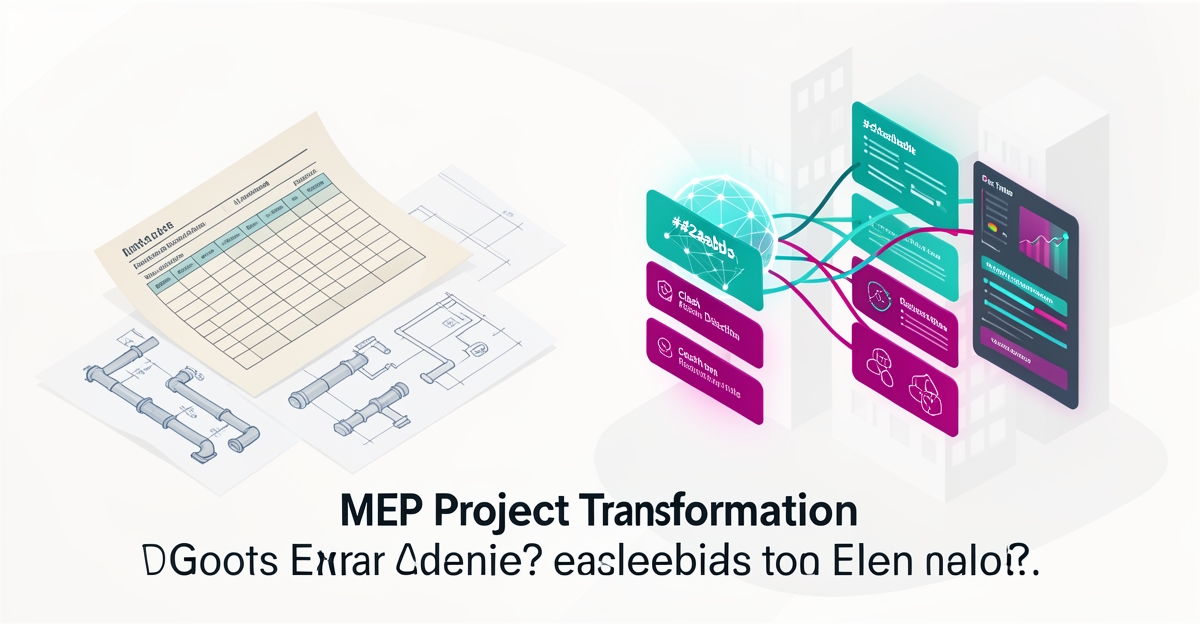
Why Most MEP Firms Still Use Manual Scheduling — And How AI Can Transform Project Planning
Key Facts
- Manual scheduling in MEP projects is time-consuming, inaccurate, and prone to human error according to published construction-management research
- AI-assisted coordination platforms in the MEP space report meaningful reductions in design clashes and coordination errors — IntoAEC, for example, cites roughly 40% in its own materials
- Vendors in this space also report faster RFI resolution cycles with AI-assisted workflows per IntoAEC's published platform claims
- AI-driven systems can provide end-to-end task transparency from design through installation in MEP projects per IntoAEC's real-time coordination features
- Schnackel Engineers' AI for MEP® technology optimizes behind-the-wall system layouts to identify the most efficient solution per their proprietary AI approach
- AI-based scheduling improves time accuracy, cost deviation, and resource utilization efficiency versus manual methods per comparative research metrics
- Live drawing revisions with instant alerts eliminate information silos that cause costly rework in MEP coordination as implemented by IntoAEC's platform
Hire a team member that works 24/7 — for less than a part-time wage.
AI receptionists, SDRs, dispatchers and 99+ roles. Trained on your business, fully managed.
Not sure where to start? Ask our AI planner
Introduction
The construction industry continues to rely on manual scheduling methods despite the clear advantages of modern technology. Most residential projects still use manual project scheduling and cost estimation that is time-consuming, inaccurate, and subject to human error, creating persistent inefficiencies in MEP project coordination. This reliance on traditional approaches persists even as firms recognize the limitations of fragmented tools, delayed approvals, and limited visibility into real-time site progress.
Manual scheduling methods in MEP engineering lead to challenges that compound across complex projects. Late design changes from architects or structural teams often trigger service clashes due to limited coordination, while approval delays for layouts and shop drawings further disrupt timelines. These issues are exacerbated by the industry's dependence on disconnected tools like AutoCAD MEP, Revit, and Excel for design, combined with email and phone calls for coordination—creating information silos that result in costly rework and schedule overruns.
AI-powered solutions offer a practical alternative by addressing these core pain points through intelligent automation. Platforms in this space report meaningful improvements—IntoAEC, for instance, cites a roughly 40% reduction in design clashes and coordination errors, faster RFI resolution cycles, and end-to-end task transparency from design to installation in its own materials. Treat vendor-reported numbers as directional rather than guaranteed, but the pattern is consistent: AI enables MEP teams to move from reactive problem-solving to proactive coordination through live drawing revisions, clash detection, and visual installation scheduling.
The integration of AI with existing project management workflows represents a practical path forward for firms seeking to modernize without disruption. By combining traditional planning methods with AI-based models that leverage machine learning and predictive analytics on real and simulated project data, MEP firms can improve estimation accuracy, reduce delays, and optimize resource utilization. This hybrid approach lets teams keep familiar workflows while gaining dynamic task assignment, proactive delay anticipation, and centralized collaboration—improving time accuracy, cost deviation, and resource utilization across projects.
Key Concepts
Despite the clear advantages, many MEP firms continue to rely on manual scheduling methods that create persistent inefficiencies in project planning and execution. Published research notes that most residential projects still use manual scheduling and cost estimation techniques that are time-consuming, inaccurate, and subject to human error. This reliance on traditional approaches persists even as the industry recognizes the limitations of fragmented tools and reactive coordination methods that lead to costly delays and rework.
The persistence of manual scheduling creates specific pain points that undermine project success, particularly in complex MEP systems requiring precise coordination across multiple disciplines. Teams frequently encounter late design changes from architects or structural teams, service clashes due to limited coordination, approval delays for layouts and shop drawings, and limited visibility into real-time site progress. These challenges are worsened by disconnected tools like AutoCAD MEP, Revit, and Excel combined with email and phone calls for communication, which creates information silos that slow decision-making and increase the likelihood of errors.
AI-powered solutions address these coordination failures through real-time visibility and proactive management. Platforms like IntoAEC demonstrate how AI integration can deliver live drawing revisions with instant alerts, automated clash detection, and visual dashboards that track installation progress by floor, zone, or system type—transforming how MEP teams manage dependencies and anticipate delays before they impact schedules. Vendor-reported outcomes in this space (such as reduced clashes and faster RFI cycles) point in a consistent direction, though your results will depend on project complexity and data quality.
AIQ Labs supports this transformation through AI Workflow Builds that rebuild the one workflow costing you the most—often scheduling and coordination—on a fixed-price, phased basis. Rather than replacing familiar tools, these solutions enhance current workflows with intelligent task assignment, dependency tracking, and delay prediction capabilities. By moving from reactive to proactive project management, MEP firms can reduce rework, improve resource utilization, and create more reliable schedules that adapt to changing conditions—turning scheduling from a persistent pain point into a strategic advantage.
Best Practices
MEP firms can transform their project planning by adopting AI-powered workflow automation that addresses the core limitations of manual scheduling. Start by assessing current processes to identify time-consuming tasks, accuracy gaps, and coordination breakdowns between design teams and subcontractors. Research consistently shows manual scheduling is time-consuming, inaccurate, and prone to human error, creating significant inefficiencies in managing complex MEP interdependencies. Next, evaluate AI solutions that integrate with existing project management platforms, ensuring seamless adoption without disrupting ongoing work. Platforms like IntoAEC show how AI-powered systems provide real-time coordination, clash detection, and collaboration, with vendor-reported outcomes including reduced design clashes and faster RFI resolution. Implement real-time features including live drawing revisions, version control with instant alerts, and automated clash coordination to eliminate information silos that lead to costly rework. Configure dynamic task assignment based on real-time conditions and resource availability, while deploying proactive alert systems that anticipate delays before they impact schedules. Train teams to leverage AI insights for informed decision-making and continuously monitor performance metrics like time accuracy, cost deviation, and resource utilization to measure gains. AIQ Labs supports this transition through custom builds that integrate with your project management tools to deliver real-time visibility and proactive alerts—built in milestones so you only continue when the numbers justify it. Finally, use AI-generated insights to continuously refine scheduling approaches and identify further efficiency gains across project portfolios.
Implementation
Transitioning from manual to AI-assisted scheduling requires a structured approach that respects existing workflows while introducing intelligent automation. MEP firms should begin by mapping their current scheduling processes to pinpoint where delays and errors most frequently occur, such as in clash detection or RFI resolution. Platforms like IntoAEC demonstrate how integrating AI with existing project management tools enables real-time coordination, with the vendor reporting reduced design clashes and faster RFI cycles.
The next step involves selecting AI solutions that specialize in construction-specific challenges, particularly those capable of analyzing complex MEP system layouts for optimal efficiency. Schnackel Engineers' AI for MEP® technology exemplifies this by evaluating viable behind-the-wall configurations to minimize rework and material waste. Firms should prioritize platforms that offer dynamic task assignment based on real-time resource availability and dependency tracking, ensuring that critical path activities are continuously optimized.
Successful implementation also depends on preparing teams to interpret and act on AI-generated insights. Training should focus on interpreting predictive alerts for potential delays and understanding how AI recommends resource adjustments. Establishing clear protocols for human-in-the-loop validation ensures that AI recommendations enhance rather than override professional judgment. Over time, firms can scale these capabilities across multiple projects, using performance metrics like time accuracy and cost deviation to measure improvements and refine their AI-driven scheduling approach. For firms that want a connected layer across all of it—not just one workflow—an AI Operating System built in phases and owned outright is the longer-term play. Schedule a free 30-minute strategy call to explore how AIQ Labs can support your firm's transformation with custom-built systems that integrate seamlessly with your current tools.
Conclusion
The persistence of manual scheduling in MEP firms isn't due to a lack of awareness—it's often rooted in workflow inertia and perceived integration hurdles. Yet continuing with spreadsheets and email chains carries measurable costs: projects remain time-consuming, inaccurate, and prone to human error, directly impacting coordination between design teams and subcontractors. Industry research confirms that most residential projects still rely on these methods, creating avoidable delays and rework that erode profitability.
AI-powered scheduling changes this reality by introducing dynamic task assignment, real-time dependency tracking, and proactive delay anticipation—capabilities that manual methods simply cannot match. Vendors in this space, such as IntoAEC, report tangible outcomes including reduced design clashes and faster RFI resolution, along with end-to-end task transparency from design through installation. These improvements stem from AI's ability to analyze complex interdependencies and optimize resource allocation continuously, turning reactive firefighting into proactive project stewardship.
For MEP firms ready to move beyond manual processes, the path forward begins with assessment and integration—not overhaul. Start by evaluating where scheduling bottlenecks occur in your current workflow, then explore AI solutions that plug into existing project management tools without disrupting ongoing projects. Prioritize platforms offering live drawing updates, automated clash detection, and intelligent task routing based on real-time site conditions. Equally important is investing in team training to ensure AI insights are acted upon, not ignored. With the right approach, firms can shift from fragmented coordination to a unified, intelligent project operating system—one that adapts as conditions change and keeps every stakeholder aligned. To explore how AI workflow automation can be tailored to your MEP projects, start the two-minute Fit Check—it's free, with no obligation, and if there isn't a clear win for your firm, we'll tell you that too.
Still paying for 10+ subscriptions that don’t talk to each other?
We build custom AI systems you own outright. No vendor lock-in. Full control.
Not sure where to start? Ask our AI planner
Frequently Asked Questions
Why do most MEP firms still rely on manual scheduling despite knowing it's inefficient?
What specific improvements can AI-powered scheduling deliver for MEP projects?
How does AI integration with existing tools work without disrupting current workflows?
What are the main challenges MEP firms face when switching from manual to AI-assisted scheduling?
Can AI really anticipate delays before they impact schedules, and how does it work?
What performance metrics should MEP firms track to measure the success of AI scheduling implementation?
From Spreadsheets to Smart Schedules: Your Next Move
Manual scheduling persists in MEP firms not because teams don't know better, but because change feels risky. Yet the costs of standing still are measurable: fragmented tools, reactive coordination, and human error that compounds across every project. AI-powered scheduling flips this equation—delivering dynamic task assignment, real-time dependency tracking, and proactive delay anticipation. Vendors like IntoAEC report reduced design clashes and faster RFI resolution, and while vendor numbers should be read as benchmarks rather than guarantees, the direction is clear. The path forward doesn't require ripping out your existing workflows. Start by identifying where your scheduling bottlenecks occur, then explore AI solutions that integrate with the project management tools you already use. That's exactly how AIQ Labs approaches these engagements—through AI Workflow Builds that rebuild your costliest workflow on a fixed price, in phases, so you only continue when the numbers justify it. If you're ready to see what AI workflow automation could look like for your MEP projects, take the two-minute Fit Check at aiqlabs.ai/apply. It's a free, no-obligation way to map your biggest bottleneck with an AI engineer—and if there isn't a clear win, we'll tell you that too.
Make AI your competitive advantage — not just another tool.
Strategy, implementation and ongoing optimization. One partner, end to end.
Not sure where to start? Ask our AI planner