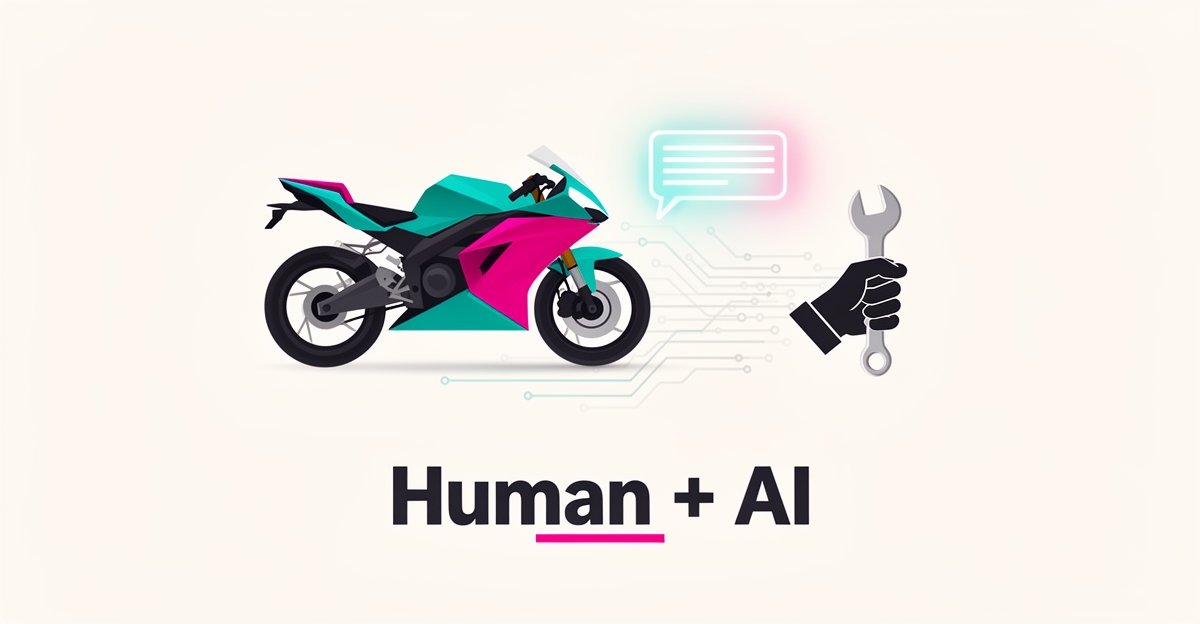
Why Most Motorcycle Body Shops Fail to Adopt AI for Customer Complaint Resolution
Key Facts
- Roughly 1 in 3 customers will leave a brand after a single bad experience, according to PwC research
- A majority of consumers feel more loyal when a dedicated human agent resolves their complaint, Ipsos data shows
- Agents can waste as much as 20% of their time searching for information that AI could retrieve instantly, per McKinsey research
- Emotionally connected customers are significantly more valuable than merely satisfied ones, Harvard Business Review found
- A majority of repair shop owners are exploring AI integration, industry research reveals
- Most repair shop owners believe AI could help them save time and increase revenue, according to recent surveys
- Generic AI fails because it automates final responses instead of supporting human judgment and empathy
Hire a team member that works 24/7 — for less than a part-time wage.
AI receptionists, SDRs, dispatchers and 99+ roles. Trained on your business, fully managed.
Not sure where to start? Ask our AI planner
The Automation Trap: Why Generic AI Fails at Complaint Resolution
The fundamental misconception driving failed AI implementations is treating the technology as a replacement for human judgment rather than a support system for it. When shops deploy generic chatbots to fire off final responses, they strip away the empathy that resolves complaints. Research shows that roughly 1 in 3 customers will leave a brand after a single bad experience, making tone-deaf automation a direct threat to retention. Industry analysis confirms that using AI only for final responses treats a complaint as a task to finish, ignoring the chance to understand, resolve, and learn.
The damage goes deeper than a single lost ticket. Global consumer data reveals that a majority of people feel more loyal when a dedicated human agent solves their problem. Generic AI cannot replicate the nuance of a service advisor who knows a customer's bike history, the specific delay on a backordered OEM fairing, or the frustration of a ruined riding weekend. Without that context, automated replies feel dismissive, turning a service recovery moment into a relationship-ending event.
Successful shops invert this model. They use AI to assemble the complete case file instantly — pulling service history, part availability, and repair timelines — so the human agent walks in with full context. McKinsey research notes agents can spend as much as 20% of their time searching for information; AI eliminates that drag. The technician or advisor then applies judgment and empathy, drafting a resolution the system can refine for consistency and policy alignment.
- AI gathers documents, transcripts, and policy details into a single view
- Sentiment analysis flags escalation risks before the first reply
- Resolution suggestions draw from past cases and current shop capacity
- Human agent owns the final message, preserving empathy and accountability
This augmented approach is exactly what [AIQ Labs' AI Employees](/ai-employees) are built for: managed AI staff trained on real motorcycle body shop data that understand repair workflows, parts logistics, and the language of the trade. The goal isn't to remove the human from the loop — it's to give them the bandwidth to be human where it matters most.
The Augmented Agent: A Human-First Approach to AI
Most motorcycle body shops don’t fail at AI because the technology is too new. They fail because they ask it to do the wrong job.
The human-first, augmented agent model flips the script. AI stays behind the scenes as an assistant to the complaint handler, not a replacement for them. That shift protects the empathy customers need while removing the friction that slows teams down.
According to customer experience research, agents can spend as much as 20% of their time searching for information. An augmented system automates that data collection instantly, pulling service history, repair timelines, part availability, and past case notes into a complete case file before the conversation starts.
With context assembled, the human agent can focus on judgment and connection. AI provides intelligent assistance throughout the lifecycle, from triage to closure, without writing the final response. This preserves the critical human elements of empathy and nuance that automated replies destroy.
The business case is clear. Harvard Business Review research shows emotionally connected customers are far more valuable than merely satisfied ones, and Ipsos data finds a majority of global consumers feel more loyal to a brand when a dedicated human agent is assigned to solve their problem.
In motorcycle body shops, that means AI can:
- Automatically gather customer history, documents, call transcripts and relevant policies from multiple systems
- Analyze initial complaints for sentiment and review dense documents for key data points
- Guide root cause analysis and propose fair resolutions based on past cases and company policy
- Prepare first drafts of response letters and summaries for human review and personalization
The result is faster, more consistent, and more human-centric resolution. Staff stop hunting for information and start building trust. Customers feel heard rather than processed, which matters because PwC research shows roughly 1 in 3 customers will leave a brand after a single bad experience.
This is where industry-specific training matters. Generic chatbots misread repair timelines and part availability, creating tone misalignment and lack of context. Systems trained on real motorcycle body shop data understand the operational realities behind a complaint and can surface the right facts to the human agent.
AIQ Labs builds AI support systems trained on real motorcycle body shop data for accurate, empathetic responses, supporting the human-first approach rather than full automation. The agent remains in control of the final decision, while AI handles the administrative load.
When AI augments instead of replaces, complaint handling becomes a chance to understand, resolve, and learn. That is how shops turn a moment of frustration into lasting loyalty.
The Strategic Advantage of Industry-Specific AI for Your Shop
Generic AI tools often miss the mark for motorcycle body shops because they lack the nuanced understanding of repair workflows, part availability, and service history that defines the industry. When a customer asks about a delayed paint job or a backordered OEM panel, a generic chatbot might offer a polite but irrelevant apology, failing to address the real operational constraints. This gap in contextual awareness leads to responses that feel disconnected from the shop’s daily reality, eroding trust rather than building it. According to industry research, a majority of repair shop owners in the United States are exploring ways to integrate AI tools into their businesses as of late 2026, yet many stumble at this first hurdle of relevance.
Industry-specific AI agents, trained on real motorcycle body shop data, transform this dynamic by acting as intelligent assistants that augment human complaint handlers rather than replace them. These systems can instantly pull repair timelines from past jobs, flag part shortages based on supplier lead times, and reference a vehicle’s service history to suggest accurate resolutions—all while preserving the agent’s role in delivering empathetic, judgment-based responses. This approach directly counters the common pitfall of using AI to generate final responses, which treats complaints as tasks to finish instead of opportunities to understand and learn. As noted in the research, agents can spend 20% of their time searching for information—a burden AI can lift by creating complete case files instantly from integrated systems.
The strategic advantage lies in shifting from automation that frustrates to augmentation that empowers. When AI handles data gathering and suggests actions based on factual patterns—like typical frame straightening durations or seasonal part availability—human agents gain the bandwidth to focus on emotional nuance and personalized solutions. This not only speeds up resolution but also strengthens loyalty, especially given that emotionally connected customers are significantly more valuable than merely satisfied ones. For shops aiming to move beyond basic automation, AIQ Labs builds custom support systems trained on real shop data to ensure every interaction feels informed, timely, and human. To explore how this could work for your specific workflow, [start with a Fit Check](/apply) to map your biggest bottleneck and identify high-ROI opportunities.
A Practical Roadmap for Implementing AI in Your Body Shop
Most body shops don’t fail because AI doesn’t work. They fail because they deploy it backwards, automating the final apology instead of supporting the person who delivers it.
A practical roadmap starts with reality, not hype. Shops that succeed treat AI as an assistant for complaint handlers, not a replacement for them. That human-first approach preserves empathy while removing the friction that slows resolution.
Assess needs before buying tools. Map where complaints stall: scheduling delays, repair order confusion, missed calls, parts ordering, or manual paperwork. According to industry research, a majority of repair shop owners in the United States are exploring ways to integrate AI tools, and most believe AI could help them save time and increase revenue. Use that insight to target pain points, not to chase features.
Start small with targeted automation that earns trust. Automate simple, high-volume tasks first so the team sees value immediately:
- Automated appointment booking and FAQ handling to reduce missed calls
- Digital repair orders with progress tracking to replace paperwork
- Context gathering that pulls service history, repair timelines, and part availability into one case file
- Draft summaries and response suggestions for agents to review and personalize
This augmented agent model directly addresses the up-to-20% of agent time currently spent searching for information, according to McKinsey research. When AI creates a complete case file instantly and suggests actions based on past cases and policy, staff shift from data collection to judgment and empathy.
Train the team to work with the new tools, not around them. Schedule hands-on practice, make sure members feel supported as they adapt to new workflows, and keep the human in control of the final decision. Team engagement is crucial for adoption; without it, implementation stalls even when the technology is sound.
Continuously optimize based on performance data and customer feedback. Review resolution times, repeat complaints, and customer sentiment. With roughly 1 in 3 customers leaving a brand after a single bad experience, according to PwC research, small tweaks to tone, timing, and context delivery deliver big wins for retention.
Shops that follow this sequence build systems that understand repair timelines, part availability, and service history, and deliver accurate, empathetic responses. AIQ Labs builds AI support systems trained on real motorcycle body shop data to support that exact workflow, keeping agents informed and customers heard.
Still paying for 10+ subscriptions that don’t talk to each other?
We build custom AI systems you own outright. No vendor lock-in. Full control.
Not sure where to start? Ask our AI planner
Frequently Asked Questions
Why do most motorcycle body shops fail when they try AI for complaints?
Does AI have to replace our service advisors?
How much time does AI actually save agents?
Is industry-specific AI really better than a generic chatbot?
Are other repair shops actually adopting AI?
What’s the first step to implement AI without hurting customer relationships?
Turn Complaints Into Loyalty: The Human-First AI Advantage
The most successful motorcycle body shops aren’t replacing their service advisors with AI—they’re empowering them. By using AI to gather service history, part availability, and repair timelines in seconds, agents reclaim the time lost to information searches and focus on what truly resolves complaints: empathy, judgment, and personal connection. This human-first approach doesn’t just speed up resolution—it builds the kind of loyalty that turns frustrated customers into lifelong advocates, especially when roughly 1 in 3 will walk away after a single bad experience. AIQ Labs builds industry-specific AI support systems trained on real motorcycle body shop data to make this shift seamless, keeping your team in control while eliminating administrative drag. Ready to see how this could work in your shop? [Start with the 2-minute Fit Check](/apply) and book a free 30-minute strategy call to map your biggest bottleneck and uncover high-ROI opportunities—no obligation, just clarity.
Make AI your competitive advantage — not just another tool.
Strategy, implementation and ongoing optimization. One partner, end to end.
Not sure where to start? Ask our AI planner