Why Most Muffler Shops Still Use Manual Work Orders — And How AI Fixes It
Key Facts
- Technicians in muffler shops commonly spend 6-10 hours weekly on manual documentation and data entry instead of repairs
- AI can typically auto-assign the majority of routine work orders without dispatcher intervention
- AI-powered routing can cut average work order response times by half or more in well-run deployments
- Predictive maintenance driven by AI typically reduces unplanned downtime meaningfully compared to reactive scheduling
- Mobile logging with AI assistance improves data accuracy by eliminating manual transcription errors
- Planned maintenance is generally far cheaper than reactive emergency repairs
- Shops adopting AI work order systems often report meaningful reductions in overall maintenance costs through better resource allocation
Hire a team member that works 24/7 — for less than a part-time wage.
AI receptionists, SDRs, dispatchers and 99+ roles. Trained on your business, fully managed.
Not sure where to start? Ask our AI planner
The Hidden Cost of Paper and Clipboard Work Orders
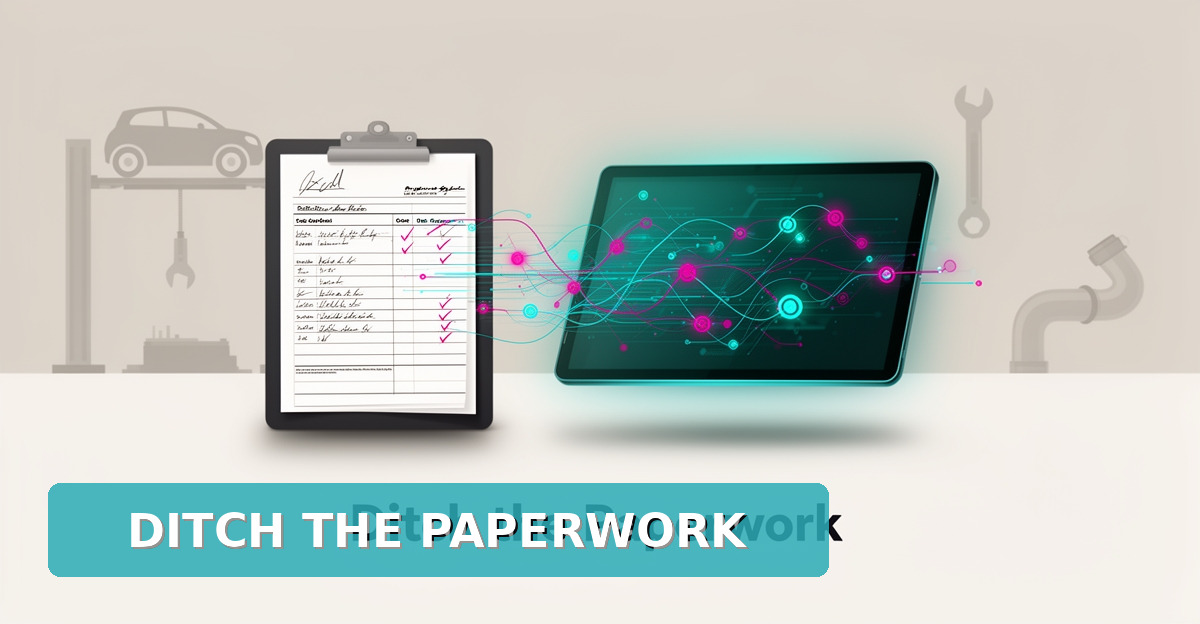
The hidden cost of paper and clipboard work orders goes far beyond the time spent filling them out. Manual systems force technicians to split their focus between repairs and documentation, creating a constant drag on productivity and responsiveness. This fragmented approach not only slows down service delivery but also increases the risk of errors, missed follow-ups, and customer frustration—all of which compound over time into significant operational inefficiencies.
Technicians in muffler shops commonly spend 6-10 hours weekly on documentation, work order creation, and data entry—time that could otherwise be spent on billable repairs or preventive maintenance. This administrative burden pulls skilled labor away from core tasks, effectively reducing shop capacity without adding headcount. When work orders are handwritten or typed into disparate systems, critical details like part numbers, service history, or safety notes often get lost or delayed in transcription, leading to rework or incorrect repairs.
Manual routing further exacerbates delays, as dispatchers rely on phone calls, sticky notes, or whiteboards to assign jobs—a process that lacks real-time visibility into technician location, skill set, or workload. As a result, the nearest or most qualified technician may not be assigned to a job, increasing response times and lowering first-time fix rates. Customers experience longer wait times, unclear status updates, and sometimes repeat visits, all of which erode trust and satisfaction.
These inefficiencies create a cycle of reactive firefighting, where shops constantly play catch-up instead of planning ahead. Without automated tracking and prioritization, urgent jobs can sit idle while lower-priority tasks are completed simply because they were logged first. Over time, this leads to missed commitments, increased overtime, and higher operational costs—problems that scale directly with shop size and volume.
AI-powered work order automation breaks this cycle by eliminating manual entry, intelligently routing jobs based on skill and proximity, and ensuring every detail is captured accurately from the start. By reducing the time technicians spend on paperwork and improving dispatch accuracy, shops can reclaim lost productivity, improve response times, and shift from reactive to proactive service delivery. For muffler shops still relying on clipboards and spreadsheets, the cost of inaction isn't just inefficiency—it's missed revenue and dissatisfied customers walking out the door. To explore how AI can streamline your work order workflow from request to closure, [start with a free strategy call](/apply) to assess your biggest bottleneck and identify high-ROI automation opportunities.
How AI Automates the Full Work Order Lifecycle
Manual work orders stall in the shop because requests arrive messy, routing is slow, and follow-up is reactive. AI compresses the entire lifecycle from capture to closure by standardizing inputs and automating decisions at each step.
Request capture and standardization starts the flow. AI parses incoming requests from phone, text, or the service desk and converts them into a structured record with vehicle ID, location, symptom category, and initial severity estimate. This removes much of the 6-10 hours technicians commonly spend each week on documentation and data entry.
Priority scoring happens in real time against business risk. Each work order is scored against vehicle criticality, failure history, active service commitments, and safety risk flags. The system surfaces what matters now instead of relying on dispatcher intuition.
Skill-based technician matching and dispatch follows. The work order is matched to the optimal technician based on certification match, current workload, shift schedule, and proximity to the bay. In well-configured deployments, the majority of routine work orders can be auto-assigned without any dispatcher intervention.
Inventory pre-check prevents wasted trips. Before dispatch, AI checks parts inventory against work order requirements and triggers an automatic procurement request when parts are missing. This eliminates the classic "arrive, wait, return" loop that inflates turnaround time.
SLA monitoring and automated escalation keeps work moving. Every open work order is tracked against its service target continuously, and overdue tasks trigger a configurable escalation chain. Shops using AI auto-assignment and routing typically see average response times drop by half or more.
The lifecycle advantage compounds across the shop:
- Standardized capture reduces errors and creates a clean data set for future forecasting
- Priority scoring aligns job criticality with technician capacity
- Auto-assignment cuts dispatcher workload and speeds first response
- Inventory pre-check ensures first-time fix rates improve
- Automated escalation protects service commitments and customer satisfaction
For muffler and field service teams, this is applied AI to a core operational process. AIQ Labs builds custom AI systems that streamline these exact workflows, reducing human error and improving turnaround times without forcing shops to adopt generic software. With [200+ multi-agent systems deployed](/workflow-builds) and four live SaaS products the company runs daily, the approach is proven in production—not theoretical.
The result is a closed loop where requests are captured cleanly, prioritized correctly, routed intelligently, and completed with visibility from start to finish.
Proven Efficiency Gains From AI Work Order Automation
The inefficiency of manual work orders isn't just a minor inconvenience—it's a measurable drain on shop productivity. Technicians in muffler and repair shops routinely spend 6-10 hours weekly on paperwork, data entry, and chasing down information, time that could be redirected to billable work. AI-powered work order automation directly attacks this bottleneck by handling creation, routing, and tracking without human intervention, turning a reactive process into a proactive system.
Shops implementing AI-driven work order solutions typically see concrete improvements across key operational metrics. AI-assisted predictive maintenance tends to reduce unplanned downtime by catching issues before failures occur. Mobile logging enhanced with AI improves data accuracy by eliminating manual transcription errors and ensuring consistent capture of critical details like part numbers and labor hours. These gains compound to create a more reliable workflow where technicians spend less time on admin and more time on repairs.
- AI-prioritized maintenance tasks typically yield meaningful efficiency gains by matching work to asset criticality and technician skill
- Planned maintenance enabled by AI is generally far cheaper than reactive emergency repairs, shifting cost from crisis management to predictable scheduling
- Shops adopting AI work order systems commonly report significant reductions in overall maintenance costs through better resource allocation and reduced waste
Beyond direct cost savings, AI automation transforms how work flows through the shop. Most routine work orders can be auto-assigned without dispatcher involvement, eliminating delays caused by manual triage. Combined with substantially faster average response times, jobs move from intake to completion significantly quicker. For muffler shops facing competitive pressure on turnaround times, this speed advantage directly impacts customer satisfaction and repeat business.
AIQ Labs helps shops realize these gains by building custom AI work order systems that integrate with existing tools while eliminating manual bottlenecks. The technology doesn't replace technicians—it removes the administrative drag that keeps them from doing what they do best: fixing vehicles efficiently and correctly the first time.
From Manual to Managed: Implementing AI Without Disruption
Muffler shops still relying on manual work orders are losing valuable technician time to paperwork and reactive problem-solving. Technicians typically spend 6-10 hours weekly on documentation, data entry, and work order creation—time that could be spent on actual repairs or customer service. This inefficiency creates delays, increases the risk of errors, and keeps shops stuck in a cycle of firefighting instead of proactive maintenance.
AI-powered work order automation transforms this cycle by handling the full lifecycle from request to closure. AI captures and standardizes incoming requests from any channel—phone, email, or in-person—into structured records with vehicle details, location, symptoms, and severity estimates. It then scores each work order in real time against criticality, failure history, service commitments, and safety risks to prioritize urgent issues. Using skill-based matching, AI assigns work to the optimal technician based on certifications, current workload, shift schedule, and proximity to the bay. Before dispatch, the system checks parts inventory and automatically triggers procurement if components are missing. Throughout the process, AI monitors service targets and escalates overdue tasks through a configurable chain, ensuring nothing falls through the cracks.
For muffler shops looking to implement AI without disruption, AIQ Labs offers a practical path forward. Start with a targeted [AI Workflow Build](/workflow-builds) focused on the one workflow that costs the most—like work order routing or dispatch—at a fixed price, delivered in phases. For broader impact, an [AI Operating System](/ai-operating-systems) connects your entire service operation into one operating layer you own outright, eliminating manual bottlenecks across scheduling, parts tracking, and technician coordination. Those who want managed help from day one can [Start Monthly](/pricing) with an AI Employee handling dispatch and work order management—an AI staff member that typically costs around 80% less than a human hire, with build, training, integrations, monitoring, and ongoing improvements included. Each approach aligns with AIQ Labs' Build in Milestones option, allowing shops to pay per phase, stop anytime, and retain everything built so far. This structured, low-risk implementation ensures AI enhances—not disrupts—daily operations while delivering measurable gains in response time, accuracy, and technician productivity.
Still paying for 10+ subscriptions that don’t talk to each other?
We build custom AI systems you own outright. No vendor lock-in. Full control.
Not sure where to start? Ask our AI planner
Frequently Asked Questions
How many hours per week do technicians typically spend on manual work order documentation?
What percentage of routine work orders can AI auto-assign without dispatcher involvement?
How much can AI reduce average work order response time in muffler shops?
Does AI work order automation require replacing my existing systems?
What cost savings can muffler shops expect from implementing AI work order automation?
How does AI prevent technicians from making unnecessary trips for missing parts?
From Clipboards to Clarity: Turning Work Order Chaos into Competitive Edge
Most muffler shops are unknowingly leaking productivity—hours per technician each week lost to manual work orders, fragmented routing, and reactive firefighting. This isn't just about paperwork; it's about missed repairs, delayed responses, and customers who don't come back. AI-powered automation flips the script by capturing requests accurately, prioritizing by real business risk, matching jobs to the right technician, and ensuring parts are ready before dispatch—all while protecting service commitments and reducing admin drag. The result? Faster turnarounds, fewer errors, and technicians spending more time wrenching and less time typing. For shops ready to stop playing catch-up and start running ahead, the first step is clarity: [book a free 30-minute strategy call](/book) with AIQ Labs to pinpoint your biggest bottleneck and see where AI can deliver immediate, measurable relief—no obligation, just a real conversation about what's possible. Questions first? Reach us at [email protected].
Make AI your competitive advantage — not just another tool.
Strategy, implementation and ongoing optimization. One partner, end to end.
Not sure where to start? Ask our AI planner