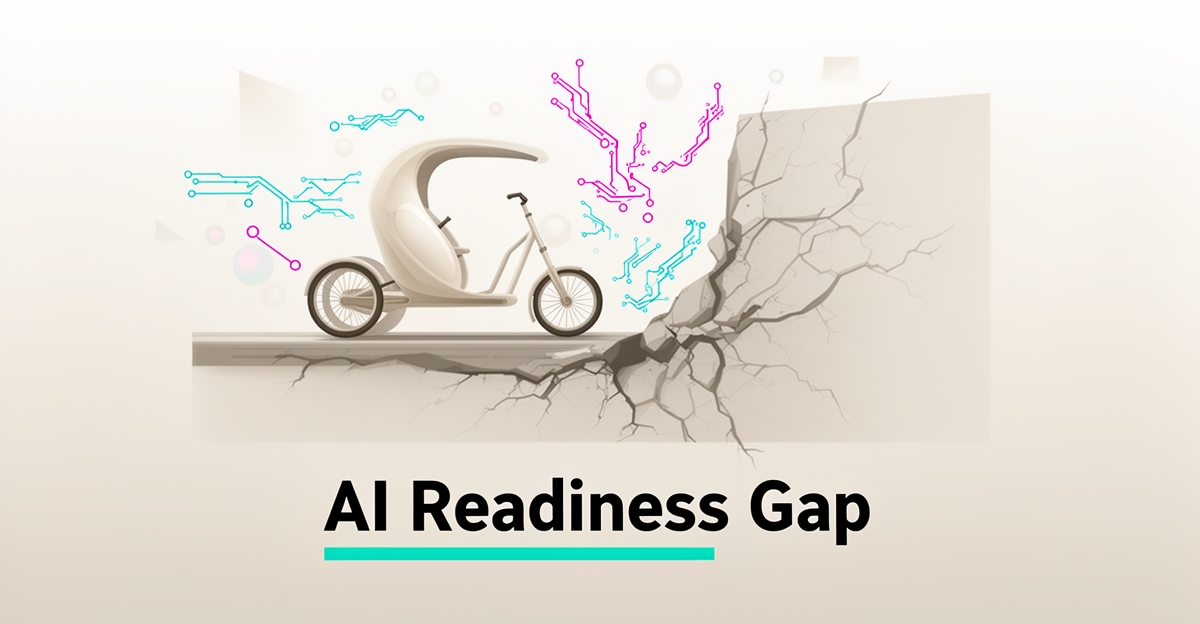
Why Most Pedicab Businesses Fail at AI Implementation
Key Facts
- 74% of businesses are investing in AI this year investing in AI according to industry research
- Most AI projects fail before reaching production per implementation guidance
- Poor AI data quality undermines success in 98% of organizations as highlighted by business data analysis
- 21% of AI projects are delayed due to insufficient data according to implementation advice
- 20% of organizations experience increased costs from fixing AI-related mistakes per practical AI guidance
- 19% of organizations face compliance issues due to inadequate AI governance from implementation guidance
- Implementing AI requires technical skills, data expertise, and business understanding as noted in practical AI guidance
Hire a team member that works 24/7 — for less than a part-time wage.
AI receptionists, SDRs, dispatchers and 99+ roles. Trained on your business, fully managed.
Not sure where to start? Ask our AI planner
The Harsh Reality: Why AI Projects Crash Before Takeoff
The gap between AI ambition and AI reality is widening, and pedicab operators are not immune. It is easy to see the headlines about automation and efficiency, but the data tells a much harder story for small fleets trying to move fast.
74% of businesses are investing in AI this year, according to industry research. That surge in spending is happening alongside a sobering failure rate. Most “AI projects” fail before reaching production, per implementation guidance, which means capital and staff time are spent on prototypes that never serve customers.
For pedicab businesses, the risk is amplified by thin margins and limited technical teams. Small fleet operators often lack the data foundations and governance needed to support production AI. Poor AI data quality undermines success in 98% of organizations, as highlighted by business data analysis. Without clean, integrated trip, booking, and payment data, models produce unreliable routing, pricing, or demand forecasts.
The failure points are consistent and preventable. Operators commonly encounter:
- Poor data integration across booking apps, dispatch sheets, and payments
- Lack of staff training and change management for new AI workflows
- Over-reliance on prototypes instead of production-ready systems
- Missing strategic alignment between AI use cases and daily operational pain points
These gaps create downstream costs. 21% of AI projects are delayed due to insufficient data, according to implementation advice, and 20% of organizations experience increased costs from fixing AI-related mistakes. For a pedicab fleet, a delayed dispatch assistant or inaccurate demand model translates directly to missed rides and driver idle time.
Implementing AI requires a combination of technical skills, data expertise, and business understanding, as noted in practical AI guidance. That combination is rare in small operations. The result is a pattern of pilot projects that stall, staff frustration, and a reluctance to try again.
Understanding these pitfalls before investing resources is critical. AIQ Labs works with SMBs to identify readiness gaps early, focusing on data readiness, strategic alignment, and sustainable adoption rather than hype-driven pilots.
The Data Quality Trap That's Sabotaging Your AI Ambitions
Poor data quality isn't just a technical hiccup—it's the silent killer of AI ambitions, with research showing it undermines success in 98% of organizations. For pedicab businesses, this often starts with fragmented, informal record-keeping: booking slips tucked in glove compartments, route notes scribbled on napkins, and maintenance logs that exist only in a mechanic's memory. Without clean, structured data on bookings, routes, customer preferences, and vehicle upkeep, any AI system built on this foundation is destined to falter—a classic case of garbage in, garbage out that hits small fleets especially hard.
The consequences are measurable and costly. Insufficient data directly causes 21% of AI project delays, stalling initiatives before they can deliver value, while 20% of organizations see increased costs from fixing avoidable mistakes rooted in poor data preparation. Pedicab operators attempting to implement AI for demand forecasting, dynamic pricing, or predictive maintenance quickly discover that their operational data lacks the consistency, completeness, and accuracy needed to train reliable models. This isn't about lacking effort—it's about lacking the data infrastructure to support meaningful AI integration.
Common data quality pitfalls in small fleet operations include inconsistent booking formats (mixing paper, text messages, and verbal agreements), missing customer contact details, unstandardized route descriptions, and maintenance records that skip critical service intervals. These gaps prevent AI from identifying patterns—like peak demand corridors or seasonal maintenance needs—that could transform efficiency. Before investing in AI, pedicab businesses must first assess their data readiness: Are records digitized? Are fields standardized? Is there a single source of truth for operations? Answering these questions isn't just prudent—it's the difference between AI that drives real improvement and AI that becomes another expensive experiment stuck in pilot phase. To evaluate your data foundation and identify high-ROI AI opportunities tailored to your pedicab operation, start with a free strategy call after completing our two-minute Fit Check.
Technology-First vs. Business-First: The Strategic Alignment Problem
A pedicab operator installs an AI chatbot on their website, subscribes to a predictive maintenance tool, and tests a route optimization app—yet six months later, none of these tools are in active use, and the core operational headaches remain unsolved. This scenario plays out constantly because most businesses approach AI backwards, leading with technology rather than the problem it needs to solve.
The data confirms this pattern is widespread. According to LinkedIn's analysis of AI implementation, most AI projects fail before ever reaching production, often because organizations jump on the AI bandwagon without first defining the specific problems they aim to solve. With 74% of businesses now investing in AI, the pressure to adopt is immense—but urgency without direction produces expensive shelfware, not results.
Technology-first thinking starts with a capability and searches for somewhere to apply it. A pedicab owner reads about AI route optimization and purchases a solution, never having measured whether routing is actually their bottleneck. Meanwhile, the real profit leak—dispatchers spending hours manually coordinating drivers during peak tourist season—goes unaddressed. The research is blunt about the consequences: 20% of organizations report increased costs from fixing AI-related mistakes, money spent correcting misdirected investments rather than solving actual problems.
Business-first thinking inverts the sequence entirely. It begins by identifying the specific operational constraint strangling growth, then evaluates whether AI is even the right tool. For pedicab operations, the genuine bottlenecks typically cluster into a few categories:
- Dispatch inefficiency — manual assignment of drivers to ride requests, causing delays and idle fleet time during peak hours
- Seasonal demand forecasting — inability to predict tourist surges and event-driven demand, leading to over- or under-staffing
- Booking friction — lost revenue from customers who can't easily reserve rides through their preferred channel
- Driver scheduling chaos — last-minute shift changes and coverage gaps handled through texts and phone calls
Each of these problems has a different solution profile, a different data requirement, and a different ROI timeline. A business-first approach identifies which one is costing the most money today, then asks whether AI addresses it better than a simpler process fix.
This is precisely why AIQ Labs opens every engagement with a readiness assessment rather than a technology pitch. The assessment maps current workflows, quantifies where time and revenue are actually lost, and evaluates whether the underlying data exists to support an AI solution—because even the right problem can't be solved with poor data foundations, a factor that undermines AI success in 98% of organizations.
The distinction between these two approaches isn't academic. Technology-first produces abandoned prototypes and organizational skepticism that poisons future AI efforts. Business-first produces a prioritized roadmap where every AI investment ties directly to a measurable operational outcome—and where the first solution that ships actually stays in production.
The Skills Gap and the Prototype Trap: Why DIY AI Fails for Small Fleets
Pedicab fleets are enthusiastic about AI, but enthusiasm rarely survives first contact with implementation. The gap between a promising demo and a working system is where small operators lose time, money, and confidence.
Implementing AI requires a combination of technical skills, data expertise, and business understanding, a mix most SMBs do not have in-house. With 74% of businesses investing in AI this year, the pressure to move fast is real, yet most “AI projects” fail before reaching production. The result is a cycle of demos that impress and systems that stall.
The prototype trap is especially common for small fleets. A vendor or an internal tinkerer builds a slick routing or demand-forecasting prototype using limited data. It works in the lab. It never survives real-world dispatch noise, messy booking logs, and staff habits. Organizations get stuck in pilot purgatory, showing the same dashboard quarter after quarter while the core operation stays manual.
Data readiness is the first hidden cost. Poor AI data quality undermines success in 98% of organizations, and 21% of AI projects are delayed due to insufficient data. For pedicab companies, that means fragmented ride logs, inconsistent driver notes, and no clean historical demand signals. Without a data strategy first, models learn the wrong patterns and staff stop trusting them.
Mistakes are expensive when they reach customers. 20% of organizations experience increased costs from fixing AI-related mistakes, from misrouted pickups to overpromised ETAs. Those errors erode trust in AI-generated insights and force owners to spend more time firefighting than operating.
Sustainable adoption hinges on people as much as technology. Staff training and change management are as critical as the model itself.
DIY AI fails for small fleets when it lacks:
- Technical skills to build production-ready systems, not prototypes
- Data expertise to clean, govern, and maintain reliable inputs
- Business understanding to align models with real dispatch and revenue decisions
- Change management to train drivers, dispatchers, and owners on new workflows
A readiness assessment changes the equation by mapping current technology stack, data infrastructure, and team capabilities before any build begins. AIQ Labs uses that assessment as the starting point for AI Readiness Assessment work, ensuring pedicab companies address skills, data, and process gaps before committing to technology.
Without that foundation, even a brilliant prototype remains a demo. With it, AI can move from experiment to everyday operations.
The AIQ Labs Readiness Assessment: Your Roadmap to AI Success
Pedicab operators are rushing to adopt AI, yet most pilots stall before they ever create value. With 74% of businesses investing in AI this year, the gap between ambition and successful implementation is widening fast.
Most “AI projects” fail before reaching production, and the reasons are predictable. Poor data quality undermines success in 98% of organizations, while 21% of AI projects are delayed due to insufficient data. Without a clear readiness check, small fleet operators risk burning budget on prototypes that never scale.
A practical readiness assessment is the difference between sustainable integration and another failed experiment. For pedicab businesses, that means evaluating four critical areas before any build begins.
- Data infrastructure audit to confirm quality, accessibility, and governance
- Business objective alignment to ensure AI solves real operational problems
- Staff capability assessment to identify skill gaps and training needs
- Realistic ROI modeling to set expectations and measure impact
Data is the foundation. An assessment starts by mapping where ride bookings, payments, maintenance logs, and customer interactions live today. Inconsistent records and siloed tools are common pitfalls that derail computer vision and dispatch automation later.
Strategic alignment comes next. According to implementation guidance, a crucial first step is to identify real business challenges AI can address effectively. For pedicabs, that might be dynamic pricing, route optimization, or automated customer support, not technology for its own sake.
Team readiness is equally important. Implementing AI requires a combination of technical skills, data expertise, and business understanding. A readiness review surfaces whether existing staff can support adoption or whether external partnership is required.
AIQ Labs applies this discipline through its AI Readiness Assessment within AI Transformation Consulting. The process is designed for SMBs to avoid the common traps of poor data integration, lack of staff training, and over-reliance on prototypes.
The assessment also stress-tests governance and risk. Organizations face compliance issues due to inadequate AI governance, and 19% of organizations see a deterioration in trust in AI-generated insights. Early evaluation prevents those costs.
With data quality, strategy, and capability validated first, pedicab operators can move from exploration to pilots with confidence. The result is not just an AI project, but a sustainable capability that supports long-term growth.
Still paying for 10+ subscriptions that don’t talk to each other?
We build custom AI systems you own outright. No vendor lock-in. Full control.
Not sure where to start? Ask our AI planner
Frequently Asked Questions
Why do most AI projects fail before reaching production, especially for small businesses like pedicab fleets?
How does poor data quality specifically impact AI implementation in pedicab businesses?
What’s the difference between a technology-first and business-first approach to AI, and why does it matter for pedicab operators?
What are the most common operational pain points in pedicab businesses that AI could actually solve?
Do I need to hire AI experts or train my current staff to implement AI successfully in my pedicab fleet?
What does an AI readiness assessment actually involve, and how can it prevent AI failure in my pedicab business?
Turning AI Ambition into Pedicab Profit: A Practical Path Forward
Most pedicab businesses don’t fail at AI because the technology is too complex—they fail because they skip the foundation. As this article shows, the real barriers aren’t flashy algorithms but fragmented data, misaligned priorities, and underprepared teams. When 98% of organizations see AI efforts undermined by poor data quality, and most projects stall before production, the cost isn’t just wasted budget—it’s eroded confidence and missed opportunities to streamline dispatch, forecast demand, or reduce booking friction. The good news? These pitfalls are predictable and preventable. By starting with a clear assessment of data readiness, operational pain points, and team capabilities—exactly what AIQ Labs’ AI Readiness Assessment delivers—pedicab operators can avoid the prototype trap and build AI that actually moves the needle. If you’re ready to see where AI could truly impact your fleet—not just where the hype points—take the two-minute Fit Check to uncover your highest-opportunity areas, then schedule a free strategy call to map a realistic, production-ready path forward.
Make AI your competitive advantage — not just another tool.
Strategy, implementation and ongoing optimization. One partner, end to end.
Not sure where to start? Ask our AI planner