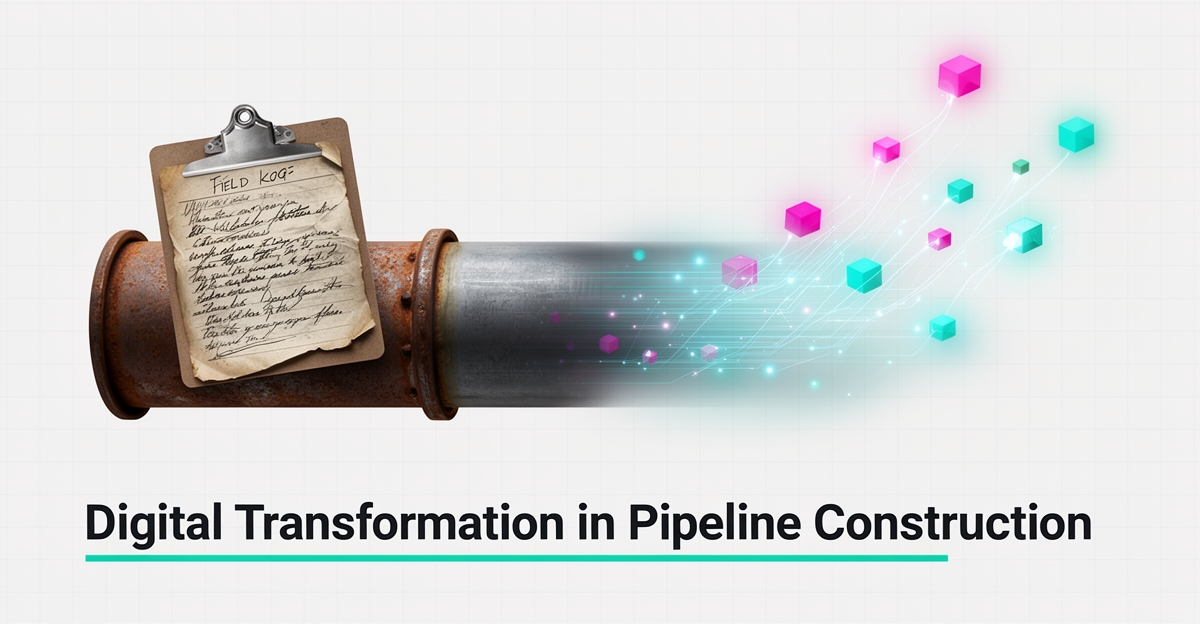
Why Most Pipeline Firms Still Use Manual Field Logs — And How AI Can Fix It
Key Facts
- Manual field logs persist due to lack of awareness of automation benefits according to industry experts
- Fivetran offers 500+ pre-built connectors for AI data pipelines per market analysis
- Airbyte provides 350+ pre-built connectors for data integration per current market data
- Fivetran pricing starts at $1 per 1,000 monthly active rows per pricing signals
- dbt pricing begins at $50 per seat per month for data transformation per market analysis
- AI-powered logging systems improve accuracy and efficiency in pipeline construction per industry research
- Benefits of AI logging far outweigh costs, making it a worthwhile investment per analyst assessments
Hire a team member that works 24/7 — for less than a part-time wage.
AI receptionists, SDRs, dispatchers and 99+ roles. Trained on your business, fully managed.
Not sure where to start? Ask our AI planner
The Hidden Cost of Manual Field Logs in Pipeline Construction
Manual field logs are still the default on pipeline sites because the problems they create feel familiar, while the risks feel distant. That inertia costs more than paper and pens.
Pipeline firms often continue manual logging due to lack of awareness of automation benefits and the potential risks associated with manual logging. Many teams simply do not see how real-time capture can change safety and reporting outcomes. Cost perceptions reinforce the status quo, as implementing AI-powered logging systems can be expensive and some firms may not see the value in investing in this technology.
Complexity is another anchor. Pipeline construction involves complex processes, and implementing AI-powered logging systems can be challenging. Integration concerns, engineering bandwidth, and change management make leaders pause even when the upside is clear. The research notes cost, complexity, and integration as core challenges when adopting AI logging.
These three barriers translate directly into operational drag:
- Delayed data means decisions lag behind field conditions, increasing error risk.
- Handwritten entries create inconsistencies that undermine reporting and compliance.
- Missed anomalies stay hidden until they become incidents, raising safety exposure.
The persistence of manual logs shows up in accuracy and timeline pressure. Without real-time data capture, teams rely on end-of-shift summaries that are prone to omission and transcription errors. Improved reporting becomes difficult when the source data is fragmented across notebooks, photos, and spreadsheets.
Market signals suggest the industry is moving anyway. The pipeline industry is shifting towards automation, with many firms investing in AI-powered logging systems. This trend is driven by the need for increased efficiency, reduced costs, and improved safety.
Tooling is maturing quickly, which changes the cost conversation. Current market analysis shows Fivetran’s library with 500+ pre-built connectors and Airbyte’s library with 350+ connectors. Pricing signals are also evolving, with Fivetran’s pricing starting at approximately $1 per 1,000 MAR and dbt’s pricing starting at $50/seat/month.
AI-powered logging systems can capture real-time data, reducing the risk of errors and improving accuracy. They can also detect anomalies and alert operators to potential issues, reducing the risk of accidents and improving safety. As industry research notes, AI-powered logging systems can significantly improve the accuracy and efficiency of pipeline construction.
At AIQ Labs, this is the kind of workflow we approach through AI Workflow & Task Automation, designing systems that capture field data as it happens rather than after the fact. The goal is not to replace field teams, but to remove the manual bottleneck that slows them down.
How AI-Powered Logging Systems Deliver Real-Time Value
Manual field logging creates delays that ripple through pipeline projects, as crews wait hours or days for paper logs to be processed and shared. This lag prevents teams from reacting quickly to issues like pressure fluctuations or material shortages, increasing the risk of costly rework or safety incidents. AI-powered logging systems eliminate this bottleneck by capturing data the moment it’s generated in the field, ensuring every measurement, inspection, and observation is immediately available to supervisors, engineers, and safety officers.
These systems use AI to continuously analyze incoming data streams, identifying subtle patterns that human reviewers might miss—such as gradual weld degradation or encroachment near utility lines—before they escalate into hazards. By flagging anomalies in real time, AI logging enables proactive interventions that protect both workers and infrastructure, directly addressing the safety gaps inherent in manual processes where problems often go unnoticed until the next scheduled review. According to industry experts, AI-powered logging systems can significantly improve the accuracy and efficiency of pipeline construction by turning passive record-keeping into active risk mitigation.
Beyond immediate alerts, AI logging transforms raw field data into structured, actionable insights without manual transcription or spreadsheet manipulation. Teams gain access to auto-generated reports that track progress against schedules, highlight recurring issues across crews or locations, and support predictive maintenance planning—all updated continuously as new data flows in. This capability is especially valuable in distributed pipeline projects where consistent oversight is challenging; AI ensures that field offices, regional managers, and corporate stakeholders all work from the same real-time view of operations. As noted in analyst assessments, the benefits of AI-powered logging systems far outweigh the costs, making it a worthwhile investment for firms seeking to reduce delays and improve decision-making.
AIQ Labs supports this shift by building custom AI logging agents that integrate directly with field devices and existing project management tools, ensuring data flows seamlessly from trench to dashboard. These agents are designed to withstand harsh outdoor conditions while maintaining secure, auditable records that meet regulatory requirements—turning field logging from a compliance chore into a strategic advantage. For pipeline firms ready to move beyond paper-based workflows, the path forward begins with assessing current logging practices and exploring how AI can turn field data into a live operational asset.
From Manual to AI: A Practical Implementation Path for Pipeline Firms
Manual logs persist because the cost and complexity feel immediate while the risk of errors feels distant. Shifting to AI-powered logging requires a deliberate path that minimizes disruption and protects ROI.
Start with an honest assessment of the current logging system. Evaluate where data is captured, how it moves, and where delays or transcription errors create rework. This baseline identifies the highest-value workflows for automation and sets measurable targets for accuracy and reporting speed.
Vendor evaluation comes next. Firms compare options like Fivetran with 500+ pre-built connectors in its library and Airbyte with 350+ connectors in its library. Pricing context matters too, with Fivetran pricing starting at approximately $1 per 1,000 MAR and dbt starting at $50/seat/month. Selection should prioritize real-time capture, anomaly detection, and integration fit over feature lists alone.
Integration planning ensures the new system works alongside existing field tools, not against them. Map data flows, define ownership of the pipeline, and build validation layers before go-live. True ownership of custom-built systems avoids vendor lock-in and allows future adaptation as operations evolve.
Team training is the adoption hinge. Operators need clear workflows for exceptions, overrides, and daily use. Training should be role-specific and reinforced with hands-on practice in the field environment.
Ongoing optimization closes the loop. Monitor accuracy, reporting latency, and anomaly response times, then refine models and thresholds. AIQ Labs follows this lifecycle approach through assessment, development, integration, governance, adoption, and scaling, aligning implementation with field realities.
A practical implementation path typically includes:
- Assess current logging system to identify error points and reporting gaps
- Research AI-powered logging systems for real-time data capture and anomaly detection
- Implement the new system with integration to existing field and office tools
- Train operators on effective use and exception handling
- Monitor and evaluate performance, making adjustments as needed
When executed this way, AI-powered logging delivers real-time data capture that reduces errors, anomaly detection that improves safety, and improved reporting that makes progress visible. As industry research notes, AI-powered logging systems can significantly improve the accuracy and efficiency of pipeline construction.
Still paying for 10+ subscriptions that don’t talk to each other?
We build custom AI systems you own outright. No vendor lock-in. Full control.
Not sure where to start? Ask our AI planner
Frequently Asked Questions
Why do pipeline firms still use manual field logs if AI is available?
What are the biggest risks of sticking with handwritten field logs?
How does AI-powered logging actually improve safety on pipeline sites?
Is AI logging really more accurate than manual logs?
What does an AI logging implementation path look like for a pipeline firm?
How expensive are AI data pipeline tools to connect to existing systems?
Turning Field Data into a Strategic Advantage
The persistence of manual field logs in pipeline construction isn’t just about habit—it’s a barrier to real-time decision-making, safety, and operational clarity. As we’ve seen, delayed data, inconsistent entries, and hidden anomalies all stem from a process that feels familiar but costs dearly in rework and risk. The good news is that AI-powered logging systems are no longer theoretical; they’re proven tools that capture data as it happens, flag issues before they escalate, and turn fragmented notes into a unified, auditable view of operations. For pipeline firms ready to move beyond paper, the path forward starts with assessing current workflows and exploring how AI can remove the bottleneck without disrupting field teams. AIQ Labs helps bridge that gap by building custom AI logging agents that integrate directly with existing tools, ensuring data flows seamlessly from trench to dashboard—so you own the system, not the vendor. If you’re curious about where your biggest logging inefficiencies lie and what real-time automation could unlock, we invite you to start with a free, no-obligation strategy call to map your opportunities and see if there’s a clear win. Book your free 30-minute strategy call to begin.
Make AI your competitive advantage — not just another tool.
Strategy, implementation and ongoing optimization. One partner, end to end.
Not sure where to start? Ask our AI planner