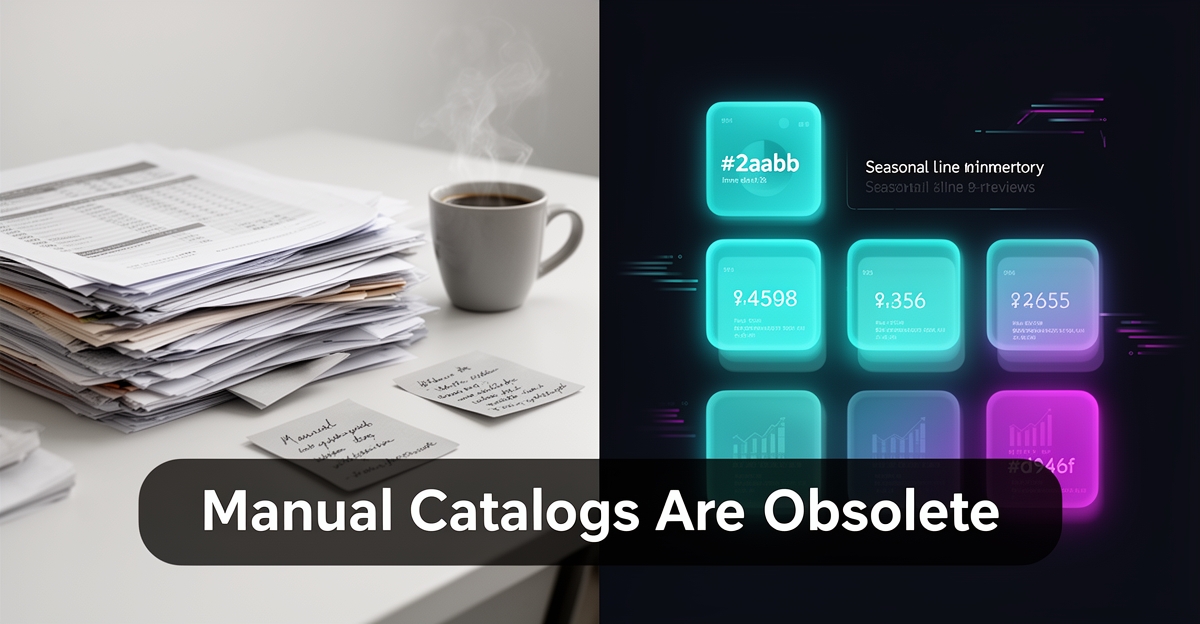
Why Most Promotional Distributors Still Use Manual Catalogs — And How AI Fixes That
Key Facts
- Most distributors already use general-purpose AI chatbots for basic tasks like prospect research and cold outreach, but few have connected them to catalog workflows
- Decoration methods—screen print, embroidery, pad print, laser engraving, heat transfer—each carry unique setup fees, color charges, and quantity breaks that make manual quoting slow and error-prone
- Fragmented vendor inventories mean teams often discover out-of-stock items only after a quote has been sent
- Deep Research-style AI modes can spend 10–15 minutes on extensive web research for vertical profiling and competitive analysis
- A significant share of distributors still use no AI design tools at all, leaving visual AI largely untapped
- AIQ Labs has deployed 200+ multi-agent systems and runs 4 live SaaS products daily
Hire a team member that works 24/7 — for less than a part-time wage.
AI receptionists, SDRs, dispatchers and 99+ roles. Trained on your business, fully managed.
Not sure where to start? Ask our AI planner
The Manual Catalog Trap Still Holding Distributors Back
Despite growing demand for AI across the promotional products industry, many distributors remain trapped in manual catalog workflows that hinder growth and efficiency. This persistence isn't due to a lack of awareness; most distributors already use general-purpose AI chatbots for basic tasks like prospect research and cold outreach. Yet most are only scratching the surface, treating AI like a simple search tool rather than leveraging its full potential for complex workflows such as catalog creation and product description generation.
The real barrier lies in how deeply entrenched manual processes have become within distributor operations. Established workflows built around spreadsheets, email chains, and manual product sourcing feel familiar and low-risk, even when they're slow and error-prone. Changing these systems requires more than just adopting new tools—it demands rethinking how teams collaborate, validate data, and deliver client presentations. For many, the perceived disruption outweighs the long-term gains, especially when AI implementation seems technical or overwhelming without clear guidance.
Compounding the issue is the inherent complexity of promotional products themselves. Decoration methods like screen print, embroidery, pad print, laser engraving, and heat transfer each come with unique setup fees, color charges, and quantity breaks that complicate quoting and catalog accuracy. When combined with fragmented vendor inventories—where distributors must manually check stock across portals from suppliers like SanMar, S&S Activewear, and PF Concept—the result is a slow, error-prone process that delays orders and frustrates buyers. Without real-time data integration, teams often discover out-of-stock items only after a quote has been sent, forcing costly revisions and damaging client trust.
AI offers a way out of this cycle by automating the most tedious parts of catalog creation while preserving the distributor's strategic role. For instance, AI-powered product description generation can instantly craft tailored, marketing-ready copy for new or seasonal lines—saving hours of manual writing and ensuring consistency across campaigns. When paired with real-time inventory feeds from major vendors, AI eliminates guesswork and reduces out-of-stock surprises. This isn't about replacing human expertise; it's about freeing distributors from administrative drag so they can focus on what truly drives revenue: understanding client needs, building relationships, and closing deals.
AIQ Labs helps promotional distributors break free from this manual trap. Whether you need a single high-cost workflow rebuilt through [AI Workflow Builds](/workflow-builds) or a fully managed AI team handling catalog upkeep, quoting support, and client follow-up through [AI Employees](/ai-employees), the goal is the same: turn a historical weakness into a competitive advantage.
How AI Automates Product Descriptions and Catalog Workflows
Manual catalog creation still consumes hours that distributors could spend closing deals. Most teams already use AI chatbots, yet treat them like a search engine — one question, one answer — missing the capabilities that actually transform workflows.
AI changes the equation by automating the bottlenecks that stall proposals and presentations. Automated product description generation handles new and seasonal lines at scale, producing consistent, marketing-ready copy without manual drafting. Real-time inventory sync pulls stock data from major vendor portals directly into unified catalogs, eliminating the fragmented portal-checking that causes out-of-stock surprises. For creative direction, today's leading models generate strong product imagery, letting teams build mood boards and visual concepts before a single product search.
- Deep Research modes can spend 10–15 minutes conducting extensive web research for vertical profiling and competitive analysis
- Claude excels at proposal narratives, RFP analysis, and complex writing that requires nuance
- NotebookLM turns uploaded supplier catalogs and trade show recaps into a private, queryable knowledge base
AIQ Labs builds custom AI systems that adapt product content to specific client audiences and campaigns, integrating these capabilities into the platforms distributors already use. For teams that want one connected layer instead of scattered tools, [AI Operating Systems](/ai-operating-systems) tie descriptions, inventory data, and client history into a single system you own outright. The shift isn't about replacing expertise — it's about removing the administrative drag so teams can focus on the strategic work that wins accounts.
Choosing the Right AI for Promo-Specific Tasks
Picking the wrong model is the fastest way to stall an AI rollout in promo distribution. The distributors who gain momentum match platform strengths to the actual work their teams do every day.
ChatGPT remains the most widely adopted tool in the industry, yet most users treat it like Google. For promo-specific tasks, its real edge is prospect research and sales prep. Deep Research-style modes spend 10–15 minutes conducting extensive web research before generating responses, which dramatically improves accuracy for vertical profiling and competitive analysis.
Claude earns trust when nuance matters. Distributors turn to it for proposal narratives, RFP analysis, pricing decisions, and newsletter writing. When work requires longer thinking and careful writing across a long document, Claude is typically the pick. That makes it well suited for client-specific proposals and polished presentations that manual catalog workflows delay for days.
Gemini leads for visual ideation. It is among the strongest image generation platforms available as of late 2026, making it valuable for mood boards, creative brief direction, and early concept development before product search begins. With a significant share of distributors still using no AI design tools at all, visual AI remains an untapped advantage.
Integration determines whether these models stay as toys or become workflow tech. Leading promo platforms show how:
- commonsku embeds AI mockup generation directly into presentation workflows, allowing photorealistic, decoration-aware product mockups to flow into client decks.
- Supplier integration platforms connect with ERP and commerce systems so pricing, order status, and program data flow directly into AI tools.
- Real-time inventory sync services pull stock from major vendor portals into unified catalogs, cutting out-of-stock surprises.
The lesson from the industry's rush toward AI webinars and trade show sessions is urgency without clarity. Matching ChatGPT for research, Claude for nuanced proposals, and Gemini for visual ideation to existing systems like commonsku and your ERP removes the guesswork.
AIQ Labs builds custom AI systems that adapt product content to specific client audiences and campaigns, including tailored product description generation for new or seasonal lines. That approach keeps human expertise in the lead while automating the repetitive catalog work that drains sales talent.
A Lean Implementation Plan Distributors Can Start This Quarter
The industry's appetite for AI sessions at recent trade shows signals a clear truth: promotional distributors know manual catalog workflows are unsustainable, but most don't know where to start with AI.
- Assess time-heavy workflows first — map the hours your team spends building presentations, sourcing products, and managing orders; those are your highest-ROI automation targets
- Pick a platform by use case — ChatGPT for prospect research and Deep Research, Claude for proposal narratives, Gemini for visual ideation
- Enable Deep Research modes across your platforms for vertical profiling, competitive analysis, and supply chain disruption monitoring
- Integrate with ESP, SAGE, and your CRM so product data, pricing, and client history flow directly into AI-generated outputs
- Start with one high-impact workflow — automated product description generation for seasonal lines or real-time inventory sync
AIQ Labs builds custom AI systems that adapt product content to specific client audiences and campaigns, turning weeks of catalog work into minutes. Measure proposal turnaround time, storefront currency, and inbox-driven delays weekly — those metrics prove the shift is working and guide the next quarter's expansion. If you want a fixed-price rebuild of the one workflow costing you the most, start with [AI Workflow Builds](/workflow-builds); if you'd rather have managed AI staff handling the routine work, see [AI Employees](/ai-employees).
Still paying for 10+ subscriptions that don’t talk to each other?
We build custom AI systems you own outright. No vendor lock-in. Full control.
Not sure where to start? Ask our AI planner
Frequently Asked Questions
Why do promotional distributors still use manual catalogs if AI is available?
How many distributors are actually using AI right now?
Which AI tool is best for product descriptions and catalog work?
What's the biggest mistake distributors make with AI?
Can AI help with out-of-stock surprises from vendors?
Where should I start with AI if manual catalogs are overwhelming?
From Manual Catalogs to AI Advantage: Your Next Move
The evidence is clear: distributors across the industry have signaled their urgency to move beyond manual catalogs, yet most are only scratching the surface of what AI can do. By matching the right tools—ChatGPT for prospect research, Claude for nuanced proposals, and Gemini for visual ideation—to integrated inventory feeds, promotional businesses can automate the tedious work of description generation and inventory syncing while preserving their strategic edge. AIQ Labs turns this potential into reality through custom AI systems that adapt to your workflows, giving your team back hours each week to focus on client relationships and closing deals. If you're ready to see where AI delivers the fastest impact, complete the 2-minute Fit Check at [/apply](/apply) and book a free 30-minute strategy call to map your biggest bottlenecks — no obligation, no hype.
Make AI your competitive advantage — not just another tool.
Strategy, implementation and ongoing optimization. One partner, end to end.
Not sure where to start? Ask our AI planner