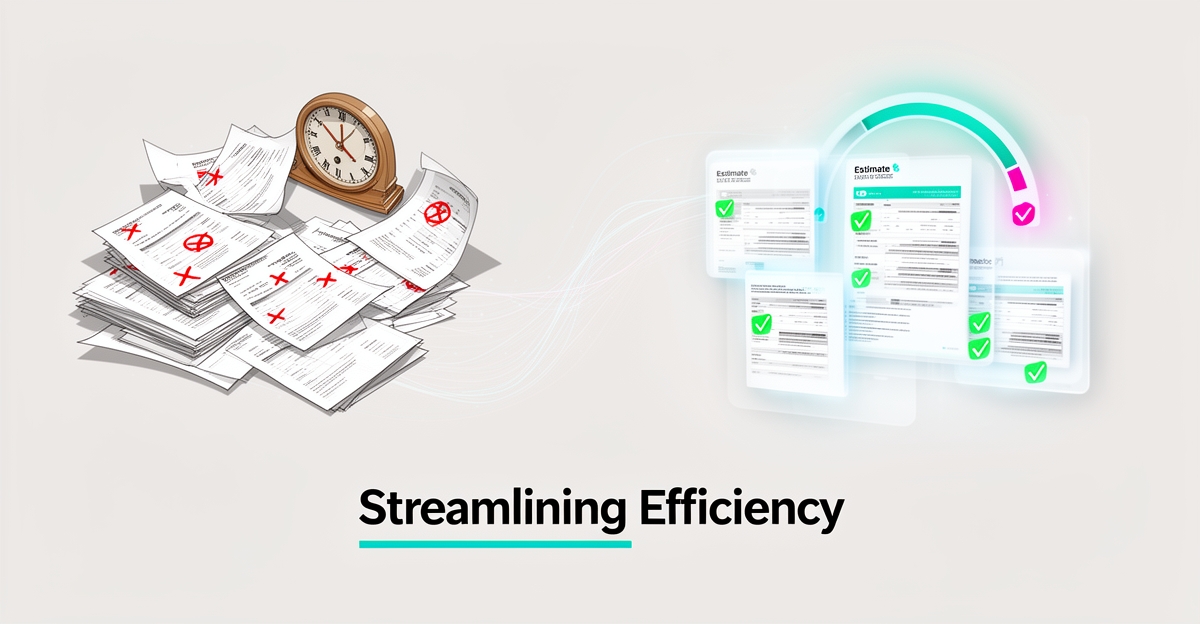
Why Most Remodeling Firms Still Rely on Manual Estimate Reviews — And How AI Can Fix It
Key Facts
- Manual estimating commonly takes several hours per mid-size remodel, according to Handoff research.
- Manual methods are often cited with error rates in the 10–20% range, per manual vs. automated comparisons.
- U.S. construction rework has been estimated at $400–$600 billion annually, per Gitnux industry statistics.
- AI-assisted estimating is reported to cut error rates to the 0–5% range, according to industry research.
- AI can compress estimating from hours to roughly 15–30 minutes, letting estimators handle several times more bids weekly, per EstimationPro AI.
- Recent market analyses suggest roughly a third of remodeling firms now use AI estimating tools, with adoption climbing year over year, per Handoff market data.
- AI-powered estimating has been linked to profitability improvements of up to 20%, according to Gitnux research.
Hire a team member that works 24/7 — for less than a part-time wage.
AI receptionists, SDRs, dispatchers and 99+ roles. Trained on your business, fully managed.
Not sure where to start? Ask our AI planner
The Hidden Cost of Manual Estimate Reviews
Manual estimating still dominates remodeling because it feels familiar, but the familiarity masks a compounding cost problem that shows up in lost bids and eroded margins.
A mid-size remodel estimate can consume several hours when done manually, according to Handoff research on traditional estimating. That time goes to cross-referencing blueprints, photos, and client notes, re-checking material pricing, and rebuilding calculations that change with every revision. The process is slow, and slowness costs jobs.
Speed is only part of the damage. Comparisons of manual versus automated estimating commonly cite error rates in the 10–20% range for manual methods, driven by calculation mistakes, outdated pricing, and missed scope items. Those errors don't stay contained. They surface as change orders, on-site rework, and margin compression after the contract is signed.
The industry scale of that rework is stark. Industry statistics compiled by Gitnux cite a $400–$600 billion annual cost impact from construction rework in the U.S., with a meaningful share of project costs lost to change orders and change management inefficiencies. Manual estimate reviews are a primary entry point for those losses.
The hidden cost shows up in three ways firms feel every week:
- Time tax: hours per estimate tie up estimators and delay proposals, losing jobs to faster competitors
- Error tax: double-digit error rates create budget overruns and damage client trust when actuals diverge from quotes
- Rework tax: inaccurate takeoffs feed the industry's multi-hundred-billion-dollar annual rework problem
Firms often accept this as normal because the review process is fragmented. Blueprints live in one folder, photos in another, client notes in email threads, and pricing in spreadsheets. Reviewers manually extract quantities and assumptions, then validate them by eye. That manual validation loop is where inconsistencies slip through.
This is where AI document processing changes the economics. AI can extract, analyze, and validate key data points from blueprints, photos, and client notes to generate accurate, consistent, and compliant quotes. AIQ Labs targets exactly this bottleneck through AI Workflow Builds—a fixed-price rebuild of the single workflow that costs your firm the most.
When estimates are created from structured data rather than memory and re-reading, the review shifts from re-checking math to confirming intent. That compresses the cycle, narrows error rates toward the 0–5% range reported for AI-assisted estimating, and protects margins before work begins.
Why Firms Stay Stuck: Barriers to AI Adoption
Despite the clear advantages of AI-powered estimating—compressing estimate time from hours to minutes and sharply cutting error rates—many remodeling firms remain hesitant. Industry surveys point to the primary barriers: lack of training and support, high upfront costs, limited integration with existing systems, and ongoing concerns about data security and privacy. These challenges often outweigh the perceived benefits, especially for smaller firms operating with tight margins and limited IT resources. As a result, even as AI adoption accelerates across the industry, a significant portion of contractors continue to rely on manual processes that are slow, inconsistent, and prone to costly mistakes.
However, the tide is turning. Recent market analyses suggest roughly a third of remodeling firms have already implemented AI-powered estimating tools, with adoption climbing year over year. This growing momentum reflects a shift in mindset, as early adopters report faster turnaround times, improved bid accuracy, and stronger competitiveness in winning projects. Firms using AI estimating also benefit from integration with project management and accounting platforms, enabling real-time cost tracking and reducing the risk of budget overruns. For those still on the fence, the barriers are real—but they are not insurmountable, especially with the right implementation partner.
AIQ Labs helps remodeling firms overcome these obstacles through a phased, milestone-based approach designed specifically around estimate reviews. We start by assessing your current workflow, identifying integration points, and building in phases so you see working results early rather than betting everything on a long pilot. Our payment models—Start Monthly, Build in Milestones, or Own It Outright—mean you're never locked into a subscription you don't control, and you own what gets built. With the right strategy, firms can move beyond pilot projects and scale AI across their estimating operations, turning a traditional pain point into a source of operational excellence.
How AI Transforms Blueprint to Quote in Minutes
The traditional estimate review process is a bottleneck that costs remodeling firms time, money, and missed opportunities. Manual takeoffs from blueprints, photos, and client notes often consume hours per estimate for a mid-size remodel, tying up estimators in repetitive data entry and increasing the risk of costly errors. Handoff confirms that this time-consuming approach directly impacts job win rates and profit margins, especially when estimators juggle multiple projects simultaneously.
AI-powered document processing transforms this workflow by automatically extracting and analyzing critical data from diverse inputs. Computer vision and natural language processing scan blueprints to identify room dimensions, material specifications, and structural details, while simultaneously interpreting photos and client notes to capture scope changes or finish preferences. This multi-source analysis eliminates manual measurement transcription and reduces the interpretation errors that commonly occur when estimators cross-reference disparate documents.
The technology then validates extracted measurements against regional pricing databases and historical project data, flagging inconsistencies before they become costly mistakes. According to Gitnux, AI-powered estimating is reported to reduce error rates from the 10–20% range in manual processes to 0–5%, significantly improving quote reliability. This validation layer also helps ensure compliance with local building codes and material availability, preventing rework caused by overlooked specifications or outdated pricing.
Perhaps most significantly, AI compresses the entire estimate-to-quote cycle from hours to minutes. What once required hours of manual effort can now take roughly 15–30 minutes, as the system auto-generates line-item costs, applies labor rates, and produces client-ready quotes with minimal human intervention. EstimationPro AI notes that this acceleration allows estimators to handle several times more bids weekly without sacrificing accuracy, directly increasing pipeline velocity and win potential.
These AI capabilities integrate with existing project management and accounting platforms through API connections, ensuring data flows from estimate approval to job costing and invoicing. Rather than replacing estimators, the technology augments their expertise—freeing them to focus on value-engineering solutions, client consultations, and complex scope negotiations instead of manual data wrangling. For remodeling firms seeking to eliminate estimating bottlenecks while maintaining quote precision, AI document processing delivers a measurable shift from reactive error correction to proactive, confident bidding.
Real Results: The Business Case for AI Estimating
Manual estimate reviews are quietly eroding remodeler margins while competitors move faster. The gap between how quotes are built today and how they can be built is measurable in hours, error rates, and won work.
AI-powered estimating has been linked to error-risk reductions of up to 90% and profitability improvements of up to 20%, according to industry research. That improvement comes from replacing manual calculations with systems that extract, analyze, and validate key data points from blueprints, photos, and client notes to generate accurate, consistent, and compliant quotes.
The business case is built on speed and control. Manual estimating can take hours per estimate for a mid-size remodel, creating bottlenecks that cost jobs. AI estimating can generate accurate estimates in a fraction of that time, while providing real-time tracking of estimated versus actual costs and early warning of potential budget overruns.
Firms are already shifting. Recent market analysis suggests roughly a third of firms now use AI-powered tools, with adoption up sharply year over year. That adoption is driven by outcomes that show up on P&Ls, not just dashboards.
| Feature | Manual Estimating | AI-Powered Estimating |
|---|---|---|
| Accuracy | Commonly cited 10–20% error rate | Reported 0–5% error rate |
| Time | Hours per estimate | Roughly 15–30 minutes per estimate |
| Integration | Limited integration with other systems | Connects with project management and accounting tools |
| Collaboration | Limited collaboration between team members | Real-time collaboration between team members |
The difference is not theoretical. Error reduction and faster turnaround translate directly into more bids submitted per week and fewer costly change orders. Real-time cost tracking creates visibility before overruns materialize, and integration with construction management systems removes re-entry and version confusion.
For remodeling firms evaluating document automation, the value shows up across the estimate lifecycle:
- Extraction from blueprints, photos, and notes without manual retyping
- Automated validation against pricing libraries and historical jobs
- Real-time variance alerts between estimated and actual costs
- Consistent, compliant quotes that sales and operations can trust
AIQ Labs maps this workflow through AI Workflow Builds—we rebuild the one workflow that costs you the most, at a fixed price, in phases. For firms ready to connect estimating with scheduling, dispatch, and follow-up across the whole operation, AI Operating Systems provide one connected layer you own outright, built in phases. And if the bottleneck is really headcount—estimating support, intake, follow-up—AI Employees add managed AI staff at a fraction of the cost of a human hire. With 200+ multi-agent systems deployed and four live SaaS products we run daily, we build systems you own, not subscriptions you rent.
The result is a quoting function that is faster, more accurate, and auditable. Firms that move from manual reviews to AI-assisted validation protect margin, win more work, and spend less time reconciling estimates after the job starts.
Making the Shift: Implementation Roadmap for Remodelers
For remodeling firms ready to modernize their estimating process, the shift begins with a clear assessment of current workflows. Many teams still spend hours per estimate on manual takeoffs and calculations, a bottleneck that directly impacts job volume and profit margins according to industry research. Mapping out each step—from blueprint review to final quote delivery—reveals where delays and errors most frequently occur, creating a foundation for targeted automation.
Choosing between custom-built and off-the-shelf AI solutions depends on a firm's specific needs and existing technology stack. Off-the-shelf tools may offer quick deployment for standard tasks, but custom systems built by partners like AIQ Labs ensure integration with project management, accounting, and CRM platforms while eliminating vendor lock-in—you own the system outright. This approach aligns with the broader trend of accelerating AI adoption across the construction sector, with roughly a third of firms already using AI-powered estimating tools.
Successful implementation requires thoughtful integration and team training. AI-driven document automation can ingest blueprints, photos, and client notes to extract measurements, material specs, and labor requirements with dramatically fewer errors than manual methods, based on industry findings. Training should focus on how AI augments human expertise—handling repetitive data extraction so estimators can focus on value engineering and client consultation—while establishing clear protocols for reviewing AI-generated outputs. With the right roadmap, firms can transition from manual reviews to intelligent, end-to-end estimate intelligence that scales with their business.
Still paying for 10+ subscriptions that don’t talk to each other?
We build custom AI systems you own outright. No vendor lock-in. Full control.
Not sure where to start? Ask our AI planner
Frequently Asked Questions
How long does a manual estimate typically take for a mid-size remodel?
What is the error rate for manual estimating compared to AI-powered estimating?
How much time can AI-powered estimating save per estimate?
What percentage of remodeling firms currently use AI-powered estimating tools?
What are the main barriers to AI adoption in remodeling firms?
How does AI estimating improve profitability for remodeling firms?
Turn Your Estimating Bottleneck Into a Competitive Edge
Manual estimate reviews carry a hidden triple tax—hours per estimate, double-digit error rates, and a share of the industry's $400–$600 billion annual rework problem—while AI-powered estimating compresses that same work into minutes with error rates approaching the 0–5% range. With roughly a third of remodeling firms already adopting these tools, the competitive gap widens each quarter. Moving forward requires assessing your current workflow, choosing a solution that integrates with your existing systems, and partnering with a team that builds systems you own outright. AIQ Labs rebuilds the estimating workflow through AI Workflow Builds—fixed price, phased delivery, no vendor lock-in—extracting, analyzing, and validating data from blueprints, photos, and client notes so estimating becomes a source of margin protection and growth. Ready to see what this looks like for your firm? Start the two-minute Fit Check at aiqlabs.ai/apply or book a free 30-minute strategy call to map your biggest automation opportunity.
Make AI your competitive advantage — not just another tool.
Strategy, implementation and ongoing optimization. One partner, end to end.
Not sure where to start? Ask our AI planner