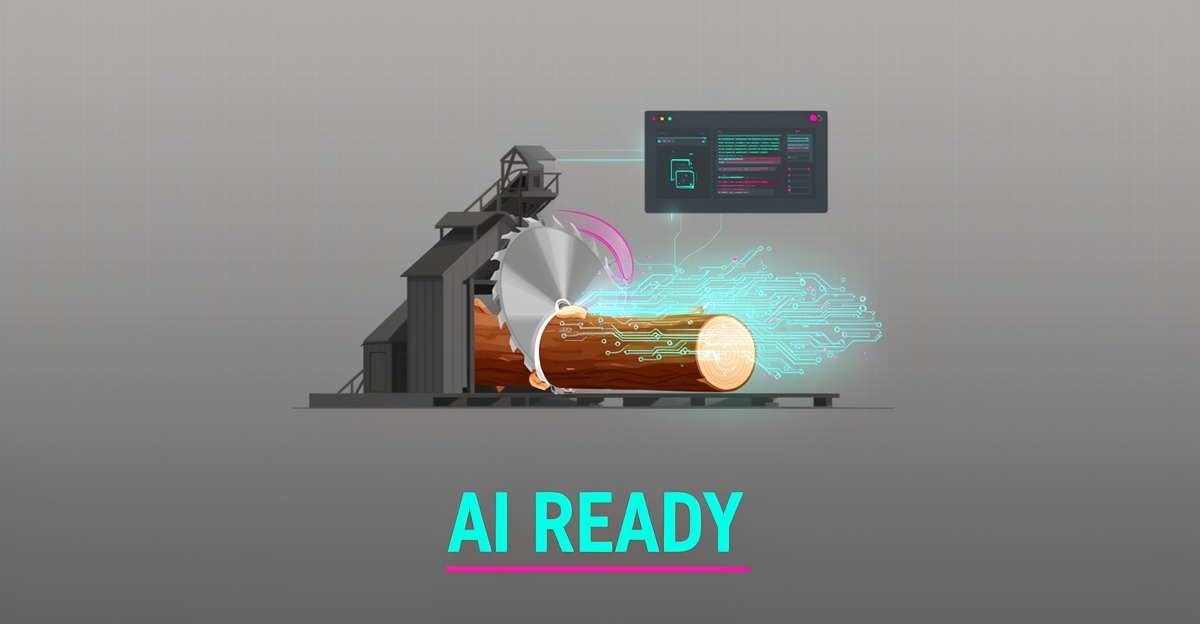
Why Most Sawmills Fail at AI Adoption (And How to Avoid It)
Key Facts
- Lumber industry research notes the industry struggles to leverage the value and power of big data analytics despite unprecedented opportunities per Springer research
- AI and machine vision enable efficient log breakdown, process health monitoring, and smart edging/trimming per Springer chapter
- Nondestructive evaluation is crucial for moisture pre- and post-sorting in kiln drying per industry research
- Smart lumber grading can be practiced using NDE-based techniques combined with AI per Springer
- Digital twins are highlighted as important in sawmilling via IoT, cyber-physical systems, and cloud computing per CoLab summary
Hire a team member that works 24/7 — for less than a part-time wage.
AI receptionists, SDRs, dispatchers and 99+ roles. Trained on your business, fully managed.
Not sure where to start? Ask our AI planner
The Sawmill 4.0 Gap: From Automation to Smart Manufacturing
Many sawmills have embraced automation through sensors, conveyors, and basic machine vision, yet they remain stuck when attempting to advance into true smart manufacturing. This transition from automated processes to intelligent, data-driven operations is where most AI initiatives falter. While the technology exists to optimize log breakdown, monitor equipment health, and enable smart grading through AI and nondestructive evaluation, sawmills often struggle to move beyond isolated pilots. The core issue isn't a lack of opportunity—it's the inability to effectively harness the value and power of big data analytics across integrated systems.
A key barrier lies in data quality and governance. Sawmills generate vast amounts of telemetry from IoT-enabled equipment, but much of it is noisy, inconsistent, or siloed, making it difficult to derive actionable insights. As noted in industry research, despite the unprecedented opportunities presented by AI and machine vision, the lumber industry struggles to leverage big data analytics value and power. Without clean, structured data flowing from sensors through to decision-making layers, AI models cannot deliver reliable predictions for moisture sorting, yield optimization, or predictive maintenance. This gap between data collection and data usability prevents sawmills from realizing the full potential of smart manufacturing, even when individual technologies are in place.
Furthermore, the path to smart manufacturing requires more than just technology—it demands organizational readiness. Many sawmills lack the internal expertise to interpret AI outputs, integrate insights into workflows, or sustain model performance over time. Employee training is often overlooked, leading to distrust in AI recommendations and underutilization of deployed systems. Compounding this is the absence of a clear strategy aligning AI goals with business outcomes such as increased throughput, reduced waste, or improved lumber grading accuracy. Without addressing these foundational gaps—data quality, workforce capability, and strategic alignment—sawmills remain trapped in the pilot phase, unable to scale AI into a transformative force across their operations.
This is where a structured build partner makes the difference. At AIQ Labs, we rebuild the one workflow that costs a mill the most—fixed price, delivered in phases—so value shows up early instead of after a year of undifferentiated consulting. By identifying where AI can deliver measurable value, such as kiln drying optimization or real-time grade prediction, we build a roadmap that moves beyond automation toward true smart manufacturing, grounded in practical, industry-specific opportunities.
- AI and machine vision enable efficient log breakdown, process health monitoring, and smart edging/trimming
- Nondestructive evaluation of lumber moisture content is crucial for kiln drying pre- and post-sorting
- Smart lumber grading can be achieved using NDE-based techniques combined with AI
Three Failure Points Killing AI Projects in Sawmills
The sawmilling industry stands at a critical inflection point, transitioning from automated to smart manufacturing, yet many operations stumble when implementing AI initiatives. Understanding why these projects fail is the first step toward building a successful Sawmill 4.0 strategy.
Failure Point 1: Poor Telemetry and Data Quality
AI systems are only as effective as the data feeding them. Many sawmills deploy sensors across their production lines but fail to establish proper telemetry management, resulting in fragmented, low-quality data streams that undermine AI accuracy. According to research on intelligent lumber production, the industry struggles to leverage big data analytics value and power despite unprecedented opportunities.
Without structured telemetry governance, sawmills face escalating data storage and processing costs and unreliable insights. In adjacent data-heavy industries, operators who implemented automated telemetry management have reported reductions in observability costs and data ingest volumes of well over half—evidence that proper data infrastructure directly impacts operational efficiency. The lesson for sawmills: cleaning up what you collect often pays for itself before any model is deployed.
Failure Point 2: Misaligned AI Goals That Ignore Core Workflows
Too many sawmills pursue generic AI applications without mapping them to specific operational needs. Effective AI adoption requires targeting the unique workflows that define lumber production. Research shows that AI and machine vision technology deliver measurable value in several critical areas:
- Log breakdown optimization through sensing and machine vision
- Kiln drying processes using nondestructive evaluation (NDE) for moisture pre- and post-sorting
- Smart lumber grading combining NDE-based techniques with AI algorithms
- Process health and equipment condition monitoring
- Smart edging and trimming operations
When AI initiatives bypass these core functions in favor of flashy but irrelevant applications, they fail to deliver ROI and erode organizational confidence in digital transformation.
Failure Point 3: Lack of Employee Training for AI-Enabled Operations
Technology alone doesn't transform sawmills—people do. The shift toward smart, data-driven manufacturing requires operators who understand how to interpret AI-generated insights, interact with digital twin systems, and maintain cyber-physical infrastructure.
Without comprehensive training programs, even the most sophisticated AI systems sit underutilized or misused. Employees need hands-on education in IoT integration, cloud computing platforms, and AI-assisted decision-making to bridge the gap between traditional sawmilling expertise and modern smart manufacturing.
AIQ Labs addresses these interconnected challenges by starting with the workflow that bleeds the most time and margin, rebuilding it end to end, and training the people who run it. By identifying gaps before implementation begins, sawmills can avoid the costly pitfalls that derail most AI projects and build a foundation for sustainable digital transformation. See how our AI Workflow Builds approach works in practice.
What Successful AI Readiness Looks Like for Sawmills
Sawmills ready for AI adoption start by aligning technology with clear operational goals, not chasing trends. Successful readiness begins with assessing data infrastructure, workforce skills, and specific pain points where AI can deliver measurable value. This foundation ensures investments target high-impact areas like log breakdown optimization or moisture sorting, avoiding the common pitfall of implementing AI for technology's sake.
A practical readiness approach focuses on three interconnected use cases grounded in current industry capabilities. First, AI combined with machine vision enables precise log breakdown and smart edging/trimming by analyzing log geometry and internal defects in real time, maximizing yield from each raw material input. Second, nondestructive evaluation (NDE) techniques paired with AI allow for accurate moisture content assessment and smart lumber grading, improving kiln drying efficiency and final product consistency. Third, digital twins powered by IoT sensors, cyber-physical systems, and cloud platforms create virtual replicas of the sawmill process, enabling predictive planning, real-time material tracking, and scenario simulation for better decision-making across the production chain.
These use cases demonstrate how sawmills can move beyond basic automation toward intelligent, data-driven operations. By starting with well-defined applications like those outlined in industry research—such as using sensing and machine vision with AI for process health monitoring or leveraging NDE for moisture sorting—sawmills build confidence and capability. This phased, use-case-driven strategy addresses readiness holistically, preparing both technology and people for sustainable AI integration. Industry research confirms that combining sensing, machine vision, and AI delivers significant opportunities across log breakdown, edging/trimming, and kiln drying processes, while studies highlight the role of digital twins enabled by IoT and cloud computing in advancing smart lumber manufacturing. Further analysis notes the industry's ongoing struggle to leverage big data analytics value—a gap that targeted AI readiness initiatives can directly address. AIQ Labs supports sawmills through this journey by identifying these high-value opportunities and designing practical, implementable solutions aligned with real-world constraints.
A Structured Path to AI Adoption Without the Pilot Trap
The difference between sawmills that successfully adopt AI and those stuck in perpetual pilot mode comes down to structure. While the industry transitions toward smart lumber manufacturing, many operations struggle to move beyond isolated experiments.
The path forward begins with an honest assessment of your current technology stack, data infrastructure, and team capabilities. This identifies high-value automation targets across log breakdown, kiln drying, and grading operations while developing realistic ROI projections. Without this foundation, sawmills risk investing in solutions that don't address their specific bottlenecks or data quality limitations.
Enterprise integration represents the next critical phase. Your AI systems must connect seamlessly with existing mill infrastructure, from moisture sensors to edging and trimming equipment. Research shows that combining sensing and machine vision with AI delivers significant value in process monitoring and optimization, but only when properly integrated into operational workflows rather than running as disconnected pilots.
Governance and adoption frameworks determine whether AI becomes embedded in your operating model or remains a side project. This includes establishing data quality standards, training programs for mill personnel, and clear protocols for human oversight of AI-driven decisions. Many organizations underestimate the change management required to shift from traditional lumber production to data-driven manufacturing.
Scaling from pilots to transformation requires a structured approach:
- Start with a single high-impact workflow like moisture content sorting or equipment condition monitoring
- Establish clear performance metrics and ROI tracking from day one
- Build internal AI literacy across operations teams, not just management
- Design integration architecture that supports expansion to additional use cases
- Implement governance frameworks that ensure data quality and system reliability
The telemetry and data infrastructure challenge cannot be overstated. Data-heavy operators who invest in automated telemetry management routinely report meaningful reductions in observability costs and ingest volumes—demonstrating how foundational data optimization enables scalable AI systems.
AIQ Labs approaches this through phased partnership rather than one-time implementation. Start by rebuilding the single workflow that costs you the most with an AI Workflow Build, then connect those wins into a unified AI Operating System built in phases and owned outright. The goal is moving your operation up the AI maturity curve from pilots to full transformation, where AI becomes embedded in your operating model and drives competitive advantage across planning, production, and market positioning.
Still paying for 10+ subscriptions that don’t talk to each other?
We build custom AI systems you own outright. No vendor lock-in. Full control.
Not sure where to start? Ask our AI planner
Frequently Asked Questions
Why do most sawmills fail when trying to adopt AI, even after investing in sensors and automation?
How does poor telemetry and data quality specifically impact AI performance in sawmills?
What are the core areas where AI and machine vision deliver measurable value in sawmills according to industry research?
Can implementing AI in sawmills reduce operational costs?
What role does employee training play in successful AI adoption for sawmills?
How can sawmills avoid getting stuck in the AI pilot phase and scale toward true smart manufacturing?
From Pilot Purgatory to Smart Manufacturing: Your Path Forward
The sawmilling industry stands at a pivotal moment where automation alone is no longer enough—true competitive advantage lies in smart, data-driven manufacturing. As we've seen, most AI initiatives fail not due to lack of technology, but because of poor data quality, misaligned goals, and insufficient workforce readiness. The path forward requires a structured approach: start with an honest assessment of your data infrastructure, team capabilities, and high-impact use cases like log breakdown optimization or moisture sorting. From there, focus on enterprise integration, governance, and scaling from pilots to transformation by embedding AI into your operating model. AIQ Labs helps sawmills navigate this journey with phased builds and lifecycle partnership, ensuring AI delivers measurable value in throughput, waste reduction, and grading accuracy. If you're ready to move beyond isolated pilots, start with our free 2-minute Fit Check and book a free 30-minute strategy call—no obligation, just clarity on your path to smart manufacturing.
Make AI your competitive advantage — not just another tool.
Strategy, implementation and ongoing optimization. One partner, end to end.
Not sure where to start? Ask our AI planner