Why Most Sports Officiating Services Fail at AI Adoption
Key Facts
- NBA tracking placed a player roughly 30 feet from the hoop during a December 2023 game according to Scientific American
- A 2022 study found people perceived ball kicks 132 milliseconds later than actual per Scientific American
- Wimbledon replaced its human line judges with hundreds of high-speed cameras and AI-based line calling per LinkedIn sports analytics
- Wimbledon reportedly saved several hundred thousand pounds per year on line judge staffing per LinkedIn sports analytics
- Wimbledon's camera and AI deployment reportedly cost in the low millions of dollars per LinkedIn sports analytics
- Wimbledon reported roughly 25% fewer match interruptions after AI implementation per LinkedIn sports analytics
- The ATP has moved to eliminate line judges entirely in favor of electronic line calling, a transition largely complete as of 2025 according to Scientific American
Hire a team member that works 24/7 — for less than a part-time wage.
AI receptionists, SDRs, dispatchers and 99+ roles. Trained on your business, fully managed.
Not sure where to start? Ask our AI planner
The Core Problem: Why AI Officiating Stalls at Implementation
Despite the promise of AI transforming sports officiating, the reality often falls short of expectations, leaving leagues grappling with stalled implementations and unresolved challenges. The gap between technological potential and practical deployment reveals fundamental obstacles that extend far beyond simple automation.
Processing delays represent the most immediate technical barrier. According to Scientific American, real-time motion-capture applications in MLB and NBA often require multiple seconds to render decisions, while human umpires typically need less than one second. When a player made a corner shot during a December 2023 NBA game, tracking data placed him roughly 30 feet from the hoop—effectively standing behind the opposing team's bench—highlighting how visual recognition systems still struggle with basic spatial accuracy. These systems must separate the ball from ten moving players and their limbs while compensating for lighting changes, background colors, and spectator movements that can cause the algorithm to "misidentify somebody's hat as the ball."
Human factors compound these technical limitations. A 2022 study found that respondents perceived a ball as being kicked 132 milliseconds later than it actually was, demonstrating how human perception introduces errors even when reviewing the same video footage used by officials. This perceptual gap explains why industry analysis identifies trust as the primary barrier to full automation; judgment calls requiring interpretation of intent and context resist algorithmic reduction, regardless of measurable accuracy rates.
Financial barriers further restrict widespread adoption. Wimbledon deployed hundreds of high-speed cameras and AI systems at a reported cost in the low millions of dollars—replacing its human line judges and saving several hundred thousand pounds annually—yet such infrastructure investments remain feasible only for elite venues. This creates a widening officiating gap between professional leagues and amateur competitions.
Successful navigation of these obstacles requires recognizing that AI implementation is fundamentally a change management challenge rather than purely technical deployment. Organizations that treat these systems as decision-support tools rather than replacements see higher adoption rates. Key strategies include:
- Starting with binary, objectively measurable calls before attempting judgment-heavy decisions
- Running parallel testing for full seasons to build stakeholder confidence
- Addressing algorithmic bias and legal compliance concerns proactively
AIQ Labs specializes in guiding organizations through these complex transitions, ensuring that technological capabilities align with operational realities and human workflows. The path forward demands patience, realistic expectations, and respect for the nuanced judgment that defines quality officiating.
Research-Backed Solution: The Hybrid Human-AI Approach
The lessons from early adopters are clear: AI works best when it stays in its lane and humans stay in theirs.
Industry leaders are settling on a hybrid model where automation handles binary, objectively measurable calls and officials retain authority over judgment-heavy decisions. Recent industry analysis notes that AI sports officiating has settled into a pattern of full automation for measurable calls, AI-assisted human decision-making for judgment calls, and caution about removing humans from decisions fans see as requiring interpretation.
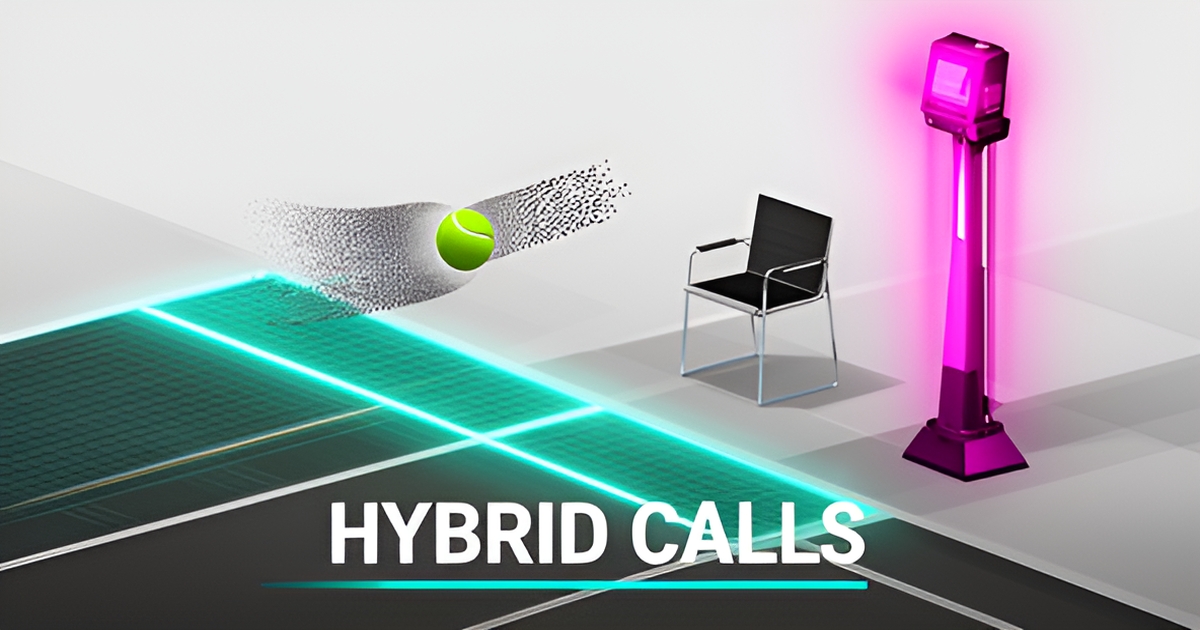
Wimbledon shows what full automation can achieve in the right context. The tournament eliminated its human line judges in favor of hundreds of high-speed cameras and AI systems, reportedly saving several hundred thousand pounds a year on line judge staffing while reducing match interruptions by roughly 25%. LinkedIn top content on sports analytics highlights a deployment cost in the low millions of dollars for the camera and AI setup.
Tennis provides the blueprint for scaling. Tennis became one of the first sports to use motion capture and computer algorithms to determine whether a ball landed out-of-bounds in the mid-2000s, and the ATP has since moved to eliminate line judges entirely in favor of electronic line calling—a transition largely complete as of 2025. Scientific American coverage of AI in officiating confirms the shift.
Baseball demonstrates the limits. MLB's automated ball-strike system has been undergoing Minor League testing since 2019, and minor league umpires using ABS in trials have been given discretion to abandon it and call the game themselves if they feel the system is interfering with pace of play. Reporting on league trials shows the value of keeping a human override.
The hybrid approach succeeds when organizations match the tool to the task:
- Binary, objectively measurable calls such as line calls, offside positions, and boundary determinations where accuracy gains are largest and controversy is lowest
- AI as a decision-support tool for complex situations requiring contextual understanding and player safety considerations
- Human-in-the-loop controls for judgment calls involving intent, excessive celebration, or unnecessary roughness
Common missteps like poor data integration, resistance to automation, and overestimating AI capabilities are exactly where expert guidance adds value. AIQ Labs helps officiating organizations design governance, adoption plans, and human-AI workflows that preserve trust while capturing efficiency—whether through a targeted AI Workflow Build for a single high-cost process or a phased AI Operating System that connects officiating, scheduling, and operations across the organization.
The barrier isn't camera or processing technology — it's trust and the nature of judgment calls themselves. Analysis of 2026 officiating trends emphasizes that many contentious decisions require interpreting intent and context beyond what position-tracking cameras capture.
As Pooya Soltani notes, technology should be utilized as a tool to aid the decision-making process and not replace it. Scientific American quotes the researcher studying games technology at Staffordshire University.
Leagues that start with clear binary calls, run extensive parallel testing, and keep humans accountable for judgment are the ones moving from pilots to sustainable adoption.
Implementation Framework: How to Successfully Deploy Officiating AI
Successfully deploying officiating AI requires a phased, evidence-based approach that prioritizes trust, accuracy, and operational readiness—principles central to AIQ Labs' methodology. Rather than attempting full automation from the outset, sports organizations should begin with low-controversy, binary calls where AI has already proven effective, such as tennis line calls or soccer offside detection. This allows teams to validate system performance in real-world conditions while minimizing disruption to game flow and stakeholder confidence.
Parallel testing is essential before granting AI decision-making authority. As demonstrated in Minor League Baseball's ABS trials, umpires retained discretion to override the system when it interfered with pace of play, highlighting the value of running AI alongside human officials for a full season or more to identify edge cases and build organizational familiarity. Wimbledon's implementation further supports this, showing a reported 25% reduction in match interruptions after extensive parallel validation of its camera-based AI system, which replaced human line judges and saved several hundred thousand pounds annually in staffing costs.
Infrastructure investment and legal preparedness must accompany technical deployment. Venues need calibrated camera arrays, synchronized processing systems, and ongoing maintenance to ensure consistent accuracy—requirements that have limited adoption to top-tier leagues due to cost, with Wimbledon's deployment reportedly costing in the low millions of dollars. Simultaneously, organizations must proactively address ethical concerns such as algorithmic discrimination risks from biased training data and player safety implications, as AI cannot contextualize intent or detect unsafe play like "unnecessary roughness." By framing AI as a decision-support tool rather than a replacement—particularly for judgment-heavy calls—leagues can enhance accuracy while preserving the human accountability central to sports integrity. This structured progression—assess, pilot, validate, then scale—mirrors how AIQ Labs builds AI systems in milestones, so organizations own what works and abandon what doesn't before costs compound. According to Scientific American, real-time motion-capture systems often trade speed for accuracy, with some calculations taking multiple seconds compared to a human umpire's sub-second judgment—underscoring why starting simple and testing rigorously is not optional, but foundational. LinkedIn industry analysis confirms that early adopters who followed this cautious, measured path achieved both operational savings and improved match continuity without eroding trust in officiating. Vanderbilt Law School research further warns that removing humans from complex decisions risks failing in duty-of-care obligations to protect player safety, reinforcing the need for hybrid systems where AI supports, not supplants, human oversight. This approach ensures AI enhances—not undermines—the credibility and flow of the game.
Still paying for 10+ subscriptions that don’t talk to each other?
We build custom AI systems you own outright. No vendor lock-in. Full control.
Not sure where to start? Ask our AI planner
Frequently Asked Questions
Why isn't AI officiating more accurate if the technology is so advanced?
What kinds of calls can AI actually handle well in sports?
Why can't AI just replace referees entirely?
How much does it cost to implement AI officiating at a venue?
How should a league or organization roll out AI officiating without losing trust?
Is human video review actually more accurate than AI?
Where AI Meets the Whistle: Building Trust, Not Just Technology
The journey to effective AI officiating isn't about replacing human judgment with algorithms—it's about strategically augmenting it. As we've seen from Wimbledon's line-call automation to baseball's cautious ABS trials, success comes from starting with binary, measurable decisions, running parallel tests to build confidence, and keeping humans in the loop for context-rich calls where intent and safety matter. This hybrid approach preserves the integrity of the game while capturing measurable efficiency gains, like Wimbledon's reported annual savings and 25% reduction in match interruptions. For sports organizations navigating this transition, the real barrier isn't technical—it's organizational readiness. AIQ Labs helps officiating bodies and sports leagues move beyond pilot paralysis through structured, milestone-based builds, governance frameworks, and human-AI workflow design that builds trust while delivering operational value. If you're ready to assess where AI can genuinely enhance your officiating workflows without undermining credibility, start with our free two-minute Fit Check to identify your highest-impact opportunity—then schedule a no-obligation 30-minute strategy call to map a realistic path forward. Start the Fit Check
Make AI your competitive advantage — not just another tool.
Strategy, implementation and ongoing optimization. One partner, end to end.
Not sure where to start? Ask our AI planner