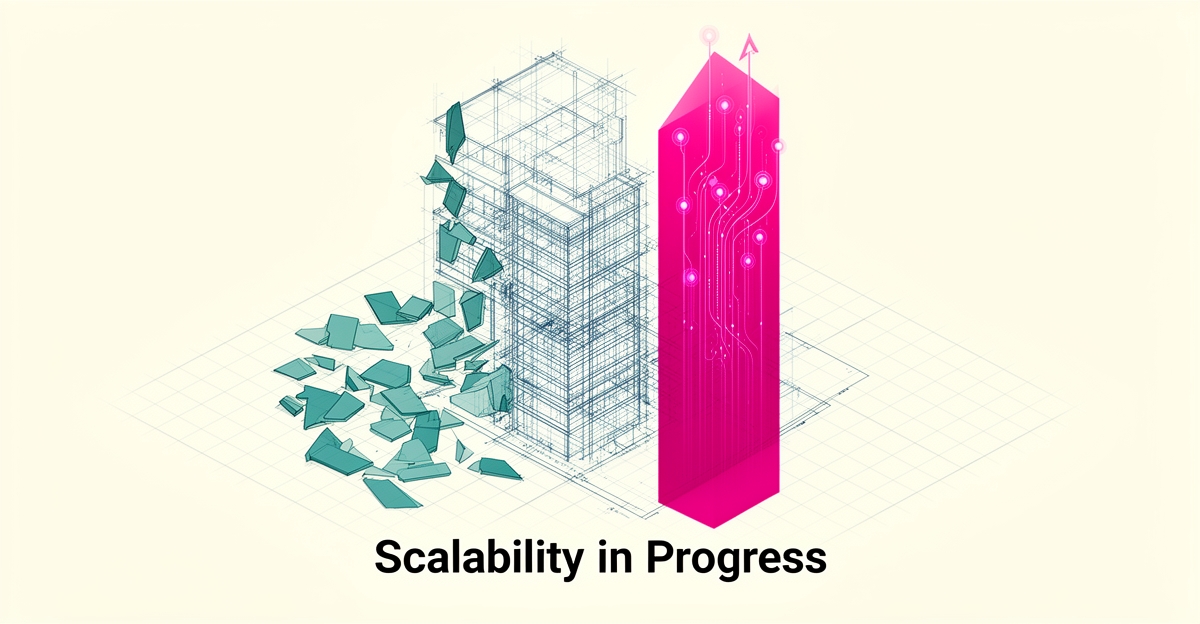
Why Most Structural Engineering Firms Fail to Scale AI Projects (And How to Avoid It)
Key Facts
- Structural engineers report reclaiming 5–10 hours per week using AI tools effectively according to industry tool analysis
- AI takeoff benchmarks show 86% time reduction from 18.4 hours manual to 2.6 hours with AI per benchmark analysis
- AI and senior estimators achieved 98.7% device-count agreement in takeoff benchmarks per benchmark analysis
- AI found 62% of items that human estimators missed in takeoff benchmark tests per benchmark analysis
- Design documentation tasks carry roughly 58% automation potential—the highest-value target for AI investment per NCSEA Foundation analysis
- Construction site inspections have only 18% automation potential due to reliance on human judgment per NCSEA Foundation analysis
- 48% of structural engineers are already exposed to AI in their work per NCSEA Foundation analysis
Hire a team member that works 24/7 — for less than a part-time wage.
AI receptionists, SDRs, dispatchers and 99+ roles. Trained on your business, fully managed.
Not sure where to start? Ask our AI planner
The Scaling Trap: Stuck in Learning and Curiosity
Ask ten structural engineering principals where their AI efforts stand, and most will describe the same picture: a few engineers playing with ChatGPT, someone testing Copilot, and no coordinated plan for any of it. That's not adoption—it's curiosity with a subscription fee.
According to the NCSEA Foundation's AI Grant Team, most firms remain at the initial "learning and curiosity" stage, experimenting with large language models rather than implementing comprehensive AI strategies. The team frames it bluntly: every firm needs to chart a realistic technology strategy and decide whether it will be a developer, a consumer, or a mix of both. Without that decision, experimentation never matures into capability.
The irony is that the opportunity is well-documented. Structural engineers sit squarely in what analysts call the augmentation zone, with 48% of structural engineers already exposed to AI in their work. But the exposure is wildly uneven across tasks—and that unevenness is exactly where scaling strategies should focus:
- Design documentation tasks carry roughly 58% automation potential, making them the highest-value target for structured AI investment
- Construction site inspections sit at only 18%, because interpreting three-dimensional conditions on-site remains fundamentally human judgment
- Routine work like code interpretation, quality assurance, and documentation offers immediate, measurable wins
The gap between curiosity and scale usually comes down to three missing pieces. First, firms skip the strategy phase—no budgets, no metrics, no measurable goals—so experiments produce anecdotes instead of business cases. Second, data quality gets ignored; models built on unverified, fragmented project data perform inconsistently and erode trust. Third, there's no cross-functional buy-in, so a promising pilot dies the moment its champion gets pulled onto a deadline.
The firms that break through treat the learning stage as a deliberate phase, not a permanent address. They give project managers and engineers secure LLM access, form internal user groups to share prompting workflows, and then move to pilots with defined success criteria. Industry guidance on AI adoption in structural engineering emphasizes that pilots work best when they start affordable—typically $25–30/month secure LLM subscriptions as of late 2026—and build small, documented wins that win stakeholder support.
There's also a hard ceiling to keep in mind. Professional liability means a licensed engineer stamps every drawing and owns every structural decision, so full automation isn't the goal—augmented productivity is. Engineers using AI tools well report reclaiming 5–10 hours per week, which compounds across a firm when workflows are systematized rather than left to individual habits.
That systematization is where many firms stall, and it's precisely the gap a structured implementation roadmap addresses. Partners like AIQ Labs work with firms to move past scattered experimentation—assessing readiness, prioritizing high-ROI use cases, and building production systems with measurable milestones instead of open-ended pilots. The difference between a firm stuck in curiosity and one compounding AI advantages isn't the technology; it's the plan.
Four Failure Patterns That Kill AI ROI
When an AI pilot delivers impressive early results only to stall at scale, the culprit is rarely the technology itself. Most structural engineering firms stumble into one of four predictable failure patterns that quietly erode ROI before the project ever reaches maturity.
The first pattern is poor data quality and infrastructure gaps. AI systems are only as reliable as the data feeding them, and engineering firms often underestimate how much cleanup their legacy files require. According to industry implementation research, starting with verified, high-quality data is the foundational requirement for models that perform consistently. Without modular architecture and robust monitoring, even promising pilots collapse under real-world complexity.
The second failure pattern is lack of cross-functional buy-in. AI adoption fails when it stays siloed in IT or a single champion's inbox. The NCSEA Foundation's AI Grant Team emphasizes that firms need structured learning approaches and user groups to demystify the technology. When project managers, business support staff, and engineers all have appropriate access and training, adoption accelerates. When they don't, skepticism hardens into resistance.
The third pattern is the absence of governance and liability frameworks. Structural engineering carries unique professional risk—when an engineer stamps a drawing, they put their license on the line. Analysis of AI's impact on the profession notes that this personal liability creates a structural barrier to full automation, requiring human oversight for critical decisions. Firms that fail to establish clear governance, authentication protocols, and compliance guardrails expose themselves to unacceptable risk.
The fourth pattern is over-reliance on disconnected point tools. Buying a takeoff tool here and a chatbot there creates fragmentation rather than transformation. The difference between integrated success and scattered failure shows up clearly in performance data. Benchmark analysis of AI versus manual takeoffs reveals what proper implementation achieves:
- 86% time reduction, with AI completing takeoffs in 2.6 hours versus 18.4 hours manually
- 98.7% device-count agreement between AI and senior estimators
- 62% of AI-flagged differences were items human estimators had missed
These results don't happen by accident. They require clean data infrastructure, cross-functional alignment, and governance frameworks that define when AI acts autonomously and when humans intervene. This is precisely why AIQ Labs structures engagements around implementation roadmaps rather than isolated tool deployments—addressing data readiness, stakeholder alignment, and governance before scaling begins.
The firms that succeed treat AI adoption as organizational change, not software procurement. They recognize that 5-10 hours per week reclaimed per engineer, as industry tool analysis suggests is possible, only materializes when the foundation supports the ambition.
A Structured Roadmap From Pilot to Production
The gap between experimenting with AI and scaling it across a structural engineering firm comes down to structure. Most firms stall at the pilot stage because they skip the foundational work that makes expansion possible.
According to the NCSEA Foundation's AI Grant Team, successful adoption moves through three critical phases: learning and strategy development, implementation with measurable goals, and pilot execution with stakeholder engagement. Firms that treat these as sequential — not optional — build momentum instead of fragmented experiments.
- Form cross-functional user groups to share prompting workflows and surface practical use cases from daily work
- Secure affordable LLM access — typically $25-30/month subscriptions for tools like ChatGPT Plus or Microsoft 365 Copilot as of late 2026
- Set clear budgets, metrics, and measurable goals before launching any pilot project
- Include younger team members who often bring native AI fluency and coding skills to the table
- Document every failure and success to build institutional knowledge for the next phase
The research emphasizes that human-in-the-loop oversight remains non-negotiable for liability and professional stamping. When a structural engineer stamps a drawing, they assume legal responsibility that no AI system currently bears. This regulatory reality means the most successful implementations automate routine tasks — code interpretation, quality assurance, documentation — while preserving human judgment for critical decisions.
AIQ Labs helps firms navigate this roadmap through three entry points: AI Employees for managed AI staff at roughly 80% less cost than a human hire, Workflow Builds that rebuild the one workflow costing your firm the most at a fixed price, and AI Operating Systems that connect everything into one layer you own outright. Every engagement is built in phases with measurable milestones—start monthly, build in milestones, or own it outright—so pilots become permanent capability instead of open-ended experiments. With 200+ multi-agent systems deployed, the focus is on production-ready, owned assets with governance built in, not point solutions that create vendor lock-in.
How to Scale AI Without Losing Control or Quality
Scaling AI in structural engineering fails when firms chase hype instead of building a controllable system. Most practices stall at pilots because data, governance, and modular design are treated as afterthoughts. A disciplined playbook turns curiosity into enterprise-ready capability.
Start with verified high-quality data. Industry guidance stresses starting with verified, high-quality data to build models that perform consistently and avoid errors down the line. In structural work where safety is paramount, poor data quality creates liability risk and erodes trust. Clean, structured project histories, drawings, and specifications are the foundation for code interpretation, QA, and documentation use cases that deliver immediate value.
Build modular planning-reasoning-action systems. Research recommends separating planning, reasoning, and action so AI agents can be easily debugged, understood, and improved as requirements change. This architecture supports monitoring and authentication layers like OAuth, MFA, and role-based access, plus continuous performance tracking and safeguards for privacy and compliance. Modularity also preserves human oversight for critical decisions where professional liability remains with the licensed engineer.
Choose augmentation use cases first. Structural engineers face medium AI exposure overall, with an automation potential around 58% for design documentation tasks but only 18% for construction site inspections. AI should augment rather than replace human expertise. Routine, high-volume workflows are the best entry points:
- Code interpretation and drawing review to catch coordination gaps before field
- Quality assurance checks that flag inconsistencies across sheets and specs
- Documentation generation and takeoff support with human review
These tasks are measurable and low-risk. AI takeoff benchmarks show an 86% time reduction from 18.4 hours manual to 2.6 hours with AI plus human review, with device-count agreement at 98.7% and AI finding 62% of items estimators missed. The gains compound on larger projects without removing professional judgment.
Implement monitoring, authentication, and change management as you scale. Establish budgets, metrics, and measurable goals before expanding beyond pilots, and form user groups to share prompting ideas and workflows. Continuous tracking, regular updates, and human-in-the-loop controls keep systems safe and adopted.
AIQ Labs applies this approach through managed AI Employees, fixed-price Workflow Builds, and phased AI Operating Systems that move firms from pilots to enterprise-ready scale. The focus is on production-ready, owned assets with governance built in, not point solutions that create vendor lock-in.
Still paying for 10+ subscriptions that don’t talk to each other?
We build custom AI systems you own outright. No vendor lock-in. Full control.
Not sure where to start? Ask our AI planner
Frequently Asked Questions
Why do most structural engineering firms get stuck in the 'learning and curiosity' phase with AI instead of scaling?
What tasks in structural engineering have the highest automation potential, and which should firms prioritize for AI investment?
How much time can structural engineers save per week by using AI tools effectively, and what's required to realize those gains at scale?
What are the four main failure patterns that kill AI ROI in structural engineering firms?
What kind of data foundation is needed for reliable AI performance in structural engineering, and why is it critical?
How does AIQ Labs help firms move beyond AI pilots to scalable, production-ready systems?
From Curiosity to Capability: Building AI That Works for Structural Engineering
Most structural engineering firms get stuck experimenting with AI tools without a plan—testing ChatGPT here, trying Copilot there—while missing the real opportunity: systematic augmentation of high-value, routine work like design documentation and quality assurance. The data shows AI can reclaim 5–10 hours per engineer weekly, but only when firms move beyond curiosity by securing verified data, building cross-functional buy-in, establishing governance, and starting with affordable, measurable pilots. Success isn't about the latest tool—it's about treating AI as organizational change, not software procurement. If you're ready to turn scattered experiments into lasting capability, start with the 2-minute Fit Check to see where your firm stands, then book your free 30-minute strategy call to map your highest-ROI automation path—without compromising safety or control.
Make AI your competitive advantage — not just another tool.
Strategy, implementation and ongoing optimization. One partner, end to end.
Not sure where to start? Ask our AI planner