Why Most Wheel Alignment Shops Fail at AI Implementation (And How to Avoid It)
Key Facts
- More than 80% of AI projects fail, twice the rate of non-AI IT projects according to RAND research
- Only 14% of organizations feel fully ready to integrate AI per the RAND study
- A majority of tire businesses report difficulty filling open technician roles according to AI B2B analysis
- Tire shop case studies report roughly 141 hours per month saved through targeted automation per AI B2B data
- An AI phone receptionist was reported to save 54 hours monthly in tire shop case studies according to AI B2B
- Shops in published case studies report a 30% increase in booked appointments within 30 days with AI scheduling per AI B2B blog
- Modern alignment tolerances are often within ±0.1 degrees per industry guides
Hire a team member that works 24/7 — for less than a part-time wage.
AI receptionists, SDRs, dispatchers and 99+ roles. Trained on your business, fully managed.
Not sure where to start? Ask our AI planner
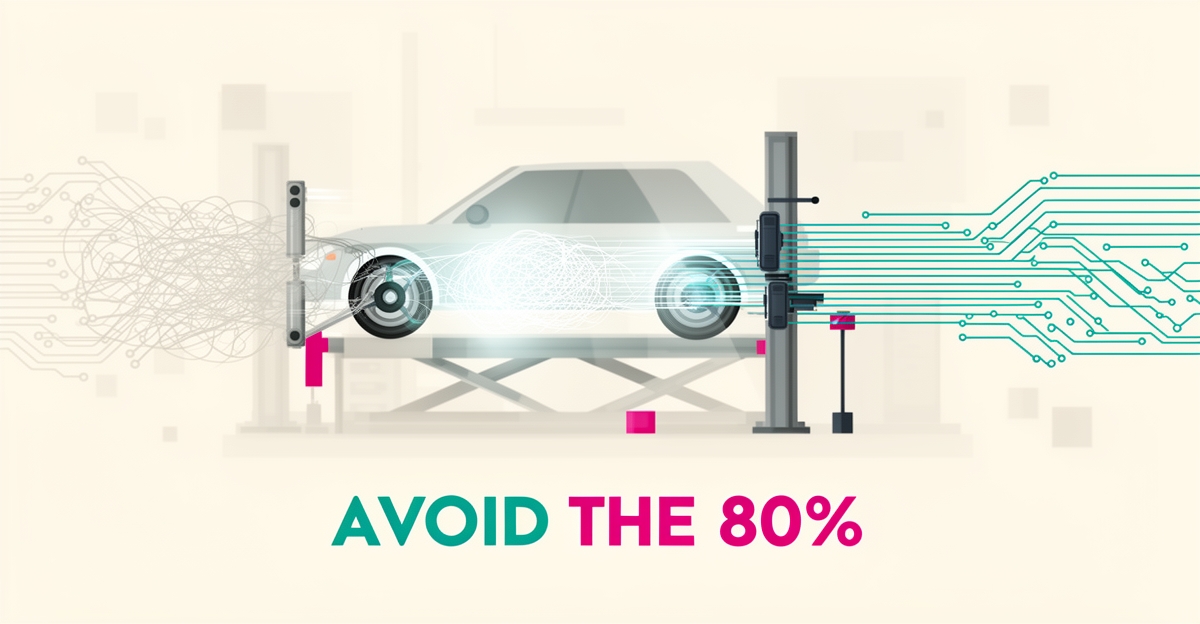
The 80% Failure Rate: Why Alignment Shops Are Especially Vulnerable
More than 80 percent of AI projects fail—twice the rate of failure for IT projects that do not involve AI, according to RAND research. For wheel alignment shops, this risk is amplified by seasonal demand spikes, persistent technician shortages, and the precision requirements of ±0.1 degrees that modern vehicles demand. Shops often rush into AI during peak season chaos or purchase tools that don't integrate with existing systems like TireMaster or Mitchell 1, setting themselves up for failure before they start.
This vulnerability stems from common pitfalls that plague AI implementations across industries but hit alignment shops especially hard. Many begin with a technology-first mindset, chasing the latest AI tools without clearly defining the problem they're trying to solve. As the RAND report notes, misunderstanding or miscommunicating the problem is the most frequent cause of failure—such as implementing AI for appointment scheduling when the real bottleneck is technician workflow or inventory management. Others overlook data quality, assuming AI will work with incomplete or inconsistent records, when in fact inadequate data is a leading root cause of failure.
Integration complexity further derails efforts. Even if a shop selects the right AI tool, connecting it to legacy systems like TireMaster or Mitchell 1 requires technical expertise many lack. The RAND study confirms that organizations often lack adequate infrastructure to deploy and manage AI models, increasing failure likelihood. Without proper alignment between AI systems and existing workflows, automation creates friction instead of efficiency.
Technician buy-in is another critical factor. The transition from manual to computerized alignment already showed that human factors determine success—results vary widely based on skill and trust in the system. For AI to work, technicians must understand and trust its recommendations, seeing it as a complement to their expertise rather than a replacement. Effective collaboration between technologists and business experts, as emphasized in the RAND report, can be the difference between success and failure.
AIQ Labs helps alignment shops avoid these traps through a structured Fit Check and phased transformation roadmaps that address data quality, integration needs, and stakeholder alignment from day one. By focusing on enduring problems rather than flashy technology, shops can build AI systems that deliver measurable ROI—tire shop case studies report savings of roughly 141 hours per month from targeted automation—without the disruption of rushed or poorly planned implementations. RAND research shows that only 14 percent of organizations feel fully ready to integrate AI, underscoring the need for a deliberate, assessment-driven approach. Shops that invest in readiness upfront are far more likely to join the minority that succeed. AI B2B Blog data confirms that targeted automation in alignment-adjacent processes saves significant time when implemented correctly.
The Five Fatal Mistakes That Kill Alignment Shop AI Projects
Most wheel alignment shops enter AI projects with high hopes but end up disappointed. The RAND study, based on interviews with 65 experienced data scientists and engineers, reveals that over 80 percent of AI projects fail—twice the rate of traditional IT projects. This isn't due to the technology itself but to predictable, avoidable mistakes that derail implementation from the start.
The first fatal mistake is misunderstanding the problem. Shops often automate appointment scheduling when the real bottleneck is technician workflow or ADAS calibration complexity. As the RAND report states, trained models are frequently optimized for the wrong metrics and don't fit into the actual business context. For example, an AI scheduler might reduce phone calls but create chaos in the bay if it doesn't account for technician skill levels or equipment availability.
Second, inadequate data sinks many projects before they begin. Alignment shops frequently lack historical patterns on customer behavior, seasonal demand spikes, or equipment performance metrics. Without sufficient data to train effective models, AI systems make poor recommendations or fail entirely. The RAND study identifies this lack of adequate data as a primary failure cause, especially critical in precision-dependent services like wheel alignment where tolerances are often within ±0.1 degrees.
Third, technology-first thinking leads shops to chase AI trends instead of solving real problems. The RAND report explicitly warns that "chasing the latest and greatest advances in AI for their own sake is one of the most frequent pathways to failure." Shops invest in flashy AI tools that promise automation but ignore core issues like technician shortages or inventory complexity, resulting in solutions that look impressive but deliver little operational value.
Fourth, poor infrastructure prevents even well-designed AI tools from functioning. Many alignment shops use legacy systems like TireMaster or Mitchell 1 Manager SE that lack modern APIs or data export capabilities. Without adequate infrastructure to manage data and deploy models—including both digital systems and physical equipment compatibility—AI projects stall during integration. The RAND study confirms that organizations often underestimate this hurdle, leading to disconnected tools that create more work than they save.
Finally, applying AI to unsolvable problems dooms projects from the outset. Expecting AI to handle complex ADAS calibration decisions that require human expertise ignores the technology's current limitations. As the RAND report emphasizes, "AI is not a magic wand that can make any challenging problem disappear; in some cases, even the most advanced AI models cannot automate away a difficult task." Successful shops recognize where AI augments human judgment—such as in scheduling or follow-ups—and where technician expertise remains essential for safety-critical tasks like alignment verification.
The Biggest Opportunity: What Successful Shops Automate First
Most wheel alignment shops miss the biggest AI opportunity hiding in plain sight: automating routine tasks that steal time from revenue-generating work. Shops that start small and strategic see real results fast—while those trying to boil the ocean with complex AI implementations often fail before seeing any return.
Published tire shop case studies point the way: shops using targeted automation report saving an average of roughly 141 hours per month. The highest-impact automations begin with the phone and the schedule—two areas where staff typically drown in repetitive work. In these case studies, an AI phone receptionist saved 54 hours per month by handling FAQs, quotes, and booking calls that otherwise consume 2-3 hours daily. Appointment scheduling automation followed close behind, saving 43 hours per month by eliminating manual coordination and reducing the no-shows that cause significant bay downtime. Your actual numbers will depend on your call volume and current processes—which is exactly what a Fit Check is designed to surface.
These aren't incremental gains—they change how the shop runs day to day. Shops in published case studies implementing both AI scheduling and phone automation saw a 30% increase in booked appointments within 30 days, directly attacking the technician shortage problem most tire businesses report. And because these automations typically run as a managed service—like the AI Employees AIQ Labs deploys, at a fraction of the cost of a human hire—the payback timeline is unusually fast for operational improvements.
The five high-value automations that deliver this value follow a clear priority order based on reported time saved:
- AI phone receptionist: 54 hours/month saved (case-study figure)
- Appointment scheduling: 43 hours/month saved (case-study figure)
- Inventory alerts: 21 hours/month saved (case-study figure)
- Post-service follow-up: 17 hours/month saved (case-study figure)
- Seasonal campaign management: 6 hours/month saved (case-study figure)
Shops that fail at AI implementation almost always make one of two critical mistakes. Some try to automate everything at once—overwhelming staff with multiple new systems while disrupting daily operations during peak seasons. Others chase complex, cutting-edge AI solutions that require significant technical expertise to integrate with existing shop management software like TireMaster or Mitchell 1 Manager SE, only to abandon projects when integration proves harder than expected.
The winning approach is counterintuitive but proven: start with the single biggest time sink (usually phone handling or scheduling), prove the concept with measurable time savings in 2-3 weeks, then expand systematically. This problem-first mindset—focusing on solving real workflow bottlenecks rather than implementing AI for AI's sake—is what separates the 14% of organizations that achieve AI readiness from the 80%+ that see their projects fail. For alignment shops, this means letting AI handle the administrative burden so technicians can focus on what they do best: precision alignment work that keeps vehicles safe and customers returning.
The Implementation Roadmap: How to Be in the 20% That Succeed
The difference between shops that succeed with AI and those that join the 80% failure rate often comes down to process, not technology. According to RAND research, successful implementation requires a disciplined approach that addresses both technical and human factors.
Start by identifying your biggest time sink. For most alignment shops, this is phone calls and scheduling—staff typically spend 2-3 hours daily answering repeat questions, according to industry analysis. This represents your highest-ROI starting point, with AI phone reception and appointment scheduling automation delivering the largest reported time savings.
The RAND study emphasizes that technologists and business experts must communicate effectively for AI projects to succeed. Your technicians need to understand and trust AI recommendations, not feel replaced by them. This means involving your team in the selection process and clearly explaining how AI will handle administrative tasks so they can focus on high-value alignment work.
Before implementation, ensure your infrastructure can support AI integration. Most shops use TireMaster, TCS TireWorks HD, or Mitchell 1 Manager SE. These systems need to connect with AI tools, often through workflow platforms that create custom connections without extensive coding. Integration capability is frequently the difference between success and abandonment.
The RAND research introduces a critical filter: the one-year commitment rule. If the problem you're solving isn't worth a year of focused effort, don't start. AI projects require patience—rushing implementation or expecting immediate transformation leads to disappointment.
Timing matters significantly. Implement during your off-season, not during the winter tire rush when you're already overwhelmed. The seasonal demand spikes that make AI valuable also make implementation disruptive if attempted during peak periods.
- Week 1-2: Map your biggest time sink and confirm team buy-in
- Week 3-4: Verify integration capabilities with existing systems
- Week 5-8: Deploy first automation (typically phone or scheduling)
- Week 9-12: Monitor performance and adjust based on real usage
Expect measurable results within the first month or two—case studies report a 30% increase in booked appointments within 30 days for shops implementing AI scheduling and phone automation. AIQ Labs structures this as a Workflow Build: rebuild the one workflow that costs you the most, at a fixed price, in phases—so you prove value before scaling further.
AIQ Labs structures implementations through a readiness assessment that identifies your highest-ROI starting point and maps the integration requirements before any development begins. This prevents the technology-first approach that RAND identifies as a primary failure pathway.
Still paying for 10+ subscriptions that don’t talk to each other?
We build custom AI systems you own outright. No vendor lock-in. Full control.
Not sure where to start? Ask our AI planner
Frequently Asked Questions
Why do most AI projects fail in wheel alignment shops?
What's the biggest time sink AI can fix first in an alignment shop?
How much time can AI automation actually save an alignment shop each month?
Do I need to replace my existing shop management software like TireMaster or Mitchell 1 to use AI?
How long does it take to see ROI from AI implementation in an alignment shop?
Will AI replace my technicians or make their jobs harder?
Your Wheel Alignment Shop's AI Advantage Starts with One Smart Step
Most alignment shops don't fail because AI doesn't work—they fail by skipping the readiness work that makes it work. The pattern is clear: shops that start with a single high-impact automation like AI phone reception or scheduling see the fastest, most measurable returns. But rushing in without assessing data quality, integration needs, or team buy-in almost guarantees disappointment. The winners aren't the ones with the fanciest tools—they're the ones who solve real bottlenecks first, prove value fast, and scale from there. If you're ready to see where AI can actually move the needle in your shop—without disruption or guesswork—start with the 2-minute Fit Check, then book your free 30-minute strategy call to map your biggest time sink and find out if AI readiness is your next competitive advantage.
Make AI your competitive advantage — not just another tool.
Strategy, implementation and ongoing optimization. One partner, end to end.
Not sure where to start? Ask our AI planner