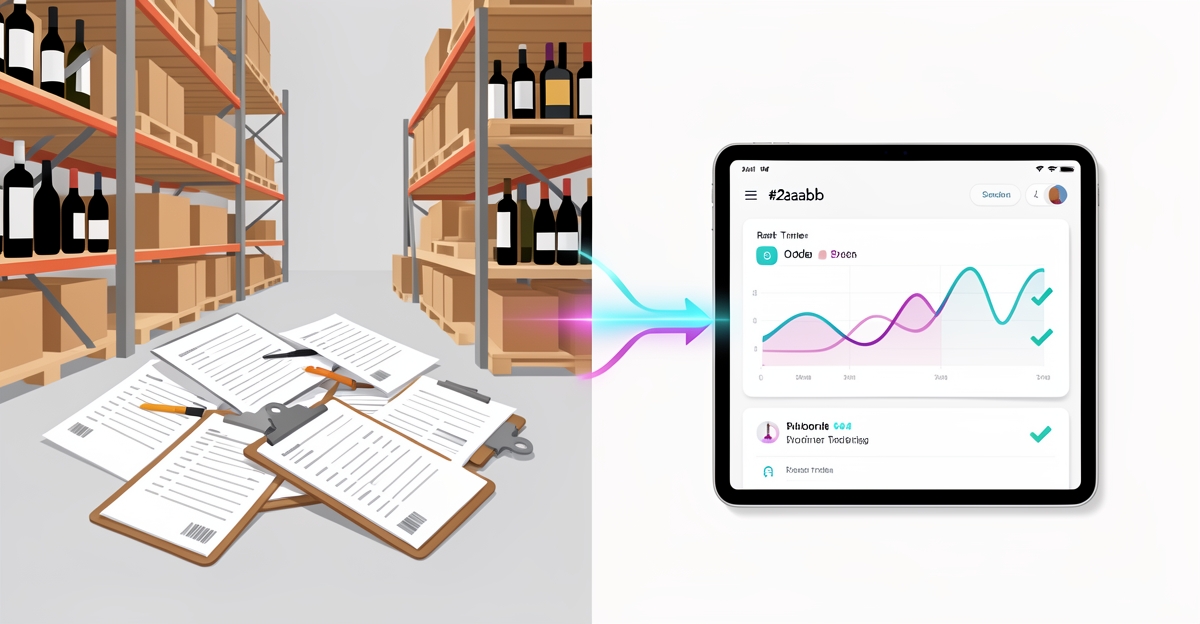
Why Most Wine Distributors Still Use Paper-Based Order Tracking (And How to Fix It)
Key Facts
- Paper-based tracking creates delays and lost orders due to manual errors and lack of visibility
- Manual tracking typically leaves teams without real-time visibility into inventory levels, order status, and delivery dates
- AI-powered digital workflows sync orders across warehouses, sales reps, and customers in real time
- Demand forecasting and compliance automation can meaningfully reduce carrying costs and administrative labor when implemented well
- A phased rollout—order management first, then forecasting and compliance—keeps implementation risk low
Hire a team member that works 24/7 — for less than a part-time wage.
AI receptionists, SDRs, dispatchers and 99+ roles. Trained on your business, fully managed.
Not sure where to start? Ask our AI planner
The Hidden Cost of Paper-Based Order Tracking
Paper logs feel safe until a shipment is late and no one knows why. In wine distribution, that moment comes often, and the cost compounds across warehouses, sales reps, and customers.
Manual tracking creates delays and lost orders because handwritten entries and phone confirmations introduce errors and eliminate visibility. Every handoff—rep to office, office to warehouse, warehouse to carrier—is a chance for an order to be misread, duplicated, or dropped entirely.
Poor visibility is the daily friction. Teams cannot confirm inventory levels, order status, or delivery dates in real time, so promises to retailers are made on guesswork. When a buyer calls asking where their allocation is, someone has to physically chase the answer.
As sales grow, paper becomes a bottleneck. Reps duplicate orders, warehouses pick from outdated sheets, and customer service spends hours reconciling. What worked at fifty accounts breaks at two hundred.
The operational pain shows up as:
- Delayed fulfillment from manual handoffs between sales, warehouse, and delivery
- Lost or duplicated orders that erode retailer trust and require costly rework
- Blind spots in inventory that drive overstock of slow SKUs and stockouts of best sellers
- Limited scalability when order volume outpaces the capacity of paper logs and spreadsheets
These gaps also keep distributors from capturing efficiency gains available elsewhere in the sector. Automated invoice processing, demand forecasting, and route planning are all proven levers in wholesale distribution—but none of them work when the underlying order data lives on paper.
Paper-based tracking leads to delays, lost orders, and poor visibility. This is where AI-powered digital workflows replace manual logs with real-time tracking, improving accuracy and supply chain efficiency. AIQ Labs builds custom systems that automatically sync orders across warehouses, sales reps, and customers—typically as a focused [AI Workflow Build](/workflow-builds) targeting the one process that costs the most.
Moving from paper to connected workflows is not just about speed. It is about real-time visibility into what is sold, where it sits, and when it arrives, so teams can make decisions with confidence instead of chasing paperwork.
How AI-Powered Digital Workflows Transform Distribution
Paper logs create blind spots the moment an order leaves the sales rep's desk. Distributors who still track by hand routinely face delays, lost orders, and poor visibility into inventory levels, order status, and delivery dates.
AI-powered digital workflows replace manual logs with real-time tracking that improves accuracy and supply chain efficiency. Where paper offers limited accuracy due to manual errors, automation delivers improved accuracy through validation at the point of entry. Visibility shifts from reactive phone calls to live dashboards, and scalability moves from cumbersome manual processes to systems that scale with the business.
Real-time order tracking becomes the foundation. AI-powered order management systems can automate order tracking, fulfillment, and delivery, syncing orders across warehouses, sales reps, and customers. That synchronization eliminates duplicate entries and gives every stakeholder the same source of truth.
Automated fulfillment tightens the loop between order capture and shipment. AI workflows route picks, validate inventory, and trigger carrier updates without rekeying. The result is fewer errors, faster cycle times, and a clearer view of where every case stands.
Demand forecasting and pricing add financial leverage. AI-driven demand forecasting can help wine distributors predict demand and optimize inventory levels, which typically reduces both stockouts and excess inventory—often translating into lower carrying costs and better cash flow. Data-driven pricing adjustments can also support margin improvement when applied consistently.
Compliance automation reduces administrative burden. AI-powered compliance workflows can help wine distributors automate regulatory reporting, including TTB and state filings, license renewals, and tax documentation—typically cutting the labor hours compliance consumes significantly.
AIQ Labs builds custom systems that automatically sync orders across warehouses, sales reps, and customers. For distributors with a single dominant bottleneck, a fixed-price [AI Workflow Build](/workflow-builds) rebuilds that one workflow in phases. For those ready to connect the whole operation—orders, inventory, compliance, customer communication—an [AI Operating System](/ai-operating-systems) provides one connected layer, built in phases and owned outright.
Key capabilities distributors gain include:
- Real-time visibility into inventory levels, order status, and delivery dates with automated alerts
- Automated fulfillment orchestration that reduces manual handoffs and errors
- Demand forecasting models that cut stockouts and excess inventory
- Compliance automation that tracks license renewals and generates required tax documentation
The shift is from manual control to automated visibility. Paper-based tracking becomes harder to manage as the business grows, while AI-powered digital workflows provide real-time visibility into inventory levels, order status, and delivery dates—and scale without adding headcount.
From Paper Logs to Real-Time Sync: A Practical Implementation Path
Paper logs create a bottleneck that gets worse with every new account. Distributors who stay manual face delays and lost orders due to manual errors and lack of visibility, while visibility into inventory levels, order status, and delivery dates remains poor.
Start with a clear process audit before any technology is added. Map how orders move from sales rep to warehouse to delivery, where handoffs happen on paper, and where errors are discovered late. This baseline exposes data gaps that will affect AI performance later.
Implementation costs, data quality, and change management are the three realities that decide success. AI-powered workflows require an upfront investment in technology and training. They also require reasonably clean data to function well—a real challenge when records have lived on paper for years. And change management matters: staff accustomed to paper need processes and habits rebuilt around the new system, which is why a phased approach is critical.
Move to real-time sync with AI-powered order management. AI-powered order management systems can automate order tracking, fulfillment, and delivery. Orders sync automatically across warehouses, sales reps, and customers, replacing phone calls and spreadsheets with live status. This shift delivers improved accuracy and reduced errors in order tracking and fulfillment and provides real-time visibility into inventory levels, order status, and delivery dates.
Build forecasting to protect margins and cash flow. An AI-driven demand forecasting strategy helps wine distributors predict demand and optimize inventory levels. Better forecasts reduce stockouts and excess inventory while improving cash flow—especially valuable in a business with allocation constraints and seasonal swings.
Automate compliance without adding headcount. AI-powered compliance automation can help wine distributors automate regulatory reporting to TTB and state agencies, track license renewals, monitor age verification compliance, and generate required tax documentation.
A practical rollout sequence keeps risk low:
- Assess current order tracking and fulfillment processes and document pain points by role
- Implement AI-powered order management to automate tracking and delivery with real-time sync
- Develop AI-driven demand forecasting to predict demand and optimize inventory levels
- Deploy AI-powered compliance automation for TTB/state reporting and license tracking
AIQ Labs builds custom systems that automatically sync orders across warehouses, sales reps, and customers, delivered through phased [AI Workflow Builds](/workflow-builds) with fixed pricing per milestone. The result is a digital workflow that scales with the business, making it easier to manage growth and complexity while preserving accuracy.
Build vs Buy: Why Custom AI Ownership Matters for Distributors
Custom AI ownership transforms workflow fixes from temporary patches into lasting competitive advantages for wine distributors. Subscription tools often lock businesses into recurring fees and limited customization, while AIQ Labs' custom-built systems ensure full control over code, data, and future evolution—critical when syncing warehouse operations, sales rep activity, and customer orders in real time. This ownership model eliminates vendor dependency and allows distributors to adapt their AI systems as market demands shift, without paying for features they don't need or waiting on third-party roadmaps.
AIQ Labs structures this flexibility through three payment models aligned to distributor needs. Start Monthly deploys a single AI Employee—like an AI order processor or dispatcher—to immediately address paper-based tracking pain points, typically at a fraction of the cost of a human hire. Build in Milestones lets distributors phase implementation, such as first automating warehouse–sales rep sync, then adding customer portal integration, paying only for completed work while retaining all progress. Own It Outright delivers a complete, owned AI operating system—ideal for distributors seeking to replace fragmented tools with a unified platform that scales with growth.
These approaches directly combat the inefficiencies of paper-based systems, which contribute to delays, lost orders, and poor visibility across supply chains. With full ownership, distributors capture the gains long-term—turning workflow fixes into strategic assets that enhance accuracy, scalability, and margin growth without ongoing subscription drag.
To explore how custom AI ownership can resolve your distributor's tracking challenges, start with the [2-minute Fit Check](/apply) and a free 30-minute strategy call to map your biggest bottleneck and identify high-ROI automation opportunities. If there isn't a clear win, we'll tell you that too—no obligation, just clarity on your AI path forward.
Still paying for 10+ subscriptions that don’t talk to each other?
We build custom AI systems you own outright. No vendor lock-in. Full control.
Not sure where to start? Ask our AI planner
Frequently Asked Questions
Why do paper-based tracking systems cause so many delays in wine distribution?
How much can AI demand forecasting actually reduce inventory costs for wine distributors?
What are the biggest challenges when switching from paper to AI-powered digital workflows?
How does AI compliance automation work for TTB and state reporting requirements?
What's the real difference between subscription software and owning a custom AI system?
Can AI automation actually improve profit margins, or does it just cut costs?
From Paper Trails to Real-Time Gains
Wine distributors clinging to paper-based order tracking face avoidable delays, lost orders, and blind spots that erode trust and margins—problems that compound as the business grows. AI-powered digital workflows replace manual logs with real-time sync across warehouses, sales reps, and customers, delivering improved accuracy and scalable operations. The path forward starts with assessing current pain points, then implementing AI-driven order management, forecasting, and compliance automation in phases. For distributors ready to turn tracking from a liability into a strategic advantage, AIQ Labs offers a clear next step: a [2-minute Fit Check](/apply) and a free 30-minute strategy call to map your biggest bottleneck and identify high-ROI automation opportunities—no obligation, just clarity on your AI path forward.
Make AI your competitive advantage — not just another tool.
Strategy, implementation and ongoing optimization. One partner, end to end.
Not sure where to start? Ask our AI planner