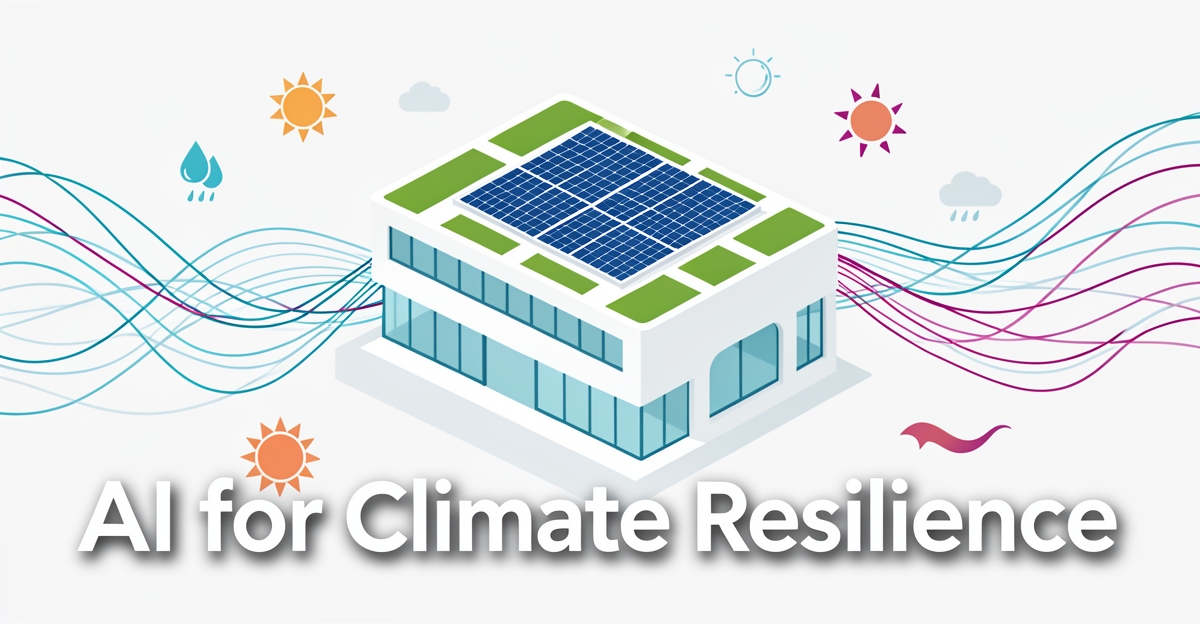
Why Net-Zero Design Firms Are Adopting AI for Climate Resilience Assessments
Key Facts
- AI-driven modeling can meaningfully reduce energy consumption in net-zero buildings while improving thermal comfort and structural durability under future climate conditions, according to industry reporting on net-zero design tools
- Static modeling tools cannot adapt to non-linear climate trends, increasing the risk of premature material degradation in net-zero envelopes
- Regional weather extremes are intensifying faster than global averages, demanding localized resilience assessments that legacy tools struggle to scale
- Zoning and building code updates driven by climate adaptation are often not integrated into early design phases, creating compliance risks
- AI transformation is not just about AI—behind every successful initiative lies a robust foundation in data, automation, and cloud infrastructure
- Start with business outcomes, not AI capabilities—map specific pain points to potential AI solutions and audit data infrastructure before any major initiative
- Firms must audit data sources like regional weather patterns, zoning codes, and material performance metrics to ensure AI readiness
Hire a team member that works 24/7 — for less than a part-time wage.
AI receptionists, SDRs, dispatchers and 99+ roles. Trained on your business, fully managed.
Not sure where to start? Ask our AI planner
The Growing Climate Risk Gap in Net-Zero Design
The pressure on net-zero design firms to deliver climate-resilient buildings is intensifying as traditional assessment tools struggle to keep pace with accelerating environmental volatility. While sustainability certifications focus on operational carbon reduction, they often overlook how regional weather extremes, material fatigue, and evolving zoning regulations will impact long-term performance. This disconnect creates a growing risk gap between design intent and real-world resilience—especially as climate projections point to more frequent and severe events that static models fail to anticipate.
Conventional tools like EnergyPlus and IES VE offer valuable insights into energy use and daylighting but lack the dynamic, scenario-based modeling needed to predict how buildings will perform under future climate stressors. These platforms typically rely on historical weather data, which no longer reflects emerging patterns of heatwaves, flooding, or wind loads. As a result, designs that meet today's net-zero standards may underperform—or even fail—decades from now when faced with unanticipated environmental pressures.
This limitation is particularly acute in healthcare and medical facilities, where building performance directly affects patient safety and continuity of care. Just as AI-driven patient care planning uses predictive modeling to anticipate health risks, net-zero design requires similar foresight to ensure structures remain safe, functional, and efficient amid shifting climate conditions. AIQ Labs supports this parallel through AI Workflow Builds that rebuild the assessment workflow that costs a firm the most—analyzing regional climate trends, zoning shifts, and material degradation pathways so design teams can stress-test net-zero projects against multiple future scenarios before construction begins.
- Static modeling tools cannot adapt to non-linear climate trends, increasing the risk of premature material degradation in net-zero envelopes.
- Zoning and building code updates driven by climate adaptation are often not integrated into early design phases, creating compliance risks.
- Regional weather extremes are intensifying faster than global averages, demanding localized resilience assessments that legacy tools struggle to scale.
Without predictive capabilities, net-zero firms risk delivering buildings that are sustainable in theory but vulnerable in practice—undermining both environmental goals and long-term asset value. Bridging this gap requires moving beyond retrospective analysis toward AI-powered foresight that mirrors the precision used in high-stakes fields like healthcare diagnostics. Only then can design resilience match the ambition of net-zero commitments.
How AI Enables Predictive, Scenario-Based Climate Modeling
AI-powered climate modeling transforms how net-zero design firms anticipate environmental stressors, much like healthcare providers use predictive analytics to tailor patient care plans. By analyzing regional climate projections, building material performance, and local zoning data, AI systems simulate future conditions such as extreme heat, flooding, or wind loads to optimize designs for long-term resilience. This scenario-based approach allows architects to test multiple futures before construction begins, reducing risk and enhancing adaptability. Industry reporting on net-zero design software suggests that AI-driven tools can pair with established platforms like EnergyPlus and IES VE to sharpen energy-efficiency simulations and daylighting analysis—critical inputs for validating net-zero performance under varying climate scenarios.
These models go beyond static assessments by incorporating dynamic variables—such as shifting precipitation patterns or rising urban heat islands—to forecast how buildings will perform over decades. Just as clinicians adjust treatment plans based on patient risk factors, designers can refine insulation, glazing, or ventilation strategies in response to predicted stressors. AIQ Labs supports this workflow by building custom systems that integrate regional weather data, zoning regulations, and material science into unified platforms for net-zero project planning. The ability to run thousands of simulations quickly allows firms to identify optimal design paths that balance sustainability, cost, and resilience.
Industry studies suggest AI-enhanced modeling can deliver meaningful energy-consumption reductions in net-zero buildings while improving thermal comfort and structural durability under future climate conditions. Expert guidance on AI transformation emphasizes that successful adoption starts with mapping specific pain points—like unpredictable weather impacts—to tailored solutions, rather than deploying technology for its own sake. By grounding design decisions in data-driven foresight, firms not only meet net-zero targets but also future-proof their assets against an uncertain climate. This proactive approach ensures resilience is designed in, not added on.
From Assessment to Action: Implementing AI in Design Workflows
Moving from climate risk assessment to real-world resilience takes more than good intentions—it requires a structured, stepwise approach to AI adoption. For net-zero design firms, the path forward mirrors the rigor of patient care planning in healthcare: success depends on predictive, scenario-based modeling and a willingness to transform workflows from the ground up.
The most effective organizations start by identifying the most time-consuming or error-prone processes—such as manual climate data analysis or repetitive energy modeling—that could benefit from automation or smarter decision-making. This targeted approach ensures that AI delivers measurable value from the outset, rather than becoming a solution in search of a problem.
Data infrastructure readiness is a critical next step. AI transformation is not just about AI—behind every successful initiative lies a robust foundation in data, automation, and cloud infrastructure. Firms must audit their data sources—regional weather patterns, zoning codes, material performance metrics—to ensure they are accurate, accessible, and integrated. This is similar to how healthcare providers rely on clean, interoperable patient data for effective care planning.
Cross-functional alignment is equally essential. Building AI committees that include IT, legal, HR, and business units helps surface potential challenges early and ensures that all stakeholders are invested in the outcome. Establishing an AI ethics framework at the outset defines clear boundaries for responsible use, especially when working with sensitive climate or client data.
Pilot projects offer a low-risk way to validate AI's impact. Start small, iterate quickly, and launch contained pilots—such as automating a single climate risk assessment workflow—before scaling across the firm. Define clear success metrics to track both technical and business outcomes, ensuring that each phase delivers tangible value.
- Audit and prepare data infrastructure for AI readiness
- Build cross-functional AI committees for alignment
- Establish an AI ethics framework early
- Launch contained pilot projects and iterate
- Define and track clear success metrics
AIQ Labs applies this transformation methodology through its three entry points. Firms that want to start small can hire AI Employees on a monthly basis to handle data-heavy analysis work. Those ready to rebuild a single high-cost workflow—like climate risk assessment—can commission a fixed-price AI Workflow Build, delivered in phases. And firms that want climate, zoning, and material data unified into one connected operating layer can adopt an AI Operating System, built in phases and owned outright. With 200+ multi-agent systems deployed, AIQ Labs guides design consultants from assessment through pilot selection and governance—so adoption is both practical and sustainable.
By following these proven steps, net-zero design firms can move from assessment to action—embedding AI into their workflows and building the foundation for long-term climate resilience.
Still paying for 10+ subscriptions that don’t talk to each other?
We build custom AI systems you own outright. No vendor lock-in. Full control.
Not sure where to start? Ask our AI planner
Frequently Asked Questions
Why are traditional net-zero design tools like EnergyPlus not enough for climate resilience?
How does AI improve climate resilience assessments in net-zero design compared to conventional methods?
What are the first steps a net-zero design firm should take when adopting AI for climate resilience?
Can AI really reduce energy use in net-zero buildings?
Is AI adoption in design firms just about buying new software, or does it require broader changes?
How does AIQ Labs support net-zero design firms in implementing AI for climate resilience?
Buildings That Weather the Future
The path to net-zero is no longer just about reducing carbon—it's about ensuring buildings can withstand the climate realities of tomorrow. As this article has shown, traditional tools like EnergyPlus and IES VE, while valuable, fall short in modeling the dynamic, localized, and non-linear impacts of climate change. AI bridges that gap by enabling predictive, scenario-based resilience assessments that mirror the precision of patient care planning in healthcare. From auditing data infrastructure to launching pilot projects, firms now have a clear roadmap to embed AI into their design workflows. AIQ Labs supports this shift through AI Employees, Workflow Builds, and AI Operating Systems—helping design teams stress-test their net-zero projects before construction begins. If your firm is ready to move from assessment to action, start with the two-minute Fit Check at https://aiqlabs.ai/apply to explore how AI can future-proof your next project.
Make AI your competitive advantage — not just another tool.
Strategy, implementation and ongoing optimization. One partner, end to end.
Not sure where to start? Ask our AI planner