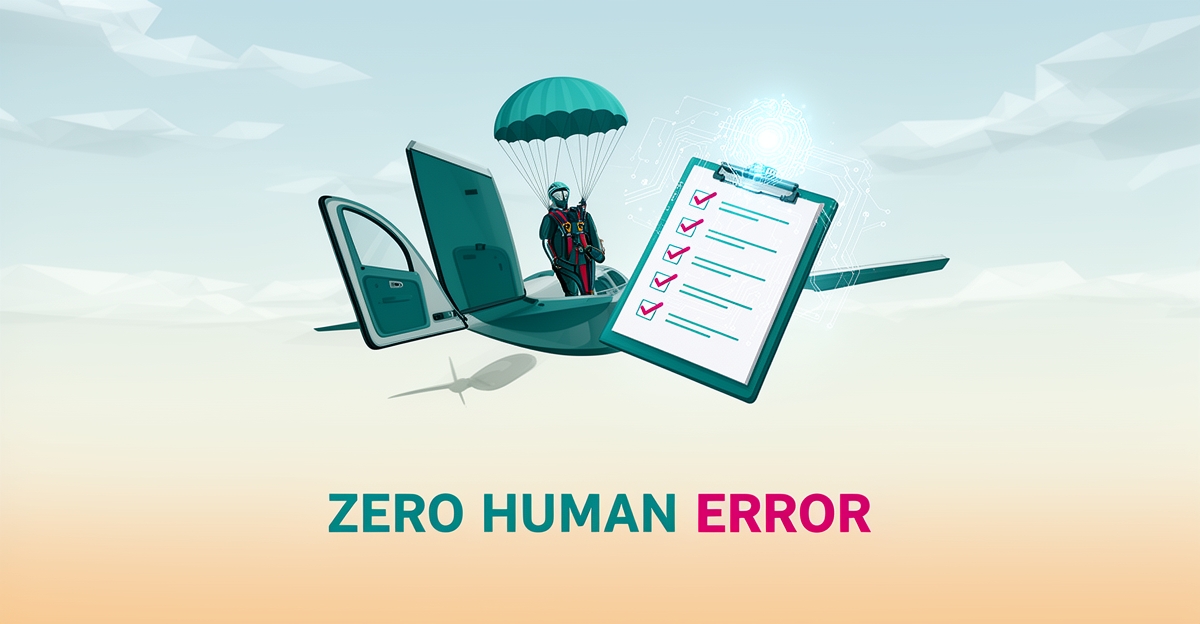
Why Skydiving Centers Should Automate Guest Pre-Flight Checklists with AI
Key Facts
- Aviation has relied on systematic checklists for decades, and digital checklist systems are now standard in modern flight operations.
- Skydiving industry events and safety bodies consistently emphasize standardized pre-jump protocols — but standardization only works when execution is consistent.
- AI-powered checklists reduce human error by ensuring consistent verification of equipment, medical forms, and compliance documents every time.
- Custom AI workflows integrate with existing booking and safety systems while maintaining full operational control for center managers.
- AI automation creates timestamped audit trails for every verification step, enabling real-time oversight impossible with manual checklists.
- AIQ Labs has deployed 200+ multi-agent systems and runs 4 live SaaS products daily, proving engineering capability at scale.
Hire a team member that works 24/7 — for less than a part-time wage.
AI receptionists, SDRs, dispatchers and 99+ roles. Trained on your business, fully managed.
Not sure where to start? Ask our AI planner
The Hidden Risk in Manual Pre-Flight Checklists at Skydiving Centers
Despite rigorous safety protocols emphasized across the skydiving industry, manual pre-flight verification processes in skydiving centers remain vulnerable to human error, fatigue, and inconsistency—creating avoidable risk in a high-stakes environment where equipment readiness, medical forms, and compliance documents must be verified with absolute precision before every jump. These critical safety items, which include harness integrity checks, reserve parachute inspections, signed liability waivers, and guest health disclosures, rely entirely on staff attention during peak operational periods when distractions are highest and cognitive load is greatest. Even experienced team members can overlook items under time pressure, leading to gaps in verification that standardized protocols alone cannot eliminate. Industry safety discussions consistently highlight that while standardization is essential, its effectiveness depends on consistent human execution—a variable that fluctuates with shift changes, workload, and individual attention spans. The consequence is not merely administrative delay but real safety exposure: a single missed medical condition or improperly secured harness can have irreversible outcomes in an activity where margins for error are negligible. Unlike low-risk industries where checklist lapses cause inconvenience, skydiving demands flawless execution every time, making reliance on manual verification a systemic vulnerability rather than an occasional mistake. This is where AI-driven workflow automation offers a transformative shift—not by replacing human judgment, but by ensuring that routine, rule-based verification tasks are performed with unwavering consistency, freeing staff to focus on higher-value safety interventions and guest experience. By embedding validation logic directly into the pre-flight process, centers can reduce dependence on fluctuating human performance while maintaining full operational control over safety outcomes. AIQ Labs' approach to AI Workflow Builds supports this shift by rebuilding the one workflow that costs the most—verifying documents, equipment status, and medical compliance against predefined rules, triggering alerts only when exceptions require human review—thus turning a point of risk into a point of reliability.
How AI-Powered Checklists Improve Safety and Consistency in Aviation-Inspired Operations
Aviation has spent decades demonstrating how integrated checklist systems evolve from simple paper documents to sophisticated digital workflows that enhance safety, with modern flight operations relying on interactive, rule-based verification protocols. This progression mirrors the opportunity for skydiving centers to elevate their pre-flight procedures through AI automation, transforming manual checks into consistent, reliable processes. By drawing from aviation's long-standing commitment to systematic safety verification, skydiving operations can adopt similar rigor while addressing the unique demands of guest-facing adventure sports.
AI-powered checklists bring aviation-grade reliability to skydiving pre-flight procedures by verifying critical safety elements with unwavering consistency. Custom AI workflows can automatically validate guest medical forms, equipment inspection records, and regulatory documentation against center-specific requirements, eliminating the variability inherent in manual checks. Unlike paper-based systems prone to oversight or fatigue-related errors, AI ensures every item is checked the same way every time, directly supporting the safety protocol standardization emphasized across the industry. This consistency reduces human error while maintaining the thoroughness required for high-risk operations.
Beyond accuracy, AI automation significantly improves processing speed and creates auditable records that enhance operational control for center managers. Where traditional checklists depend on individual attention and experience levels, AI-driven verification delivers rapid, standardized processing that scales with guest volume without linear staffing increases. Each verification step generates a timestamped audit trail, providing managers with real-time oversight and compliance documentation—addressing a key limitation of manual systems where real-time oversight is limited. These capabilities align with AIQ Labs' approach to building connected operations, from individual AI Employees that handle routine verification to a full AI Operating System that connects booking, safety, and compliance in one layer the center owns outright. The result is a safer, more efficient pre-flight process that upholds the highest standards of aviation-inspired safety in the skydiving industry.
Implementing AI Checklist Automation: A Practical Path for Skydiving Centers
Manual pre-flight checks create a bottleneck where fatigue and volume increase risk. Skydiving centers can remove that variability with an AI checklist that verifies documents, equipment and medical forms before every jump.
Assessment starts with mapping the current manual workflow. Teams document every safety-critical item, from equipment inspection to guest medical forms and regulatory compliance documentation. This baseline reveals handoff points, duplicate entries and where human oversight typically occurs.
Integration defines how the AI interacts with existing systems. The workflow must connect to booking platforms, safety documentation databases and operational control systems without replacing them. Full operational control stays with center managers while routine verification runs automatically.
Custom AI workflows are built for skydiving-specific logic. Agents verify safety documents, equipment readiness and medical forms with error handling and clear escalation paths for failed checks. Validation layers and human-in-the-loop controls ensure reliability in high-risk environments, a design principle mirrored in integrated aerial systems built for sustained performance in demanding operational conditions.
Staff training and change management secure adoption. Comprehensive training covers system operation, exception handling and escalation protocols. Monitoring then optimizes performance over time, refining workflows based on operational feedback and safety outcomes.
A practical implementation path follows this sequence:
- Assess current manual processes and identify all safety-critical checklist items
- Define integration requirements with booking and safety systems
- Develop custom AI workflows with validation layers and human-in-the-loop controls
- Train staff and establish continuous monitoring and optimization
Industry context reinforces the need for standardization. Skydiving safety bodies and industry events continue to focus on standardized pre-jump checklists, reflecting recognition that human error remains a primary risk when execution varies.
Aviation technology shows how checklists evolve. Modern flight operations integrate sophisticated weather data, real-world information and comprehensive digital aircraft checklists, illustrating how systematic verification becomes integral to safety.
AIQ Labs applies this proven implementation framework through custom AI development that integrates with existing booking and safety systems. The approach delivers reliability, speed and consistency while maintaining compliance and scalability without disrupting existing operations.
Still paying for 10+ subscriptions that don’t talk to each other?
We build custom AI systems you own outright. No vendor lock-in. Full control.
Not sure where to start? Ask our AI planner
Frequently Asked Questions
How does AI-powered pre-flight checklist automation improve safety in skydiving centers?
What lessons from aviation technology support the case for AI in skydiving pre-flight procedures?
Will implementing AI checklists replace skydiving center staff or reduce their role in safety?
What are the key steps for skydiving centers to implement AI-powered pre-flight checklist automation?
How does AI automation improve operational efficiency beyond safety in skydiving operations?
What does it cost to get started with an AI checklist workflow?
From Manual Checks to Mission-Critical Reliability
The shift from paper-based pre-flight verification to AI-driven checklists represents more than operational modernization — it addresses the fundamental vulnerability of relying on human consistency in an environment where a single oversight carries irreversible consequences. Standardization only works when execution is flawless every time, not just when conditions are ideal. AI automation delivers that reliability by embedding validation logic directly into the workflow, verifying equipment status, medical forms, and compliance documents with the same rigor on the hundredth jump as the first. For skydiving centers, this means reducing administrative burden while strengthening the safety foundation their reputation depends on. The implementation path is practical: assess current processes, define integration points, build custom workflows with human-in-the-loop controls, and train teams to manage exceptions rather than routine checks. Centers ready to explore how this applies to their operation can start with a free strategy session to map their biggest bottleneck and identify the highest-ROI automation opportunity — take the two-minute Fit Check to begin.
Make AI your competitive advantage — not just another tool.
Strategy, implementation and ongoing optimization. One partner, end to end.
Not sure where to start? Ask our AI planner